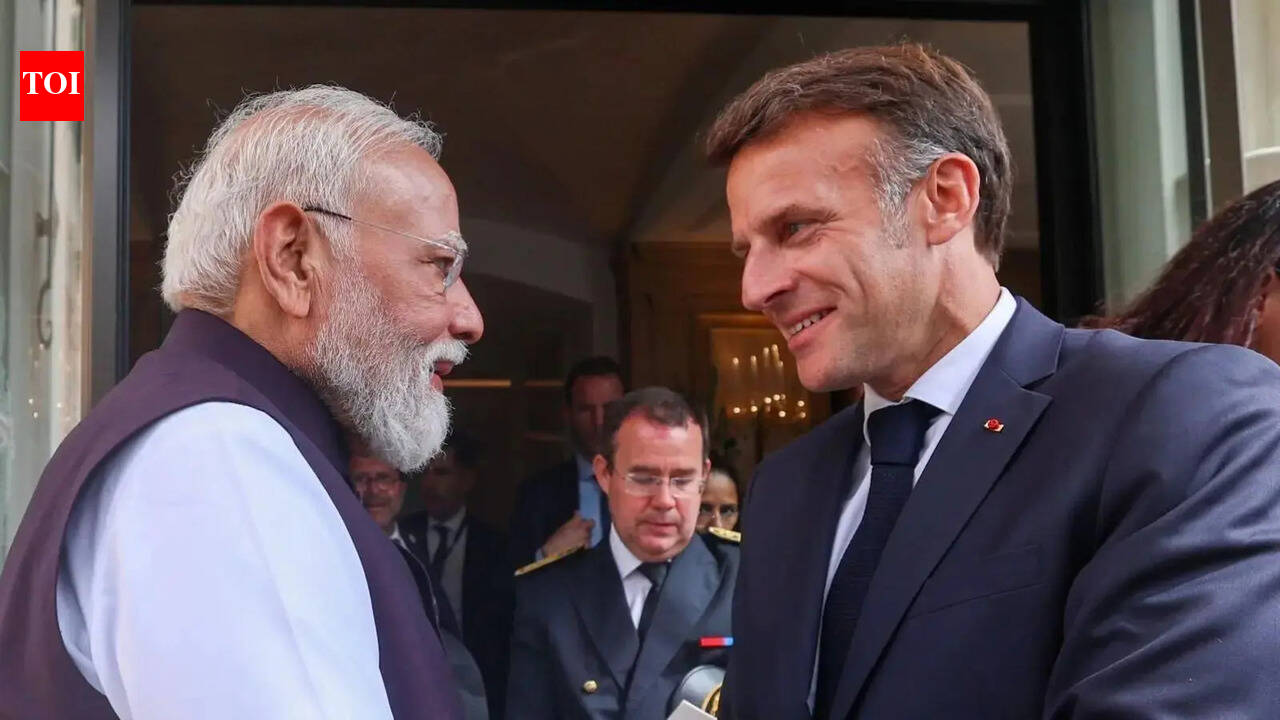
Narendra Modi and Emmanuel Macron met in Nice and agreed to aim for doubling India-France trade over five years while discussing civil nuclear cooperation, defence, technology and mobility. Reporting also says the two sides signed 19 agreements across multiple sectors.
Trade push in Nice
Prime Minister Narendra Modi and French President Emmanuel Macron met in Nice on June 14 and agreed to work toward doubling India-France bilateral trade over the next five years, according to reporting on the meeting.
The trade target was the clearest commercial headline from a bilateral engagement that also covered civil nuclear cooperation, defence, technology and mobility. The talks came as the two leaders met around the Bharat Innovates 2026 event in Nice, adding an innovation-focused backdrop to the diplomacy.
Coverage described the meeting as part of a wider attempt to deepen a long-running strategic partnership between India and France. That relationship already spans defence, security, civil nuclear technology and space, and the latest talks appeared to extend that agenda into newer areas such as digital payments and talent exchange.
Chronology of the Nice talks
The sequence in Nice began with Modi and Macron jointly inaugurating Bharat Innovates 2026, according to one report. Later coverage said they held bilateral discussions that produced a broader cooperation package.
An Economic Times report said the leaders discussed expanding India's UPI payment system in France and that 19 agreements were signed across infrastructure, clean energy, defence, space, education and digital technology. That report framed the meeting as a practical step toward widening the relationship beyond traditional diplomatic and security channels.
Times of India then reported that the two leaders had agreed to aim for a doubling of bilateral trade within five years and that nuclear cooperation remained on the table. That later reporting added a more specific commercial and strategic target to the day’s earlier coverage.
Civil nuclear and strategic ties
Civil nuclear cooperation was one of the main subjects discussed in Nice. The reporting did not identify a specific project or new reactor commitment, but it treated civil nuclear cooperation as part of the broader strategic package between the two countries.
Defence also featured prominently, alongside technology and talent mobility. Reporting said student and talent mobility were part of the conversation, pointing to an effort to broaden the relationship beyond government-to-government contracts and large strategic projects.
The India-France partnership has long been presented as a strategic one, and background coverage described it as anchored in defence, security, civil nuclear technology and space. The Nice talks appeared to reinforce that foundation rather than replace it with a narrower trade-only agenda.
Agreements and economic stakes
The reported 19 agreements suggest a wide-ranging package, but the coverage did not list each deal or explain which were new commitments and which were expected follow-ons. Still, the sectors mentioned show that the bilateral agenda is moving across ministries and industries, not just foreign affairs.
The economic stakes are significant because a five-year target to double trade would require sustained growth across manufacturing, energy, technology and services. That makes the reported discussions on UPI expansion, clean energy and digital cooperation relevant to the larger trade goal.
The broader diplomatic value is also clear. For India, deeper ties with France can support its push for market access, advanced technology and diversified strategic partnerships. For France, the relationship offers a route into one of the world’s fastest-growing major economies and a partner with global influence.
The reports also suggest that the cooperation package is not limited to symbolic language. By pairing a trade target with agreements across infrastructure, defence, space, education and digital technology, the Nice meeting points to a multi-track effort that could be implemented over time by several departments and agencies.
What remains unclear
An immediate open question is whether the trade-doubling language will appear in an official joint readout or remains confined to media reporting. Another is whether either side will publish a more detailed breakdown of the reported 19 agreements.
It is also not clear whether the civil nuclear discussions produced any project-specific commitments or follow-up timelines. For now, the available reporting supports the conclusion that nuclear cooperation remained a central talking point, but not that a new nuclear deal was announced.
The next developments to watch are any official statements from New Delhi or Paris and any deal sheet that confirms the package in full. That would clarify how much of the Nice meeting is already formalized and how much remains an agenda for future implementation.
For now, the meeting in Nice signals a concrete attempt to broaden India-France relations on both commercial and strategic fronts, with trade growth and civil nuclear cooperation at the center of the latest push.
Revision note
Initial automated publication based on substantial reporting.