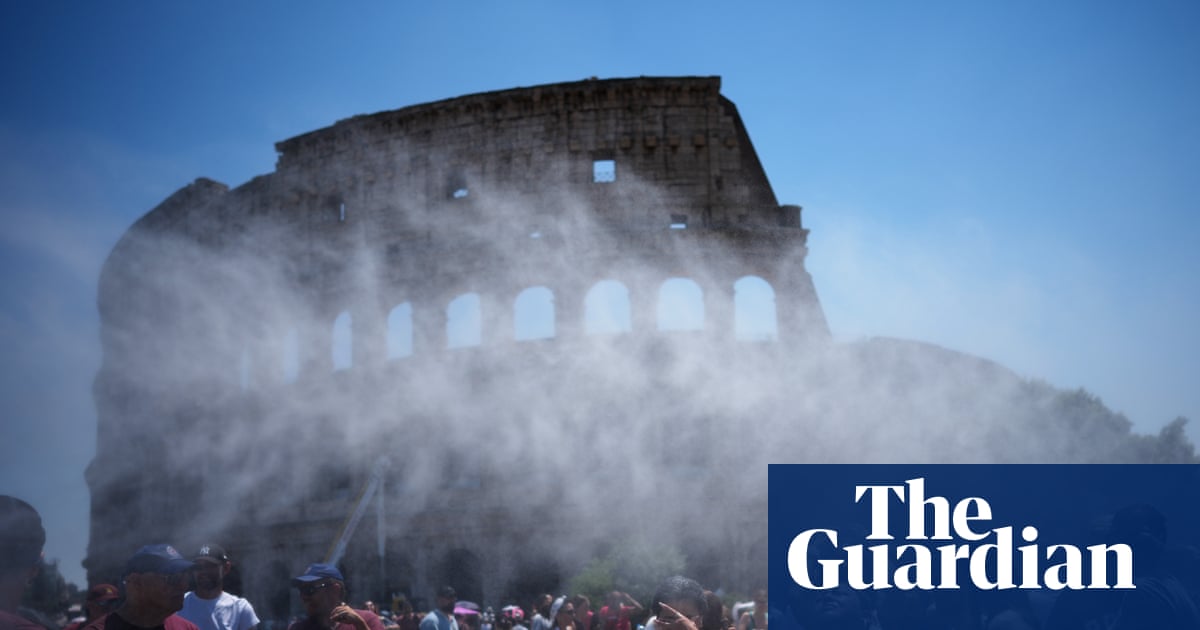
Europe’s record June 2026 heatwave is exposing persistent gaps in heat preparedness across housing, hospitals, schools, transport and workplaces, despite decades of climate warnings and policy debate.
Europe’s latest heatwave is doing more than breaking temperature records. It is exposing how slowly Europe has adapted to a hotter climate, even after decades of warnings that extreme heat would become more dangerous, more frequent and more disruptive.
The current spell has brought record June temperatures to parts of France, the UK and Switzerland, while schools, hospitals, roads and rail services have all come under pressure across the continent. In several places, the impact has gone beyond discomfort and into public safety, with cooling systems strained, critical incidents declared and transport infrastructure buckling.
That gap between warning and action is the core of the story. Europe has known for years that heat kills, that older people and people with chronic illness are especially vulnerable, and that dense cities, poor housing and weak planning make the toll worse. Yet adaptation has remained uneven, fragmented and often too slow.
A warning long in the making
The modern European playbook for heat risk was shaped by the deadly 2003 heatwave, which killed about 70,000 people across the continent. It forced governments and health agencies to treat heat as a serious public-health threat, but the response never fully matched the scale of the danger.
A June 3 Guardian explainer had already highlighted the scale of the preparedness gap, noting that only 21 of 38 European countries had heat-health action plans in a 2024 survey. The latest wave suggests that, even where plans exist, implementation remains inconsistent.
WHO Europe has been trying to push the issue higher up the agenda. Hans Kluge, the agency’s regional director, announced updated heat-health action plan guidance in Berlin two weeks before the current article. The Guardian reports that WHO estimates Europe has lost 200,000 lives to heat over the past four years.
The point of those warnings is not abstract. Heat risk rises sharply during prolonged hot spells, especially for older people, children and people with chronic illness. The current wave is a reminder that inaction is already carrying a cost.
Where the system is failing
The weaknesses are visible in the places people rely on most. Hospitals are among the most exposed. The Guardian reports that several hospitals in England declared critical incidents during the heatwave, with cooling units and IT systems failing under pressure.
Housing is another major fault line. In France, the article says roughly half of homes have poor heat protection, leaving residents trapped in overheated rooms when temperatures climb. That is especially dangerous in low-income housing, where residents are less likely to be able to retrofit insulation, shading or air conditioning.
Schools and transport networks are also struggling to cope. School closures, road damage and transport slowdowns have been reported across multiple countries, showing how heat affects not just individual health but the functioning of daily life.
The burden is not evenly shared. Poorer households, people in older buildings and workers with little control over their conditions are more exposed to heat stress than those with access to cooler homes, flexible work or private transport.
The human and infrastructure toll
The current heatwave is already being tied to direct harm. The Guardian reports more than 55 drownings in France, four child deaths in hot cars and the shutdown of two nuclear reactors because of insufficient cooling water.
Those details matter because they show how heat radiates outward through the entire system. It is not only a health emergency. It is an infrastructure and labor problem, an energy problem and, in some places, a water problem.
Earlier coverage of the same heatwave described record-breaking temperatures, red alerts and major roads buckling in Germany, while reports from Spain to Germany described an unprecedented red zone spreading across the continent. Axios and other outlets have also summarized attribution work suggesting climate change has made this kind of event far more likely.
The Guardian cites a World Weather Attribution study saying the current heatwave would have been virtually impossible 50 years ago and that dangerous overnight heat has become much more likely. That shift matters because nights are when the body is supposed to recover.
What adaptation looks like
Experts quoted in the Guardian argue that Europe does not need a single silver bullet. It needs a layered response: shading, ventilation, urban greening and targeted cooling in the places where heat kills most readily.
That means prioritizing care homes, hospitals, schools and public transport rather than assuming every building or neighborhood can be cooled the same way. It also means treating design as policy: tree cover, reflective surfaces, passive cooling and building standards all matter before a heatwave begins.
Some cities are already experimenting with climate shelters, greener streets and more heat-aware planning. But the examples remain uneven, and too often they depend on local initiative rather than continent-wide standards.
The central policy dispute is not whether cooling should exist, but how much of Europe’s response should rely on air conditioning. Some political actors are pushing AC as the obvious fix, while experts warn that broad dependence on it can raise power demand, worsen urban heat and deepen blackout risk if the grid is strained.
The next test
This is why the debate is so stubborn. Air conditioning can save lives in hospitals, care homes and other critical settings. But a broader strategy still has to reduce exposure at the building, street and city level, while emissions cuts continue in the background.
For now, the immediate focus is on the latest wave itself: whether governments issue new heat-health measures, whether hospitals and rail operators expand emergency protocols, and whether updated death or impact estimates emerge from public-health researchers and attribution groups.
The evidence already points in one direction. Europe was warned for years that heat would become more dangerous. The current crisis suggests that in many places, the warning was heard but not translated into enough concrete protection.
That is why this heatwave is not just another extreme-weather story. It is a stress test for how seriously Europe has taken a risk it has known about for decades.
Revision note
Initial automated publication.