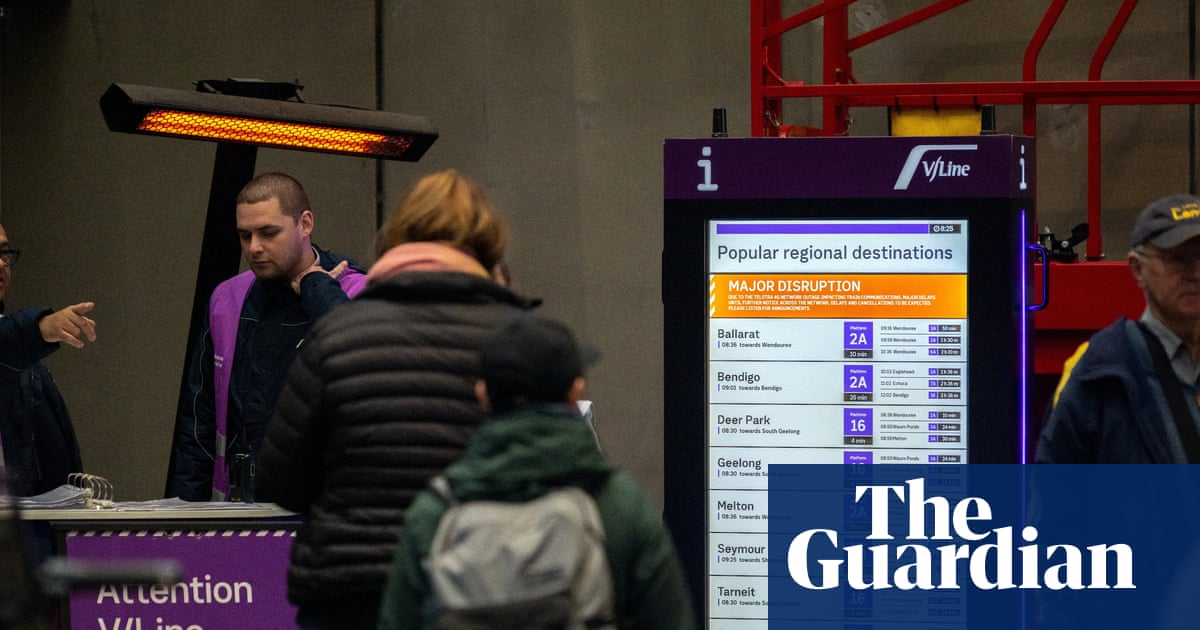
Telstra said it restored services after a nationwide outage, but residual triple-zero problems and regional rail disruption continued into Thursday morning while operators waited for communications to stabilise.
Public safety fallout
Australia’s Telstra outage was still causing disruption on Thursday morning, with residual triple-zero calling problems persisting after the carrier said it had restored most services the day before.
The nationwide failure began at about 4:30 a.m. AEST on Wednesday and affected mobile calls, data services and emergency calling. Telstra said the incident was caused by a software defect that reset a GPS and time-synchronisation node, rather than malicious activity.
Federal communications minister Anika Wells said some triple-zero calls were going straight to message bank and that residual problems remained as the network fallout was being worked through.
Telstra said people who could not connect to triple zero should wait for the handset to latch onto another network or try a different device.
The company said it had completed more than 300 welfare checks on people who tried to call triple zero during the outage, and that some of those checks required immediate assistance.
How the outage unfolded
Telstra said services were restored by about 4 p.m. AEST on Wednesday, but the later secondary issue meant the incident did not end with that first recovery.
Thursday reporting said the emergency-calling problem was still being investigated and that the disruption had outlasted the main network restoration. That made the outage a broader public-safety issue rather than a one-day consumer fault.
The company’s explanation pointed to a technical fault in synchronisation rather than a cyberattack. That distinction matters because it frames the event as an infrastructure reliability failure and raises questions about how a single network problem spread so widely.
Telstra is Australia’s largest mobile network provider, so an outage of this scale immediately affects not just consumer communications but systems that depend on reliable mobile coverage.
Rail services held back
The network failure also hit regional transport. V/Line said its network remained impacted on Thursday morning and that passenger train services were unable to operate.
A V/Line update said only very limited coach services would run while restoration work continued. That meant the disruption was not confined to calls and texts, but extended into day-to-day travel across regional Victoria.
The Australian Rail Track Corporation said Telstra’s telecommunications reliability issues made it unsafe for normal rail operations to resume.
That safety concern is central to why rail services stayed down after the main outage was declared restored. Operators were waiting not just for the mobile network to come back, but for communications stability and operational sign-off before resuming normal passenger services.
Reporting also indicated disruption beyond Victoria, including impacts in New South Wales, as transport systems that rely on telecom links were forced to slow or stop.
Why the outage mattered
Regional rail depends on telecommunications for train-control and operational communications. When those links are unstable, services can be suspended even if the trains and tracks themselves are otherwise ready to run.
The same dependency explains why a mobile-network failure becomes a public-safety story rather than a routine service inconvenience. If triple-zero calls fail or route incorrectly, the consequences can be immediate.
That is why the welfare-check count mattered. It showed the outage had moved beyond service disruption into direct emergency-response risk.
The incident has also sharpened scrutiny of telecom resilience and outage reporting, especially where a single fault can affect both emergency services and essential infrastructure.
What remains unresolved
It was not immediately clear by Thursday morning whether the secondary triple-zero issue had been fully eliminated.
The timing of a return to normal regional rail services also remained uncertain, with V/Line and other operators still waiting for communications to stabilise before restoring ordinary passenger operations.
Regulators are expected to examine the outage handling, the restoration timeline and the effect on critical services.
For now, the immediate next steps are Telstra confirming the emergency-calling issue is closed, and rail operators deciding when it is safe to bring services back to full operation.
Revision note
Expanded coverage of outage chronology, emergency-calling impact, rail disruption, and unresolved recovery questions.