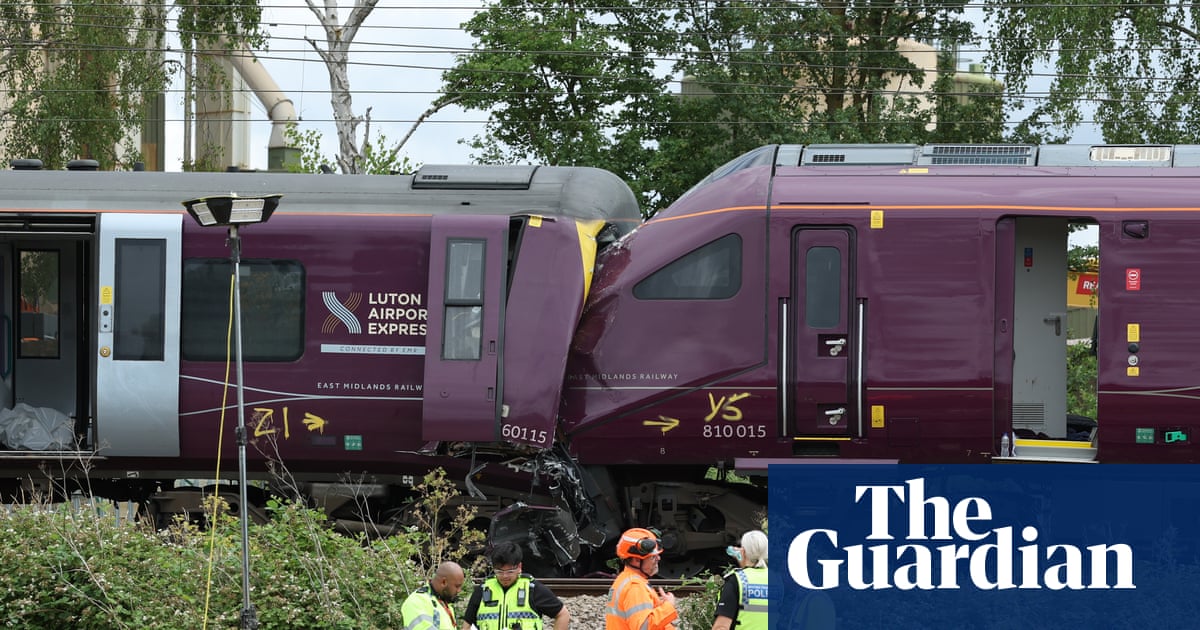
An interim Rail Accident Investigation Branch report says the East Midlands Railway Corby-to-London train that hit another service near Bedford passed a red signal before the collision. Driver Shaun Burton died and about 100 people were injured, while investigators are still working to establish what warning he received and why the train could not be stopped in time.
An interim Rail Accident Investigation Branch report says the East Midlands Railway Corby-to-London St Pancras service passed a red stop signal before the Bedford-area collision and could not be stopped in time.
The findings sharpen the focus on a signal-passed-at-danger event on the Midland Main Line, while leaving open key questions about what the driver saw, heard or received before the train continued past the signal.
The crash happened on Friday, June 20, 2026, near the Elstow interchange south of Bedford, when two East Midlands Railway passenger trains collided. The driver of the Corby service, Shaun Burton, 60, died in the crash.
About 100 passengers were injured in total. The latest reporting says eight people were in critical condition and 53 remained in hospital at the time of the interim report.
What the interim report says
According to the interim findings, the Corby-to-London train passed a red stop signal and continued toward the stationary train ahead. Investigators say the train’s brakes were applied about nine seconds before impact, when it was still travelling around 76 mph, and it had slowed to about 49 mph by the time of the collision.
The train it struck was a Nottingham-to-London service that had stopped because a fault in its automatic warning system caused its brakes to apply. Investigators say that fault left the train stationary in the path of the oncoming service.
The Rail Accident Investigation Branch has not yet published its full report. Its interim statement sets out what appears to have happened, but it does not yet determine the broader chain of causes.
What remains unclear
Investigators say it is not yet clear what warning Burton received, or how he responded, before the train passed the red signal. They have not yet said whether any signalling or protection system intervened before the impact.
Those unanswered questions are now central to the investigation. The current findings point to a red-signal event and a braking attempt just seconds before collision, but they do not yet explain why the train was not stopped earlier.
Disruption and recovery
The collision caused major disruption on the line between Bedford and Luton, where recovery crews have been working to clear wreckage and inspect track, signalling and overhead equipment.
Network Rail said the recovery and repair work would keep the line disrupted through the week. It had earlier described the crash as a tragic isolated incident.
British Transport Police and the Rail Accident Investigation Branch are both investigating the crash. East Midlands Railway, Network Rail and Hitachi are among the organizations involved in the response and technical recovery work.
Next steps
The RAIB is expected to continue its technical investigation and later publish fuller findings. Those are likely to examine the warning the driver received, the performance of the train and signalling systems, and how the two services came to be in conflict on a busy main line.
For now, the interim report confirms the crash sequence more sharply than earlier coverage did, but it leaves the central causal questions open.
Revision note
Expanded into a fuller initial article with verified chronology, investigation context, disruption, and open questions.