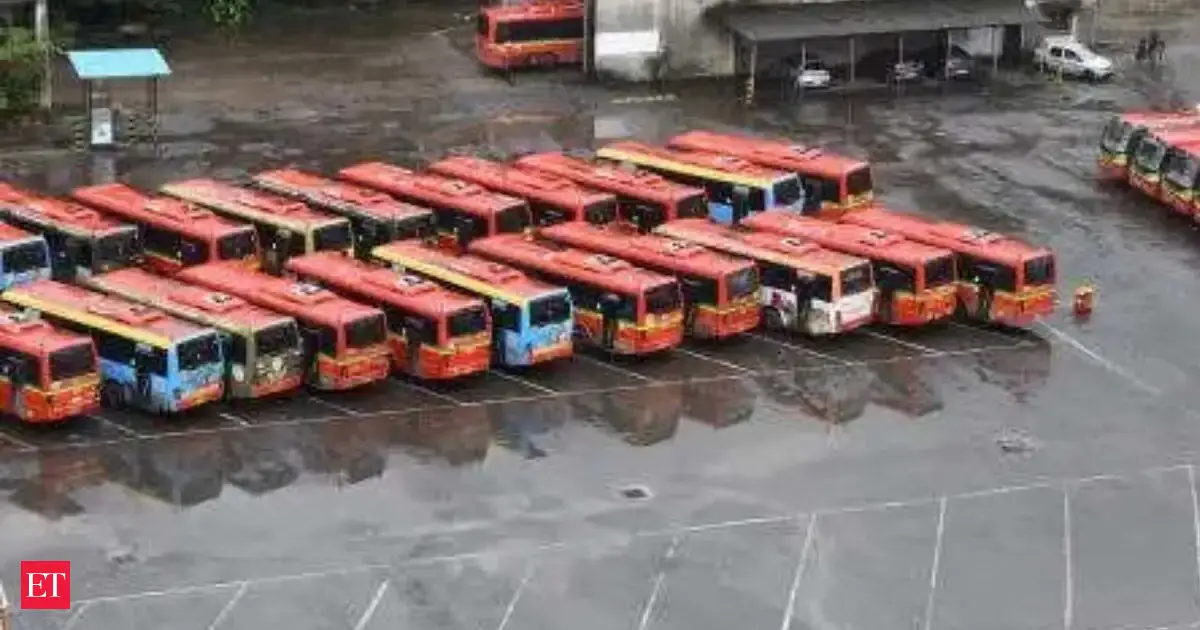
BEST employees began an indefinite strike on June 19 after talks failed, sharply reducing bus service across Mumbai and adding pressure on commuters. The BMC later approved a Rs 1,000 crore disbursement to BEST as metro ridership rose and operators added services to absorb demand.
BEST employees launched an indefinite strike on June 19 after talks with management failed, sharply reducing bus service across Mumbai and intensifying pressure on daily commuters.
The action was called by the BEST Sanyukt Kamgar Kruti Samiti, which reports described as a 12-union committee. It involved workers from both BEST's transport and power-supply divisions, raising the stakes beyond bus operations alone.
Reports on Friday said commuters and students were hit during the morning rush, with several routes seeing little or no regular service. One later report said only 32 BEST buses were operating, underscoring how severely the network had been curtailed.
Why workers walked out
Union demands reported by multiple outlets included payment of pending dues to retired workers, a merger of BEST's budget with the BMC budget, more BEST-owned buses, filling vacancies, ending contracting, and regularizing leased workers.
The strike had been signaled earlier in the week. On June 17, unions were reported to be planning a June 19 walkout, and Economic Times later reported that the indefinite strike began after negotiations failed.
Impact on commuters
BEST is central to Mumbai's daily mobility network, and reports estimated that about 23 lakh passengers rely on its buses each day. The strike quickly pushed riders toward other modes of travel.
Metro One reported a sharp jump in ridership, and later reporting said it added services as commuters shifted away from buses. BEST also arranged extra buses in BKC to reduce inconvenience, but the added capacity did not fully offset the wider service drop.
Funding pressure and city response
The walkout also spotlighted BEST's finances. On June 19, the Brihanmumbai Municipal Corporation standing committee approved a Rs 1,000 crore disbursement to BEST after previously deferring the proposal.
That decision added a new layer to the dispute, because BEST functions as both a transport operator and an electricity utility under the civic corporation. Reports had said South Mumbai electricity supply could also be affected, though the immediate verified disruption was centered on bus service.
What happens next
The main questions now are whether the strike continues into the next day, whether BEST and the unions reopen talks, whether additional alternate transport measures are expanded, and whether the BMC funding approval changes the union's calculus.
For now, the practical effect is clear: Mumbai's bus network has been sharply reduced, commuters have shifted toward the metro, and the city's labor and funding dispute around BEST has become a broader public issue.
Revision note
Expanded with full chronology, labor demands, commuter impact, funding response, and next-step context.