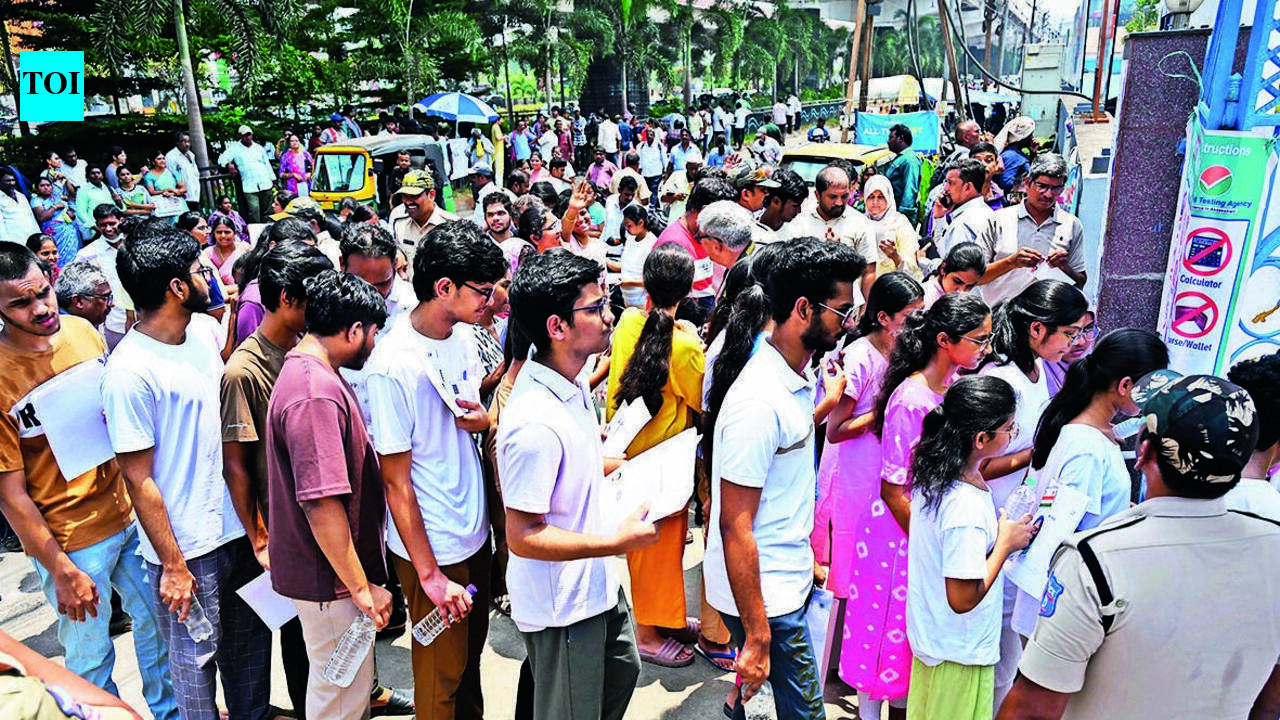
Bhilwara police detained a youth in Rajasthan after a midnight raid in Pratapnagar over allegations that he was selling fake Re-NEET papers on Telegram ahead of the June 21 exam. The case adds to a wider crackdown on exam fraud, alongside NTA scam warnings and a Delhi High Court ruling upholding a temporary Telegram restriction.
Bhilwara police detained a youth in Rajasthan after a midnight raid in the Pratapnagar area over allegations that he was selling fake Re-NEET papers on Telegram ahead of the June 21, 2026 re-examination.
The detention was reported on June 19, leaving just days before NEET UG 2026’s re-test and adding to concerns about exam-fraud attempts aimed at students preparing for the paper.
Raid and allegation
According to the reports, police moved in overnight in Pratapnagar and detained the suspect on suspicion of running or helping run a Telegram channel linked to fake question papers.
One report identified the accused as a 19-year-old Bhilwara student named Aakash and said investigators linked the activity to a fake-paper operation that used VPN access.
The reporting so far does not make clear whether police have formally registered charges or detained him only for questioning. It also remains unconfirmed whether investigators recovered devices, chat logs, or payment trails during the raid.
The allegation itself is significant because it sits at the center of a broader fear among candidates: that fake leaks and paid-paper scams can spread quickly in the hours before an exam and exploit urgency and anxiety.
Timing before the re-test
The suspected racket surfaced in the final stretch before the June 21 re-exam, when official messaging around the test has been especially sensitive.
The timing matters because the re-test is not just another routine exam cycle. Any claim that paper content is available early, even if false, can create confusion among candidates and amplify the impact of online fraud.
That is why the Bhilwara detention is being read not only as a local police action, but also as part of the wider enforcement response around NEET UG 2026.
NTA warning to candidates
In a separate June 19 report, the National Testing Agency launched a verified WhatsApp channel for NEET UG 2026 re-exam candidates and warned that it does not provide paper leaks, answer keys, or paid services.
The NTA also told candidates to rely on its official website for admit cards and to report suspicious activity or suspected cybercrime through the proper channels.
That advisory reinforces the agency’s message that students should use only official channels in the run-up to the exam. It also underlines how seriously authorities are treating claims of leaked papers or inside access.
The NTA move is part of the same pressure point exposed by the Bhilwara case: scammers appear to be targeting students with promises of privileged information at exactly the moment when demand for certainty is highest.
Telegram under scrutiny
The Bhilwara detention also comes against the backdrop of broader restrictions on Telegram in India tied to exam-fraud concerns.
Another June 19 report said the Delhi High Court upheld the Centre’s temporary Telegram restriction in the NEET re-exam context. The reporting said the order reflected official concern about messaging platforms being used to circulate fake papers and lure candidates.
That legal backdrop matters because it shows the issue is no longer limited to one local police raid. It now involves a wider effort by authorities and courts to limit channels that can be used to spread exam scams at scale.
Even so, the precise scope of the court’s relief was not fully clear in the reporting, and the broader regulatory picture around Telegram remains subject to further developments.
Open questions
Several key questions remain unanswered. It is still unclear whether Bhilwara police have filed an FIR, what specific charges may follow, and whether the detained youth is believed to have operated alone or as part of a larger network.
It is also not yet known what material, if any, police seized during the raid or whether investigators have tied the alleged Telegram activity to money transfers or other digital evidence.
Those details will matter for determining whether this was an isolated attempt to sell fake papers or part of a wider racket aimed at students preparing for the re-exam.
What comes next
The immediate focus is now on police follow-up, NTA advisories, and the June 21 exam window.
Authorities are likely to keep watching for fresh claims of leaked papers, suspicious Telegram activity, and other scams targeting candidates in the final days before the test.
For students and parents, the practical advice from officials is unchanged: rely on the NTA’s official website and verified channels, and treat any offer of leaked questions, answer keys, or paid exam material as suspicious.
Revision note
Expanded to a fuller revision with chronology, NTA response, Telegram context, open questions, and next steps.