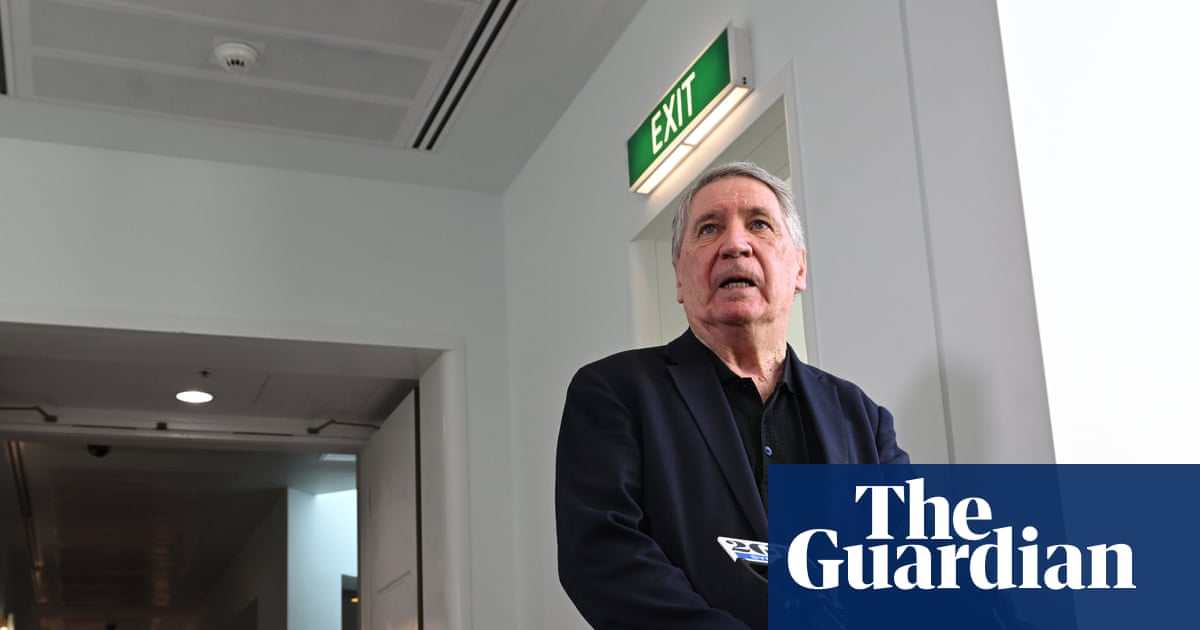
Virginia Bell’s Bondi royal commission is not using Dennis Richardson’s separate review as evidence, instead treating it as guidance as the inquiry examines police and intelligence coordination failures.
The Bondi royal commission is not treating Dennis Richardson’s separate federal review as evidence, instead using it as background guidance as the inquiry broadens its focus on police and intelligence coordination failures.
The decision gives Richardson’s work a more limited role inside Virginia Bell’s Royal Commission on Antisemitism and Social Cohesion, which has been examining how the Australian Federal Police, NSW Police and intelligence agencies handled the fallout from the Bondi attack.
Richardson was originally appointed by Anthony Albanese to lead a narrower federal review into law-enforcement and intelligence agency failures after the December 2025 attack. That review was later folded into Bell’s broader commission.
Richardson review given narrower role
Current reporting says Bell’s commission is not relying on Richardson’s separate inquiry as formal evidence. Instead, it is being treated as guidance while the royal commission continues to reinterview former police and intelligence figures and test the agencies’ handling of the crisis.
That is a material procedural shift. The original Richardson review was meant to give the government a focused assessment of security and policing failures, but the royal commission is now building its own record as it expands into the coordination breakdowns between agencies.
Richardson resigned from the royal commission in March 2026. At the time, he argued publicly that public-safety reforms should not be delayed until the commission’s final report, and said some recommendations needed to move sooner.
How the inquiry developed
The broader royal commission was established on January 8, 2026, with Virginia Bell appointed commissioner. It followed the December 2025 Bondi attack and a separate push by the government to understand what had gone wrong in the response across law enforcement and intelligence.
By April 30, the commission had already released an interim report containing 14 recommendations. Among them was a call for a review of Joint Counter-Terrorism Team operations, signalling that the inquiry had already identified inter-agency coordination as a central issue.
That interim report also pointed to policing gaps and the need for stronger operational arrangements around major events and Jewish festivals. The final report is due in December 2026, but the commission’s work has continued in the meantime through further hearings and evidence gathering.
Why the evidentiary call matters
Whether Richardson’s review is treated as evidence or only as guidance matters because it affects how much weight the original closed review carries in the final findings.
If the commission keeps Richardson’s work outside the evidence record, its conclusions will lean more heavily on fresh testimony, agency documents and the commission’s own hearings. If the material were used as evidence, it could have more direct influence on findings about accountability and reform.
The issue also goes to the broader question at the heart of the inquiry: how failures in coordination between agencies shaped the response to the Bondi attack and the aftermath.
Police and intelligence focus
The commission has been examining tensions between the AFP and NSW Police, along with the way intelligence and law-enforcement agencies shared information before and after the attack.
Former AFP commissioner Reece Kershaw and former NSW police commissioner Karen Webb are among the key figures linked to those coordination questions. Reporting on the inquiry has also pointed to the Dural caravan hoax as an example of how trust and information-sharing problems emerged.
Bell’s commission is also looking at how counter-terrorism arrangements should work in practice, not just in theory. That includes the role of joint teams, the exchange of information and the point at which responsibility shifts between agencies.
What happens next
The commission has not yet publicly explained why Richardson’s separate review is being treated as guidance rather than evidence, and it remains unclear whether that position will change before the final report.
Further hearings are expected to continue ahead of the December deadline. The commission is still assessing the extent of the inter-agency failures and whether its final recommendations should expand on the interim call for a review of Joint Counter-Terrorism Team operations.
For now, Richardson’s work remains part of the background to the inquiry rather than a formal part of the evidence record, even as Bell’s commission pushes further into the policing and intelligence breakdowns exposed by the Bondi attack.
Revision note
Expanded into a fuller public-news rewrite with chronology, inquiry context, stakeholders and next steps.