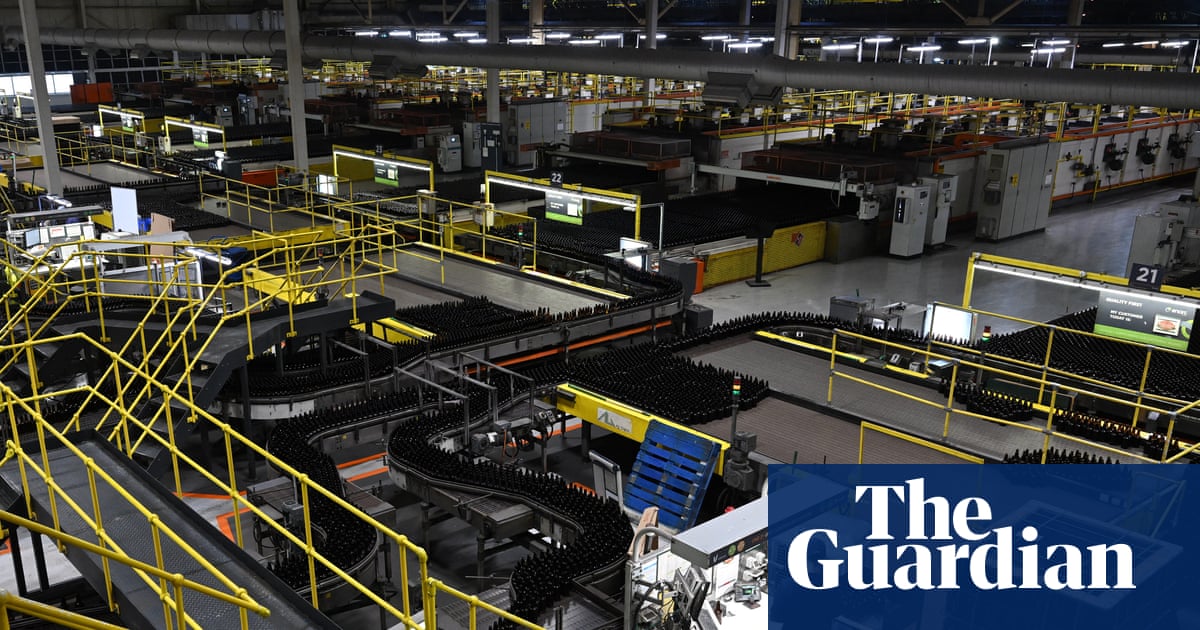
Make UK says high industrial energy costs are pushing UK manufacturers to delay investment, cut jobs, move production overseas and face insolvency risk. The government says it is cutting electricity costs, but its wider support scheme does not begin until April 2027.
Survey warning
Britain risks deindustrialisation unless manufacturers get relief from high energy prices, according to a new Make UK survey that points to offshoring, investment delays, job cuts and insolvency risk across the sector.
The trade body said a quarter of manufacturing companies have either moved production overseas or plan to do so. It also found that one in 10 believe they are likely or very likely to be insolvent within the next 12 months.
Make UK chief executive Stephen Phipson said the warning should be read as a sign that the UK is losing industrial ground. The group said high electricity and gas costs are now feeding directly into decisions about where firms invest, hire and produce.
The survey found that 38% of companies had delayed investment because margins were being squeezed, while 21% had reduced headcount. Make UK said those figures show energy costs are no longer just a pressure on profits, but a factor reshaping manufacturing strategy.
Energy costs and timing
The latest findings add to a problem that manufacturers have been raising for months. Make UK says industrial energy bills in Britain remain about twice the continental European average and four times the level in the US, leaving UK firms at a cost disadvantage against overseas competitors.
The survey also found that 46% of industrial companies had seen another increase in energy bills since the Middle East conflict began. That matters because many manufacturers are already operating on tight margins, so repeated price rises can quickly affect hiring, capital spending and long-term planning.
The Times reported on June 14 that a quarter of UK manufacturers have moved some production overseas, or are considering doing so, because energy costs are higher than in rival markets. The Guardian then reported the survey on June 15, reinforcing the same core message: the cost gap is no longer abstract, but is already changing business decisions.
Policy gap
The government said it is tackling industrial energy costs through its modern industrial strategy, cutting electricity costs across Great Britain, and new support for chemicals and ceramics. But the broader British industrial competitiveness scheme is not due to take effect until April 2027.
That timetable leaves a gap between the current pressure on manufacturers and the point at which the main policy package is scheduled to arrive. For firms already cutting staff or delaying investment, the delay is central to the complaint that support is not reaching industry quickly enough.
Make UK is pressing for industrial energy taxes and levies to be shifted onto general taxation, citing France and Germany as examples. The argument is that levies now embedded in business bills should be funded more broadly so that power costs for industry come down faster.
Who is exposed
The stakes are significant because manufacturing still employs around 2.5 million people in the UK. If high energy costs continue to push production overseas, the risk is not only lower investment but also permanent losses in industrial capacity, plant closures and deeper job cuts.
The survey suggests the pressure is already being felt in several ways at once. Some firms are delaying expansion, others are cutting headcount, and a growing share are either already moving production abroad or considering it.
That combination raises the risk of a self-reinforcing cycle: weaker investment makes British plants less competitive, which can lead to more offshoring, which in turn can reduce domestic output and future investment.
What happens next
The immediate question is whether ministers will move faster on support, widen eligibility or leave the current timetable unchanged until April 2027. The government has said it is acting, but the core issue is whether manufacturers need relief now rather than in the next spending cycle.
Further responses from affected manufacturers, the CBI and Energy UK are likely to keep the issue alive, particularly if more firms report higher bills or new relocation plans. Unions and industry groups are also expected to continue pressing for a change in how industrial electricity pricing is structured.
For now, Make UK’s survey gives fresh evidence that high energy prices remain one of the biggest constraints on UK manufacturing competitiveness. The warning is no longer just about weaker profits. It is about offshoring, insolvency, job losses and whether Britain can retain a viable industrial base.
Revision note
Initial automated publication.