California housing officials have ruled Brisbane out of compliance with state housing law after missed Baylands rezoning deadlines, exposing the city to Builder’s Remedy pressure and possible state funding consequences.
California housing officials have ruled Brisbane out of compliance with state housing law after the city missed deadlines tied to its long-delayed Baylands Specific Plan, escalating a fight over one of the Bay Area’s most complicated redevelopment sites.
The state action leaves Brisbane exposed to California’s Builder’s Remedy framework, which can limit a city’s ability to reject qualifying housing projects when it is out of compliance. It also raises the possibility that the city could lose access to some state funds while it remains off track with housing-element requirements.
The ruling became public on or before July 1, 2026, according to reporting from the San Francisco Chronicle. The newspaper said Housing Accountability Unit chief Melinda Coy communicated the state’s determination in a letter to city officials.
The missed deadline
The dispute centers on Brisbane’s failure to meet a May 18 rezoning deadline tied to the Baylands plan. That deadline was part of the city’s effort to keep pace with its required housing obligations under California law.
The Baylands Specific Plan is not a minor local zoning dispute. It is the core of Brisbane’s housing strategy and the central reason state regulators have been pressing for action.
Why Baylands matters
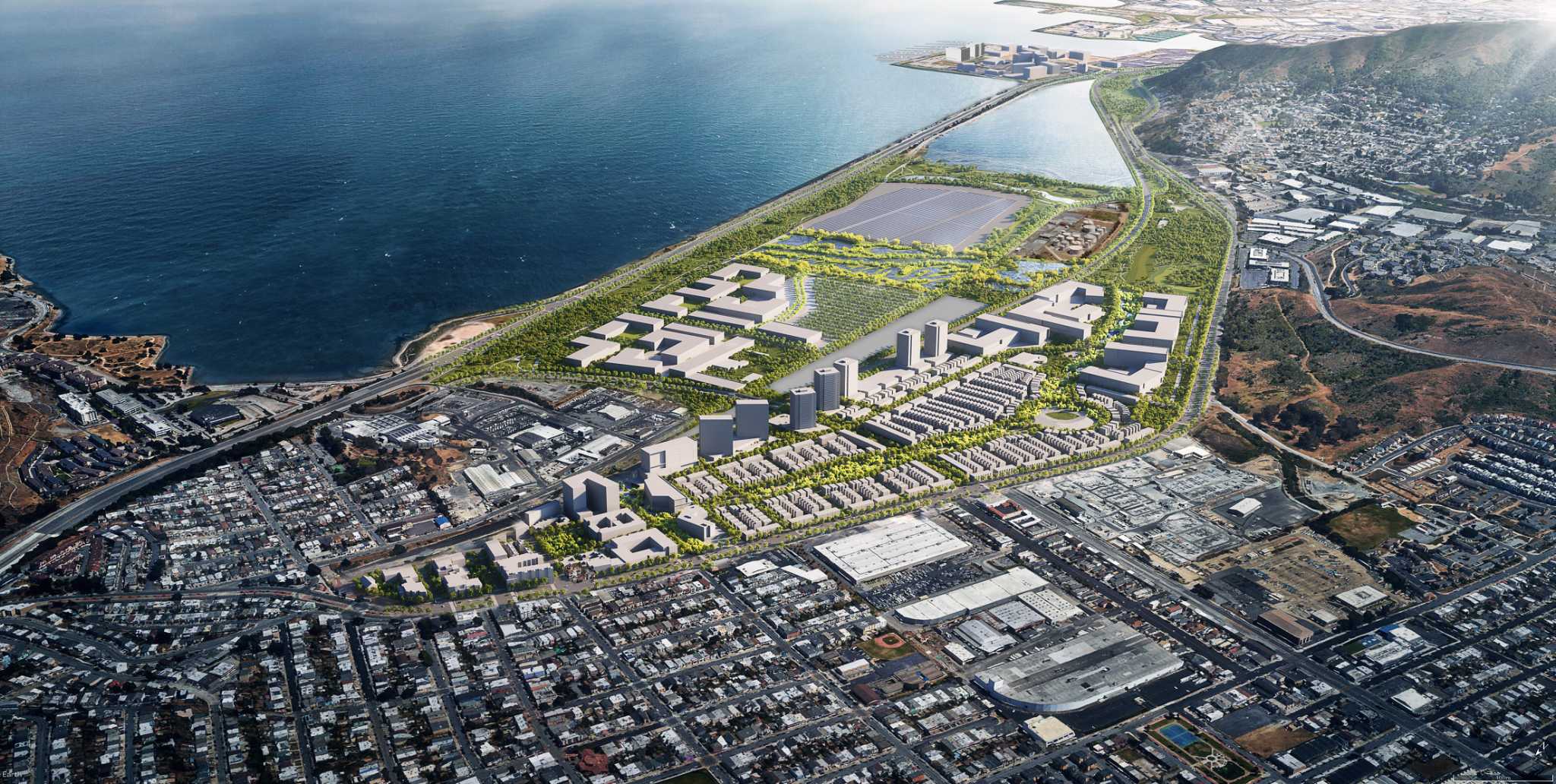
The Baylands site covers about 660 acres on the Brisbane and San Francisco border. It is tied to 81% of the 1,588 housing units Brisbane must plan for under state housing-element law.
The site also accounts for about half of Brisbane’s low-income housing target. That makes the rezoning dispute central not just to land-use planning, but to the city’s ability to meet state housing obligations at all.
The project has been described as a potential mixed-use redevelopment that could eventually include nearly 4,000 homes, commercial space, solar panels and parks. Its scale helps explain why it has become such a difficult and politically sensitive entitlement process.
Why the city says the site is complex
Brisbane has said it has invested significant time and resources in the Baylands plan and environmental review, but could not finish within the statutory timeframe.
The city has also said the project is unusually complex because it involves landfill closure, site remediation and coordination with the California High-Speed Rail Authority. Those issues make the Baylands far more complicated than a standard rezoning case.
What the state action changes
The immediate consequence is stronger state leverage over a city that has already missed a key deadline. Under Builder’s Remedy, developers can gain more room to pursue qualifying housing projects in jurisdictions that are not in compliance.
That does not mean every project becomes automatic. It does mean Brisbane’s ability to reject or reshape proposals tied to the site may be weakened while the compliance issue remains unresolved.
The ruling also carries financial stakes. State housing compliance can affect access to certain state funds, so the city may face pressure on more than just zoning authority if the problem lingers.
Who pushed for enforcement
The Chronicle reported that the Bay Area Council and the Housing Action Coalition had urged state intervention as the deadline slipped. Their pressure underscores how closely housing advocates are watching the Baylands case as a test of whether California will enforce its housing laws against a small city with a difficult site.
The state’s move also shows that California regulators are willing to act on missed housing deadlines even when a city argues that the underlying project is unusually complicated.
What happens next
It remains unclear whether the California Department of Housing and Community Development issued a public letter or only a letter to city officials.
It is also unclear whether Brisbane will challenge the ruling, seek a cure period or move quickly to adopt the required rezoning plan. Any of those steps could shape how long the city remains out of compliance.
Another open question is whether any developer will file a Builder’s Remedy application tied to the Baylands site. If that happens, the city could lose even more practical control over the project’s future.
For now, the ruling leaves Brisbane in a weaker position on a site that carries most of its housing burden. The next city response, and any follow-up state filing, will determine whether this becomes a short enforcement step or a longer fight over the Baylands’ future.
Revision note
Expanded with full verified chronology, site context, enforcement stakes, stakeholder reaction, and next-step uncertainty.