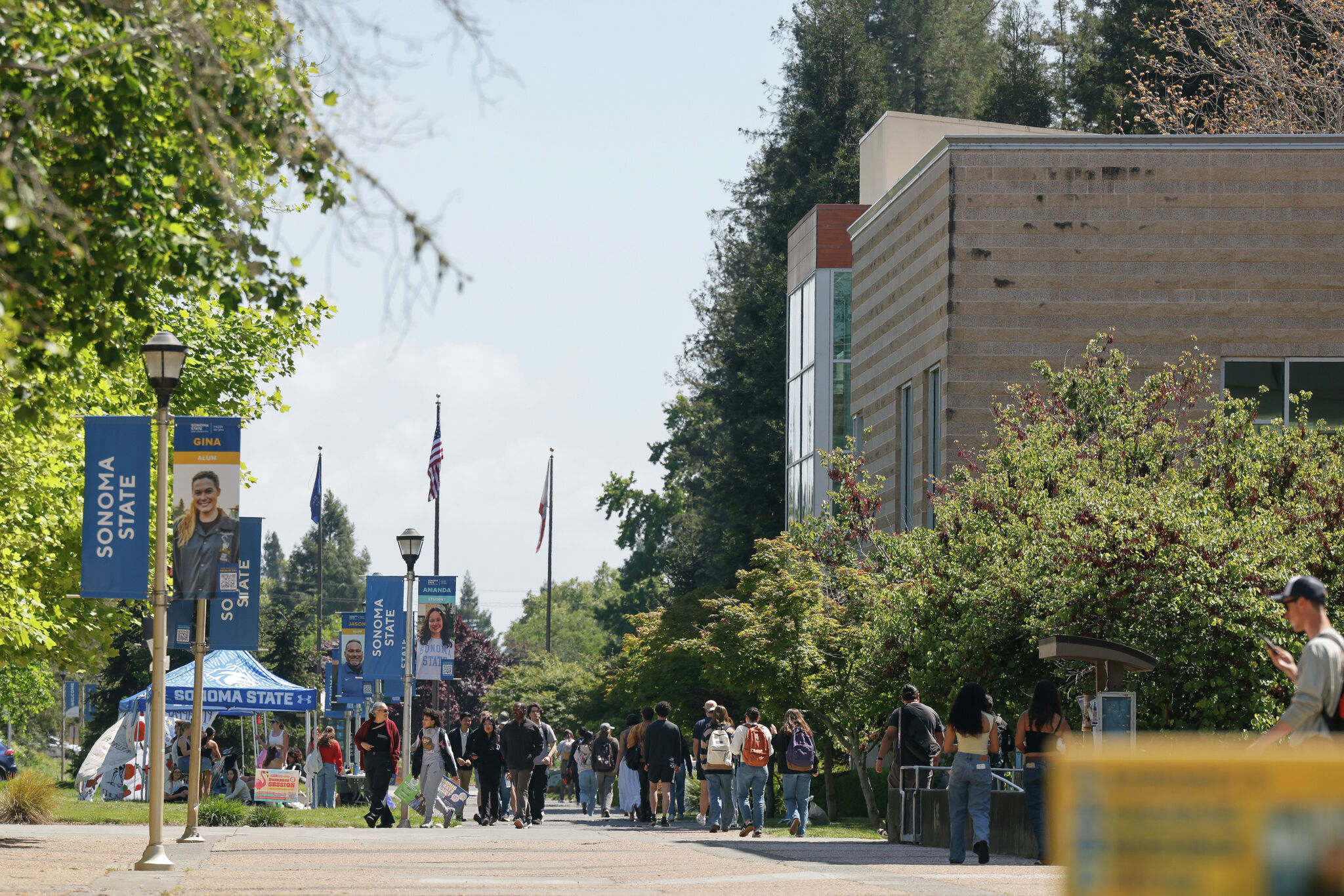
The California Supreme Court has agreed to review a challenge by seven Sonoma State student-athletes to the university’s 2025 elimination of athletics and academic programs. The justices will first decide whether the case can proceed in court.
The California Supreme Court has agreed to review a challenge by seven Sonoma State student-athletes to the university’s 2025 decision to eliminate its intercollegiate athletics program and cut academic offerings.
The case, Lencioni v. Cutrer (S296461), puts the dispute back before the state’s highest court after lower courts had treated the matter as finished. The justices will not yet decide whether Sonoma State’s cuts were lawful. Their immediate question is narrower: whether the students’ challenge can be heard at all.
What the court agreed to review
The Supreme Court’s June 18 grant of review reopens a fight over process, not substance. The plaintiffs are asking the court to say the dispute is justiciable, meaning a court may consider it on the merits.
That distinction matters. If the Supreme Court says the case can proceed, the litigation could move on to the underlying arguments over the university’s authority and the rights of students affected by the cuts. If it does not, the lower-court rulings would stand.
Reporting describes the plaintiffs as seven student-athletes whose teams were eliminated when Sonoma State shut down its athletics program. The lawsuit has become a test of how far a California State University campus can go when making sweeping budget-driven changes.
How Sonoma State got here
Sonoma State announced the cuts in January 2025 amid a stated $24 million budget deficit. The restructuring was broad. It included eliminating 13 intercollegiate sports, cutting 22 academic programs, and laying off faculty and staff.
The move drew immediate attention because it went well beyond athletics. It affected academic departments, students in discontinued majors, and campus employees at the same time the university said it was responding to a financial crisis.
A lawsuit described in reporting says the athletics shutdown affected 243 team members. Most of those athletes have since transferred, according to reporting.
Lower-court history
The case has already moved through multiple courts. A Sonoma County Superior Court judge ruled in May 2025 that the university could make the cuts. A state appeals court later said the decision could not be appealed, according to reporting.
That left the plaintiffs with a procedural hurdle before they could reach any substantive claims. The California Supreme Court’s decision to grant review now gives them another chance to argue that the courts should hear the case.
The high court is not saying the students will win. It is saying only that it will examine whether the legal doors should have been closed so quickly.
The students' arguments
The student-athletes argue that Sonoma State violated California State University consultation rules when it moved ahead with the restructuring. They say the university was required to consult students and obtain Academic Senate approval before making the cuts.
They also argue that students whose programs were eliminated should have been allowed to finish their degrees rather than being forced to switch majors.
Those claims extend the case beyond sports. They raise broader questions about whether students have enforceable rights when a public university shuts down programs they were already pursuing.
Funding and fallout
Later reporting said Sonoma State received $90 million in new funds, including $8 million designated for athletics, after the cuts were announced. Even so, the university said athletics would not be restored for the following academic year.
That development sharpened the disagreement over whether the cuts were truly unavoidable. It also added to the stakes for small-college athletics programs watching how a major restructuring plays out inside a public university system.
The university’s January 2025 decisions also included broader academic retrenchment. Reporting said Sonoma State eliminated six academic departments and nearly two dozen degree programs, along with the athletics shutdown and staffing reductions.
Who is involved
The case involves Sonoma State University and the California State University system, along with university officials identified in reporting as Emily Cutrer, Michael Spagna and David Seidel.
On the other side are the seven student-athletes who brought the challenge. The state’s trial and appellate courts are also central to the case because their rulings set up the Supreme Court review.
The university is part of the CSU system, so the dispute has implications beyond one campus. A ruling on whether the students’ claims can be heard could shape how future restructuring fights are handled across the system.
Why this matters
The case could influence how much procedural protection students have when a public university makes abrupt cuts to programs, teams and degree paths.
It also raises a recurring question in higher education: when a school eliminates a major or a sports program, what obligations does it have to students already enrolled in those tracks?
For athletics, the dispute tests whether a university can terminate an entire program during a financial reset and still satisfy the consultation rules that govern CSU campuses.
For students, the stakes are more immediate. The case asks whether they can insist on the chance to finish the education they started, even after the institution changes course.
What happens next
The California Supreme Court will now receive briefing on whether the case is justiciable. Further filings will determine whether the court reaches the merits of Sonoma State’s cuts at all.
For now, the justices have opened the door to another round of litigation. They have not ruled on the legality of the athletics shutdown, the academic program eliminations or the campus layoffs themselves.
That uncertainty is what makes the review significant. It keeps alive a challenge that lower courts had treated as closed, and it leaves open the possibility of a broader ruling on university governance, student rights and campus restructuring in California.
The immediate question is procedural. The broader consequences could extend well beyond Sonoma State.
Revision note
Initial automated publication.