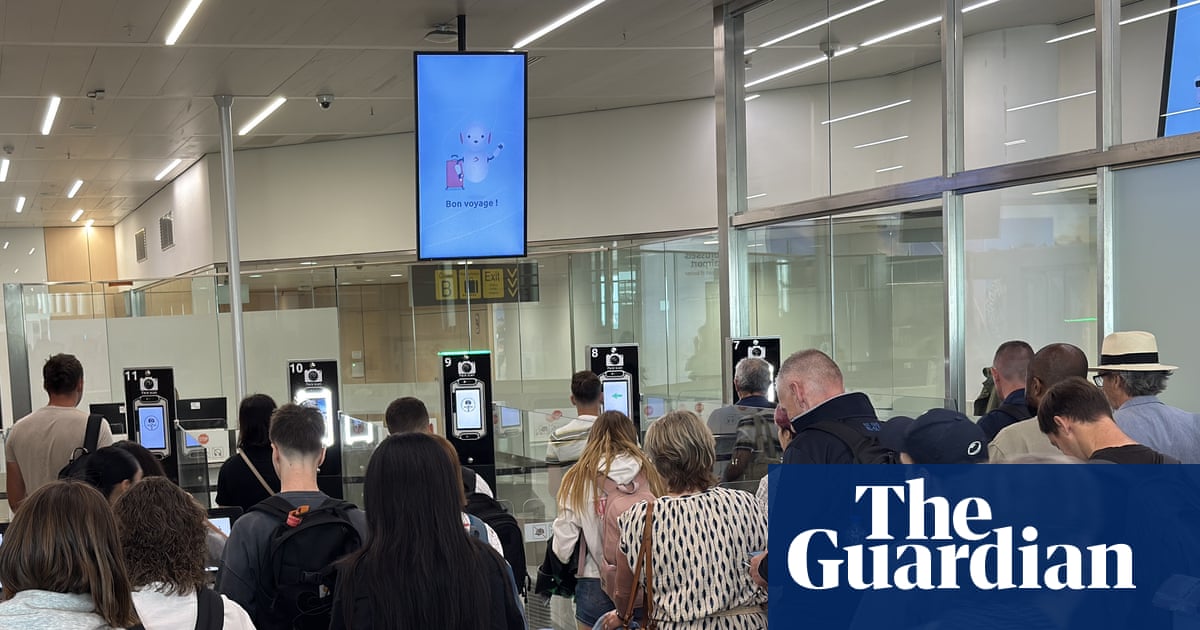
Airlines and airports are urging the European Commission to allow temporary suspensions of the EU’s Entry/Exit System during the summer peak, saying biometric border checks are causing long queues, delayed flights and half-empty departures. The Commission says the system is operational and that delays are usually tied to staffing and infrastructure limits.
Airlines and airports are pressing Brussels to suspend the European Union’s new Entry/Exit System during the busiest weeks of the summer holiday season, arguing that biometric border checks are already causing severe delays and disrupted flights.
The request comes as Europe moves into a peak travel period that industry groups say will add about 40 million passengers in July and August compared with the previous two months. They warn that the new system, which requires non-EU travellers to register fingerprints and a photograph on first entry, is creating queues of up to five hours at some border points.
The call was made in a letter to European Commission president Ursula von der Leyen from ACI Europe, Airlines for Europe and the International Air Transport Association. The groups say the pressure is no longer theoretical: some flights have left with empty seats because passengers were still stuck in border queues, while others have been delayed while waiting for travellers to clear the checks.
Industry warning
The industry argument is that the Entry/Exit System may be manageable in normal conditions but becomes a bottleneck when airports are already at their seasonal limit. Airports had previously warned that the first biometric enrolment is the slowest part of the process, particularly when passenger volumes are high.
The groups want member states to be able to use emergency flexibility to pause or bypass the system at busy points during the summer peak. Their case is that the combination of new border technology and the heaviest travel demand of the year risks turning routine processing delays into missed departures, longer turnarounds and wider disruption across the network.
Reporting on the letter also reflects a broader concern among airports that the impact is not confined to one country or one terminal. Europe’s summer travel market is tightly interconnected, so delays at a few chokepoints can quickly spill into missed connections, aircraft rotation problems and knock-on disruption elsewhere.
How the system works
The Entry/Exit System is the EU’s new biometric border regime for non-EU nationals. It replaces or reduces passport stamping by recording entries and exits electronically and requiring first-time visitors to provide fingerprints and a photograph.
The system was rolled out gradually from October 2025 and became fully operational across Schengen countries on 10 April 2026. That timeline matters because the current dispute comes only months after the full launch, before the busiest part of the summer has even run its course.
The reporting says airports had already been warning that the first enrolment at the border is the slowest step. That is the point most likely to matter when queues build, because even small delays can affect departure waves, boarding times and gate management when aircraft are running close to capacity.
Commission response
The European Commission has said the Entry/Exit System is working and that long waits are usually caused by staffing shortages, infrastructure constraints and concentrated flight schedules rather than by the system itself.
A Commission spokesperson has also said the rules already provide flexibility to ensure border fluidity. That means the core dispute is not whether the system exists, but how aggressively member states should use the room already available when traffic spikes.
The Commission’s position is important because it frames the issue as an operations problem as much as a policy one. Airports and airlines are effectively asking Brussels to sanction broader, faster use of the flexibility it says already exists, while the Commission is pointing back to local staffing and capacity as the main constraints.
Existing flexibility
There are already signs, according to reporting and official comments cited by AP, that some authorities have used temporary operational workarounds. Greece has allowed biometric checks to be suspended during busy periods, and French police temporarily suspended extra checks at the port of Dover in May.
Those examples do not settle the broader policy debate, but they show that some level of temporary adjustment has already been used when border systems are under pressure. The industry’s argument is that such flexibility should not be ad hoc or exceptional when the summer peak is predictable and the consequences of delay are immediate.
That matters for airports and airlines because they are planning around a known surge. If the system slows processing during the highest-demand weeks, they say the consequences will not just be longer queues; they will be operational costs, missed slots and reduced passenger confidence.
What happens next
The immediate question is whether the European Commission will respond directly to the latest industry letter and whether any member states will announce broader suspensions at busy airports or ports before peak travel weeks deepen.
Airports and airlines will be watching for further evidence of long queues, missed flights and delays through July and August. They are also looking for clarity on whether temporary flexibility will remain available after September, once the peak season begins to ease.
For now, the dispute captures a familiar trade-off in European travel: tighter border screening on one side, and the risk of congestion, delays and reputational damage on the other. With summer demand rising and the system still new, the pressure is on Brussels and national authorities to show whether the new rules can work without disrupting the peak holiday period.
Revision note
Initial automated publication.