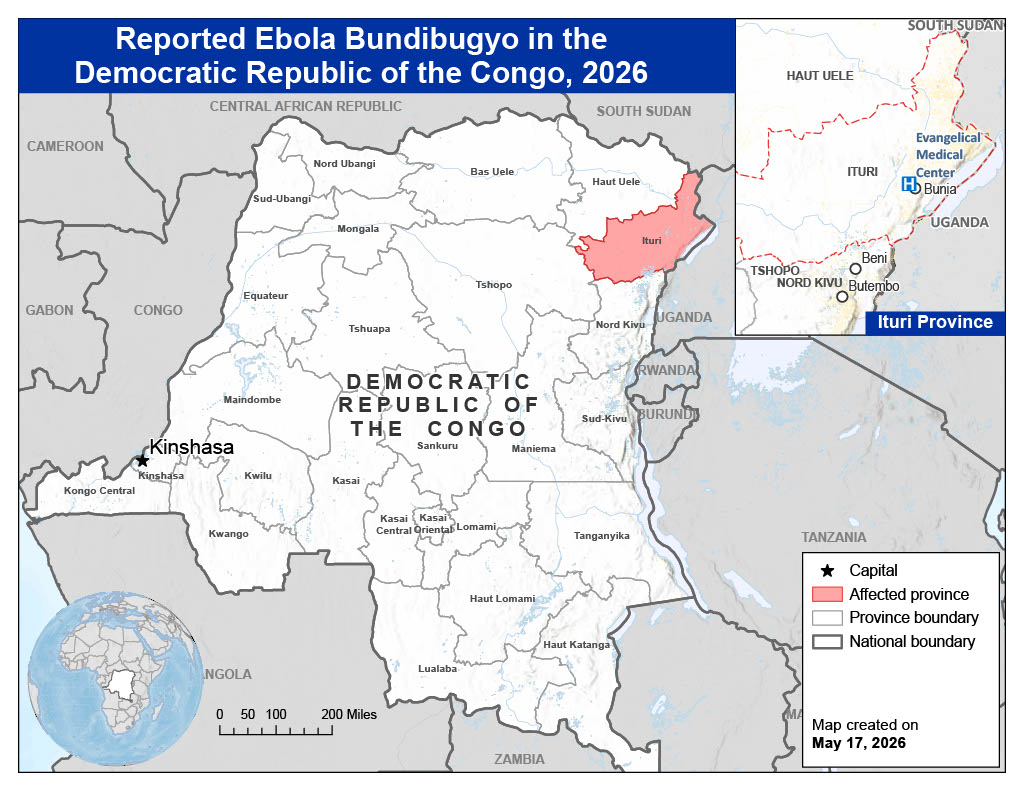
CDC said it is adding enhanced screening, traveler monitoring and entry restrictions after Ebola Bundibugyo outbreaks in the Democratic Republic of Congo and Uganda triggered a wider international response.
CDC said Monday it has begun enhanced travel screening, traveler monitoring and entry restrictions for some non-U.S. passport holders after Ebola Bundibugyo outbreaks in eastern Democratic Republic of Congo and linked cases in Uganda prompted a wider international response.
The agency said it is monitoring confirmed cases in the DRC and Uganda and is coordinating with airlines and port-of-entry officials as part of the response.
The move follows the World Health Organization’s decision on May 17 to declare the outbreak a public health emergency of international concern. WHO said the outbreak is caused by Bundibugyo virus.
According to CDC, travelers arriving from the DRC, Uganda and South Sudan will face enhanced screening and monitoring. Non-U.S. passport holders who have been in Uganda, the DRC or South Sudan within the previous 21 days are subject to entry restrictions.
CDC first said on May 17 that it was mobilizing international response activities after Ebola was confirmed in the DRC and cases were reported in Uganda. Reuters and The Associated Press both reported the U.S. response as a new travel restriction and screening measure tied to the same outbreak.
The development adds a border-control element to an already widening public-health response. Officials have not said whether the restrictions will be broadened or narrowed as surveillance continues, and more case and death counts are expected in later updates.
Revision note
Initial automated publication.