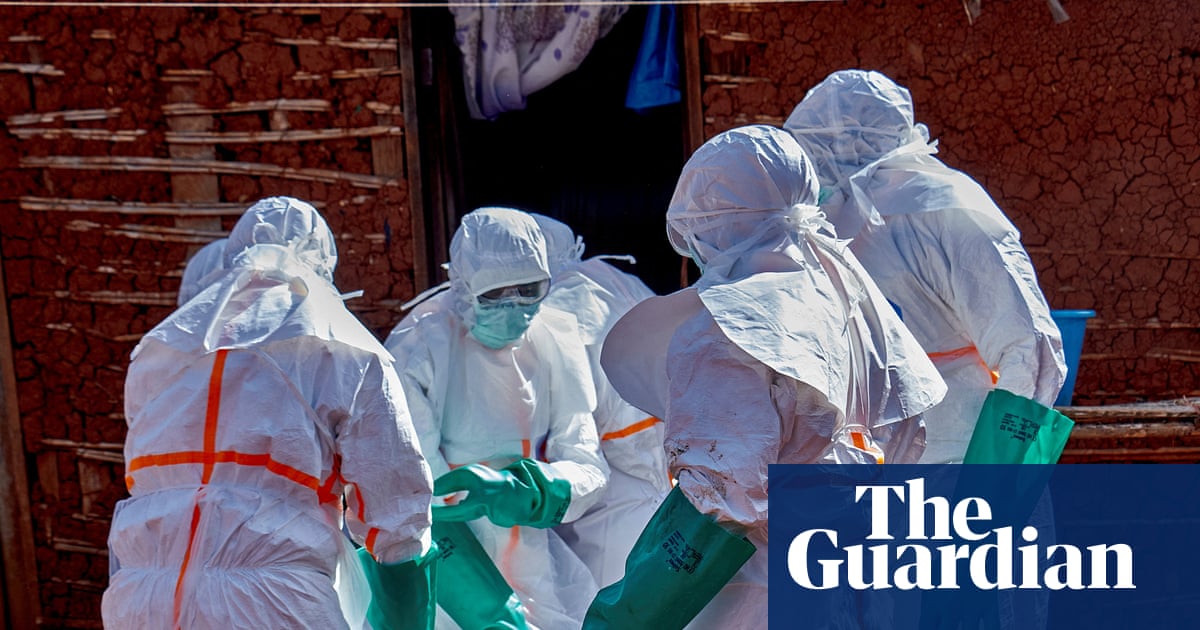
The CDC said it will tap $107 million in emergency funding for Ebola response in the Democratic Republic of the Congo and Uganda as the outbreak worsens. The move comes amid rapidly rising case counts, severe operational constraints and renewed concerns about the pace of containment.
The U.S. Centers for Disease Control and Prevention will tap $107 million in emergency funding to support Ebola response efforts in the Democratic Republic of the Congo and Uganda, according to reporting published June 18.
The money comes as the outbreak continues to worsen across eastern Congo and across the border in Uganda, where health authorities are struggling with a fast-moving epidemic, weak contact tracing, insecurity and population displacement.
CDC response
CDC Ebola incident manager Satish K. Pillai said the agency's work is centered on three priorities: controlling the outbreak in the DRC, controlling the outbreak in Uganda and maintaining domestic readiness in case imported cases appear in the United States.
The Guardian reported that the CDC has 23 field staff supporting disease investigations and 125 staff members across the two countries. The new funding is meant to sustain that response and strengthen outbreak control as case counts continue to move higher.
The outbreak is driven by the Bundibugyo strain of Ebola, which reporting says has no approved vaccine or treatment. That makes rapid detection, isolation, safe care and contact tracing especially important.
Outbreak keeps growing
The latest figures are changing quickly. AP reported on June 18 that the outbreak had risen to 894 confirmed cases and more than 200 deaths, citing Africa CDC figures.
That followed a Guardian report using CDC briefing material that put the total at 837 confirmed cases in the DRC and 19 in Uganda as of June 15, with 198 deaths across both countries. The differing totals reflect how fast the situation is evolving.
AP said the outbreak in the DRC is centered in Ituri province and has spread into North and South Kivu, with cases also crossing into Uganda. The response, the report said, is being hampered by insecurity, displacement and weak contact tracing.
Local strain
The outbreak is already disrupting daily life in affected communities. Guardian reporting on June 17 showed Ebola taking a toll on Bunia's public-facing workers, with supply shortages and limited access to protective equipment adding to the pressure on local residents and health workers.
Le Monde reported a day earlier that the outbreak had spiraled in Bunia, describing overwhelmed facilities, delays in care and community distrust as major obstacles to containment. Those conditions make it harder to reach patients quickly and stop transmission chains.
The wider public-health backdrop is also serious. WHO declared the outbreak a public health emergency of international concern in May, after the DRC and Uganda publicly announced outbreaks on May 15.
Funding gap and next steps
Research around the outbreak suggests roughly $910 million has been pledged internationally, but only a fraction has been released so far. That leaves responders dependent on new disbursements to keep field operations moving.
The immediate question is whether the CDC's new funding will translate into faster surveillance, better logistics, stronger contact tracing and more field capacity before the outbreak spreads further.
Also worth watching is whether the CDC or other U.S. agencies publish a formal notice or spending breakdown for the $107 million, and whether Africa CDC, WHO or national health ministries issue a new case-count update that reconciles the different figures now in circulation.
Travel screening or border measures could still change if the outbreak widens, even though reporting describes the broader global risk as low. For now, the CDC's move marks a significant escalation in support for an outbreak that remains active, disruptive and difficult to contain.
Revision note
Initial automated publication with expanded outbreak context and funding details.