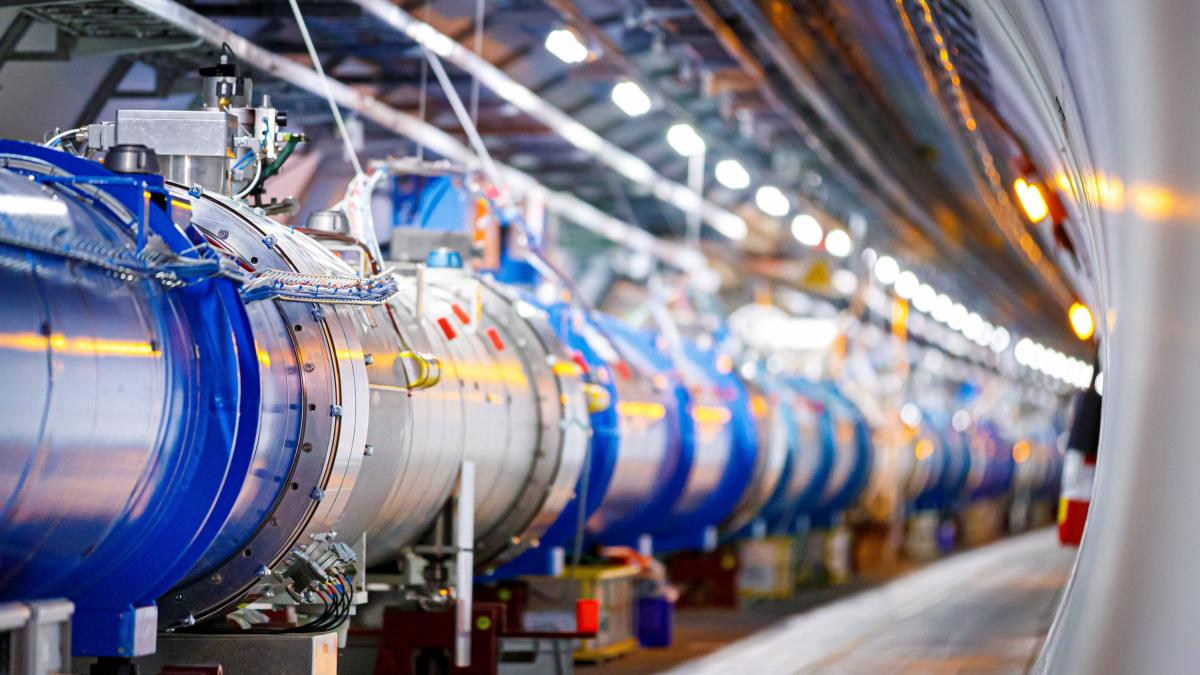
CERN has started a planned four-year shutdown of the Large Hadron Collider to install High-Luminosity LHC upgrades, with physics expected to resume in 2030.
CERN has begun a planned four-year shutdown of the Large Hadron Collider, moving the 27-kilometer machine into its next major modernization phase.
The pause, known as Long Shutdown 3, started on June 29, 2026, and is intended to prepare the collider for the High-Luminosity Large Hadron Collider program. Reporting and CERN-linked schedule references point to a return to physics in 2030 after the upgrade work is completed and commissioned.
The shutdown is a planned operational milestone, not an emergency outage. It marks the start of a long installation window in which key hardware will be replaced and upgraded while the accelerator is offline.
What the shutdown means
The LHC is being taken out of collision mode so engineers can install hardware that cannot be added during routine operation. That makes this phase central to CERN’s long-term physics plan: the machine has to pause now in order to come back with higher performance later.
The upgrade program is designed to increase the number of collisions the LHC can produce. More collisions, or higher luminosity, should give physicists more data and improve the chance of studying rare processes.
CERN materials and reporting on the shutdown say the work includes stronger magnets and detector upgrades. Those changes are meant to focus particle beams more effectively and improve the experiments’ ability to record what happens when the beams collide.
The broader goal is to expand the collider’s scientific output in the years ahead, rather than simply restore the machine to its previous operating level.
Why the timing matters
The LHC has been operating since 2008 and became central to particle physics during the period that included the 2012 Higgs-boson discovery. This shutdown is the next major step in the machine’s long operating cycle.
Long Shutdown 3 opens the installation phase for the HL-LHC era. CERN teams and experiment collaborations will spend the coming years replacing hardware, testing systems, and preparing the machine for the next round of beam commissioning.
The expected 2030 restart is important because it sets the schedule for the rest of CERN’s physics program. Any delay or scope change during the installation window would affect the timeline for the next run.
The 2030 target also makes the current shutdown a long planning horizon for the laboratory and its experiments. Researchers who depend on the collider’s output are now working within a schedule shaped by the upgrade, not by day-to-day operations.
The HL-LHC upgrade
The High-Luminosity LHC program has been in preparation for years and is intended to extend the collider’s reach into the 2030s. The project is designed to produce more collision data and improve sensitivity to subtle or rare phenomena.
That matters for both precision measurements and searches for new physics. With more usable data, researchers can refine existing results and probe effects that are difficult to see in smaller samples.
The upgrade is also a practical engineering effort. Stronger magnets and detector improvements are part of the work needed to support the higher collision rates the project is aiming for.
The installation window is therefore both scientific and technical: it is about increasing what the machine can measure, but also about replacing the hardware that limits how far the collider can be pushed.
What CERN teams will be doing
The next four years are expected to be dominated by installation, integration and commissioning. That includes fitting new components, aligning systems, and making sure the upgraded machine can operate safely and reliably when beams return.
Because the LHC is a tightly integrated accelerator complex, each part of the modernization affects others. Magnet changes, detector updates and beam-operation systems have to work together before the collider can be restarted.
The long shutdown also gives CERN and its experiments a controlled period to validate the upgraded setup. That matters because the first physics runs after a major shutdown usually depend on careful checks before full operation resumes.
The research packet does not identify a single first component or sequence for the upgrade work, but it does confirm that the installation phase has now begun and that the hardware changes are part of the official HL-LHC plan.
The bigger physics stake
For particle physicists, the point of the upgrade is more usable data. A higher-luminosity collider can produce more interactions, which improves the odds of observing rare events and sharpening measurements that are already known.
That gives the HL-LHC an important role in CERN’s long-term program. The next run is not just a return to previous performance; it is meant to expand the collider’s scientific reach.
The machine itself remains one of CERN’s most important instruments. Built beneath the Swiss-French border, the LHC has already defined the laboratory’s modern era, and the current shutdown is meant to protect that role for the decade ahead.
What comes next
The immediate focus is on the shutdown phase itself: installation, integration, and commissioning work during the four-year window.
Observers will be watching CERN for updates on hardware milestones, schedule changes, or any adjustment to the planned restart sequence. The next major checkpoint remains the expected return to beam operations in 2030.
For now, the collider is offline, the modernization phase has started, and CERN has entered the period that will shape the machine’s next decade of physics.
Revision note
Initial automated publication.