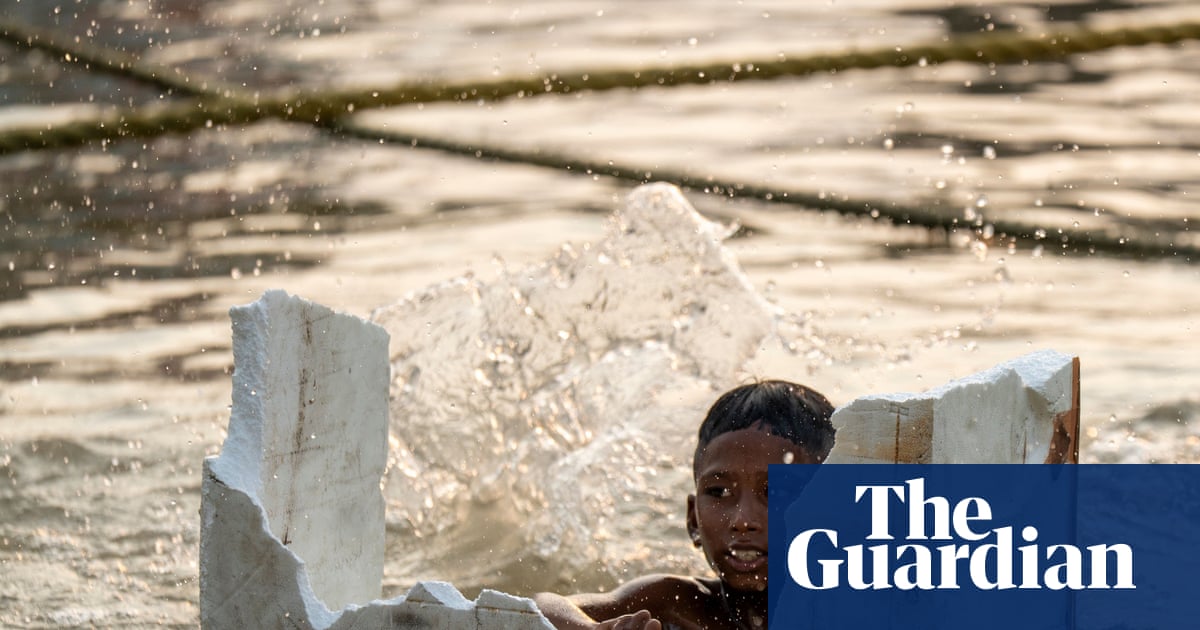
UNICEF’s Children’s Climate Risk Report says more than one billion children are exposed to at least three overlapping climate hazards, while almost every child faces at least one.
UNICEF has released its 2026 Children’s Climate Risk Report, warning that climate hazards are converging on children at what it describes as an unprecedented scale.
The report says half of the world’s children, more than one billion, are exposed to at least three overlapping climate hazards. UNICEF also says almost every child globally is exposed to at least one climate hazard.
The agency’s analysis looks at eight hazards: coastal floods, drought, extreme heat, fires, heatwaves, river floods, sand and dust storms and tropical storms.
UNICEF says the findings show that climate risk is no longer a single-event threat for many children. In its framing, the same communities are increasingly exposed to multiple hazards at once, amplifying pressure on health, schooling, mobility and basic services.
A global risk map
The report is presented as a broad mapping exercise rather than a narrow warning about one disaster or one region. UNICEF says 123,000 children experience more than six climate hazards in their lifetimes.
That concentration of risk matters because repeated shocks can compound one another. Heat, flooding, drought and storms can interrupt school attendance, damage roads and bridges, strain health systems and make access to water and food less reliable.
UNICEF argues that existing infrastructure and essential services are not resilient enough for the level of climate stress children are already facing. The report is also a policy signal, pushing governments and donors toward child-centered adaptation rather than general climate planning alone.
Regions under the heaviest pressure
The Sahel is among the hardest-hit regions in the report, with more than 4 million children facing a triple threat of heatwaves, extreme heat and sand and dust storms.
UNICEF also says children in Bangladesh, Myanmar and Pakistan are exposed to more climate hazards than anywhere else in the world. Those countries are highlighted as places where overlapping risks are especially intense and repeated.
In Europe, UNICEF says more than 6 million children in Italy are exposed to prolonged heatwaves and drought. The report uses that example to show that severe child climate risk is not limited to low-income countries or one geographic belt.
The common thread across the regions is overlap. UNICEF’s central argument is that the hazard stack is becoming more dangerous than any one climate threat taken alone.
Papua New Guinea case study
UNICEF uses Papua New Guinea to show how climate risk reaches into daily life, not just long-term statistics. The report highlights schoolchildren in Launkalana, in Rigo district, who must cross a crocodile-filled river to get to school after a bridge washed away and was not replaced.
That example underscores the way climate impacts can affect transportation, safety, attendance and access to education at the same time. It also shows how the loss of basic infrastructure can turn a climate hazard into a recurring barrier to schooling.
For UNICEF, the case study is part of a larger argument: children face climate danger not only when extreme weather strikes, but when public systems fail to recover or adapt.
What UNICEF wants governments to do
UNICEF is calling on governments and businesses to reduce emissions and invest in resilient services, infrastructure, education and health systems.
The report’s policy message is that adaptation has to be built around the systems children rely on every day. That includes schools, clinics, roads, water systems and other public services that can quickly become fragile under repeated climate stress.
The report also puts pressure on policymakers to direct more adaptation funding toward child-focused protection. UNICEF’s case is that climate resilience cannot be measured only by protecting assets; it must also be measured by whether children can safely live, learn and move.
The release adds a fresh global benchmark to the climate-and-children debate. It suggests that the scale of exposure is now broad enough to shape education, health and infrastructure planning in many countries at once.
Revision note
Initial automated publication.