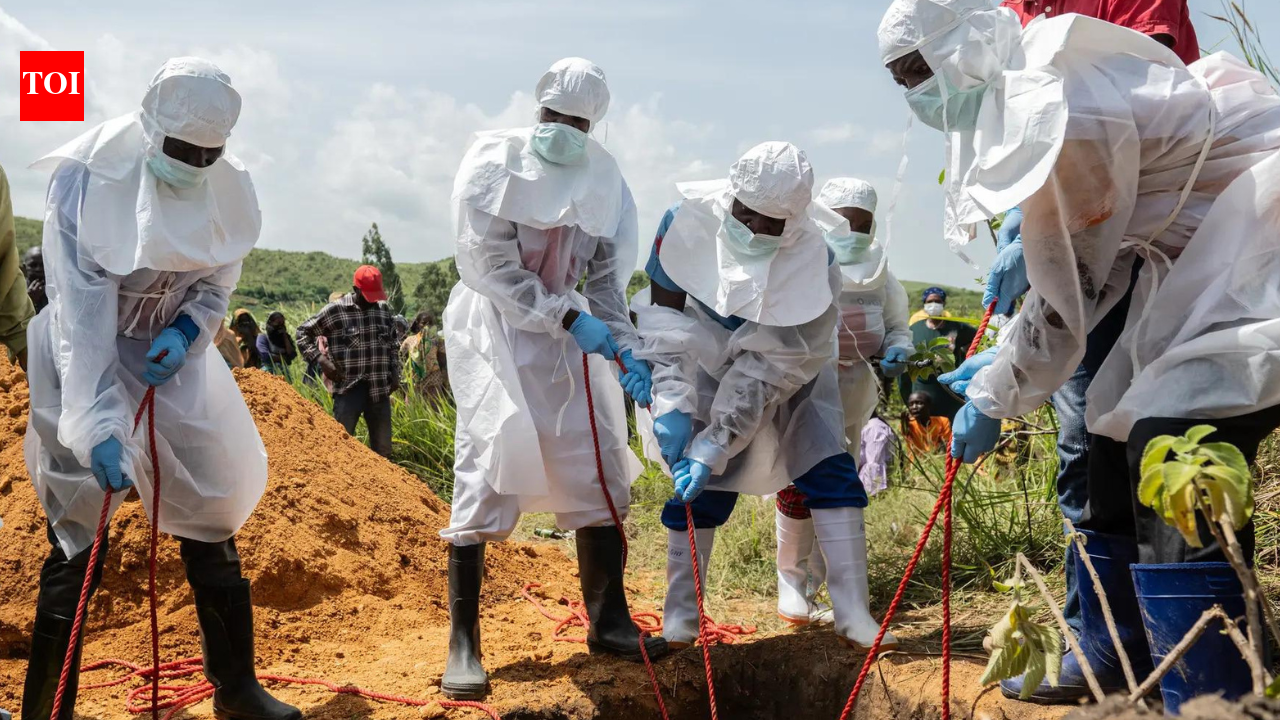
The Ebola outbreak in eastern Democratic Republic of Congo has reached 1,048 confirmed cases and 267 deaths in its first month, according to reporting tied to WHO officials, making it the largest first-month toll yet recorded for an Ebola outbreak in Africa.
The Ebola outbreak in the Democratic Republic of Congo has reached 1,048 confirmed cases and 267 deaths in its first month, according to reporting tied to World Health Organization officials, marking an alarming escalation in one of the region's most difficult public-health emergencies.
The latest figure, reported on June 23, suggests the outbreak has moved far faster than responders have been able to contain it. A WHO official was quoted as describing the toll as the largest number of confirmed cases in the first month of any Ebola outbreak in Africa.
The numbers also show how sharply the situation has worsened in just over a week. On June 15, The Guardian reported 676 confirmed cases and 136 deaths. By June 21, People reported that the outbreak had surpassed 1,000 cases and stood at 254 deaths. The June 23 report lifted the totals again, to 1,048 cases and 267 deaths.
A rapidly worsening outbreak
The speed of the increase is the most striking feature of the current outbreak. In a matter of days, the official and near-official reporting moved from the hundreds to more than 1,000 confirmed cases, while the death toll climbed sharply at the same time.
That kind of growth suggests sustained transmission and a response system that is still struggling to catch up. Ebola is typically most dangerous when cases are not found quickly, contacts are not traced, and sick patients are not isolated in time to interrupt spread.
The outbreak is being tracked in eastern Congo, where health emergencies often unfold in difficult conditions. The region faces logistical barriers, limited treatment capacity, and challenges reaching communities quickly enough to find exposed people before they become contagious.
The latest figures place this outbreak in a particularly severe category even by the Democratic Republic of Congo's history with Ebola. Congo has dealt with repeated Ebola emergencies before, and each one has strained the country's health system and emergency response teams.
What the response looks like
People reported on June 21 that about 100 people had recovered, while 365 were hospitalized or isolated. The same report said only about 55% of exposed contacts had been reached, a sign that tracing and follow-up were still incomplete.
That matters because contact tracing is one of the main tools used to stop Ebola outbreaks. If health workers cannot identify and monitor exposed people quickly, transmission chains can continue unchecked.
The reporting also said the outbreak involves the Bundibugyo strain. That identifies the virus variant, but it does not change the basic immediate problem for responders: finding cases fast enough to isolate them and protect the people around them.
Health workers are also among the most exposed groups during an Ebola outbreak. As cases rise, so does the risk to clinicians, tracers, burial teams, and local responders working in communities where the virus is still circulating.
Regional stakes
The outbreak is not only a Congo problem. People reported that neighboring Uganda had recorded 19 cases and two deaths, adding cross-border urgency to surveillance and containment efforts.
That raises the stakes for Uganda's health authorities as well as Congo's. Border screening, follow-up of contacts, and coordination between countries become more important when the virus is already moving across regional lines.
The regional risk also makes the response more complicated. A broader geographic footprint means more people to monitor, more facilities to support, and more pressure on health systems that are already stretched.
For communities in eastern Congo, the outbreak is arriving alongside fear, disruption, and economic strain. The Guardian's June 17 reporting described the toll on Bunia's public-facing workers, showing that Ebola can damage livelihoods even before a community has fully absorbed the health impact.
What remains unclear
Several important questions are still open. Reporting has not resolved the full transmission chain or the source of the outbreak, and it remains unclear whether the case curve is still accelerating or beginning to flatten.
It is also not clear from the available reporting whether the World Health Organization has formally declared a Public Health Emergency of International Concern for this outbreak. That would be a major policy signal, but it was not established in the material reviewed here.
For now, the clearest verified signal is the pace of deterioration. The outbreak moved from 676 confirmed cases and 136 deaths on June 15 to more than 1,000 cases and 267 deaths by June 23, a steep rise that underscores how hard the response is being pushed.
The immediate next steps are straightforward but difficult: keep watching updated WHO and ministry case counts, track whether vaccination and isolation efforts are expanding, and monitor whether Uganda's case count changes further.
Health authorities will also be watching whether contact tracing improves and whether the outbreak begins to plateau. Until then, the numbers point to a fast-moving emergency with serious risks for health workers and communities on both sides of the border.
Revision note
Initial automated publication.