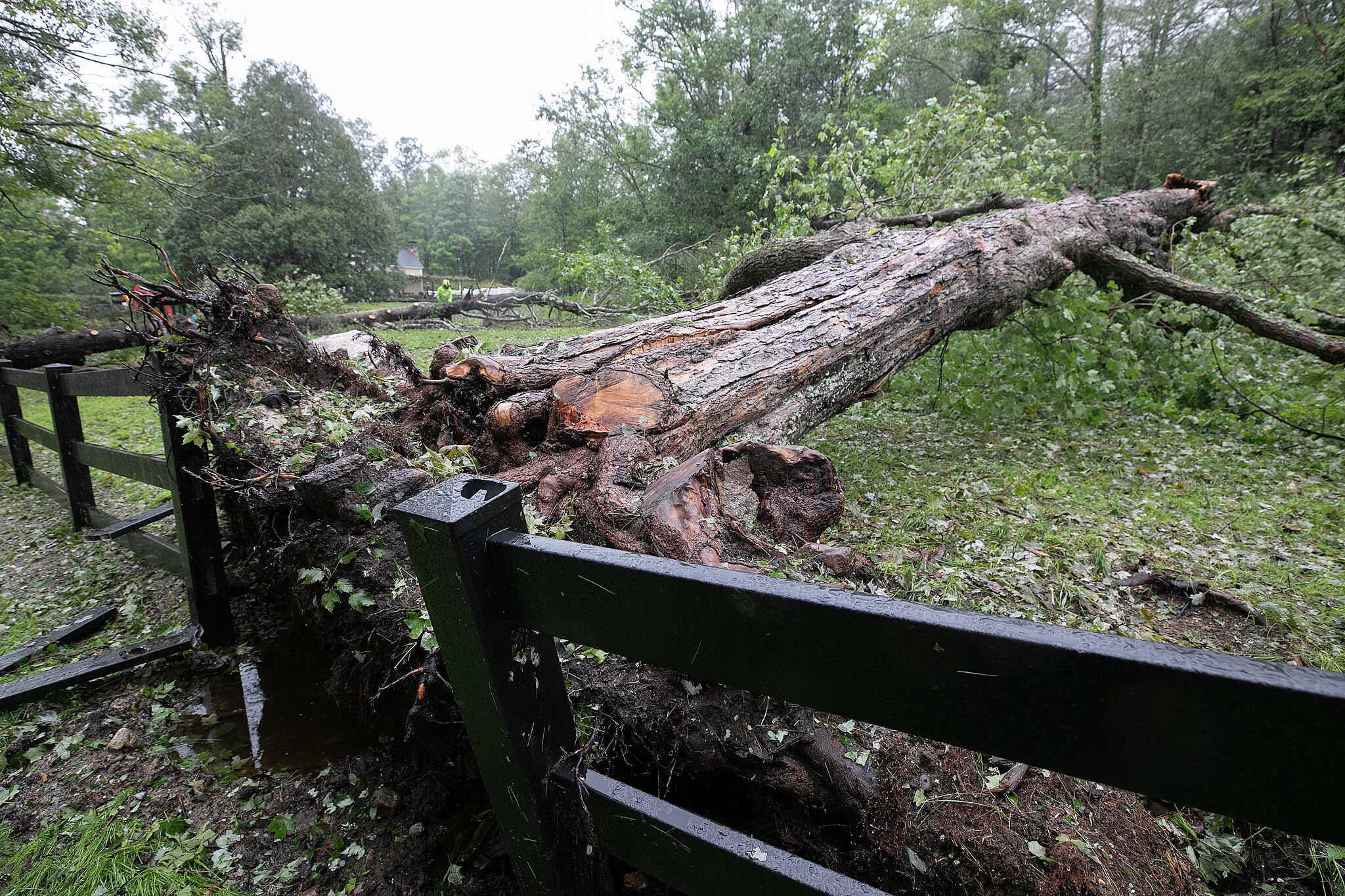
Connecticut’s July 4 storm recovery is moving from emergency restoration to debris cleanup and damage assessment as outages fall sharply, towns enter a second recovery phase and state officials prepare to judge whether the damage could qualify for federal aid.
Connecticut’s recovery from the July 4 severe storms is moving out of emergency power restoration and into debris cleanup, damage assessment and the question of federal aid.
Outage totals fell sharply by Wednesday, and the hardest-hit towns were reporting that the immediate crisis had eased even as crews kept working on damaged poles, downed trees and other storm debris.
From emergency response to cleanup
Severe thunderstorms swept across Connecticut over the Fourth of July weekend, leaving widespread damage and knocking out power for tens of thousands of customers. CT Insider reported that outages initially surged above 70,000 and later climbed to more than 100,000 at the peak of the event.
By Wednesday morning, July 8, the statewide picture had changed dramatically. One CT Insider report said outages had fallen to under 600, signaling that the storm response was shifting from broad restoration work to scattered cleanup and repairs.
A separate same-day report showed that the restoration picture was still moving through the day. Eversource listed 1,096 outages at about 3:55 p.m. Wednesday, underscoring that totals were still fluctuating even as the overall trend pointed toward recovery.
Towns move into phase 2
Local officials in some of the hardest-hit towns said the work was already changing on the ground. In Harwinton, First Selectman Michael Criss said the town had entered what he described as “phase 2” of recovery.
Criss said that phase was focused on debris management and food waste, with the town making facilities available for proper disposal. He said brush and tree clearing would continue in the coming weeks as crews dealt with the aftermath of the storm.
Harwinton had 34 outages remaining Wednesday morning, according to the reporting. That was a far cry from the scale of the original outage surge and a sign that the town’s needs had shifted toward cleanup rather than emergency restoration.
Other communities were also working through the tail end of the outage response. New Fairfield had been among the hardest hit, with more than 3,100 outages at one point, but had fewer than a dozen remaining by Wednesday morning. Newtown, which had 59 road closures on Saturday, had no road closures by Tuesday.
State road impacts had also eased significantly. CT Roads showed only one weather-related state road closure, Route 201 in North Stonington, because of a downed utility pole.
Damage estimates and FEMA questions
The next major question is whether Connecticut can make a viable request for federal disaster aid.
Gov. Ned Lamont asked towns and cities to submit damage estimates so the state can determine whether it meets FEMA thresholds. CT Insider reported that state officials expected to assess eligibility within about a week.
That review matters because the full cost of the storm will go beyond utility restoration. Local governments may still face tree removal, pole repairs, road work and other cleanup costs, while residents continue to document property damage for insurance claims.
For now, the state’s focus is splitting into two tracks: clearing the remaining debris and collecting the numbers that will determine whether Connecticut can seek federal help.
The open questions are still practical ones. Outage totals were still changing on Wednesday, cleanup will likely take weeks in the hardest-hit areas, and state officials have not yet determined whether the storm damage will qualify for FEMA assistance.
Revision note
Expanded into a fuller recovery-phase article with chronology, local cleanup details, road impacts and FEMA context.