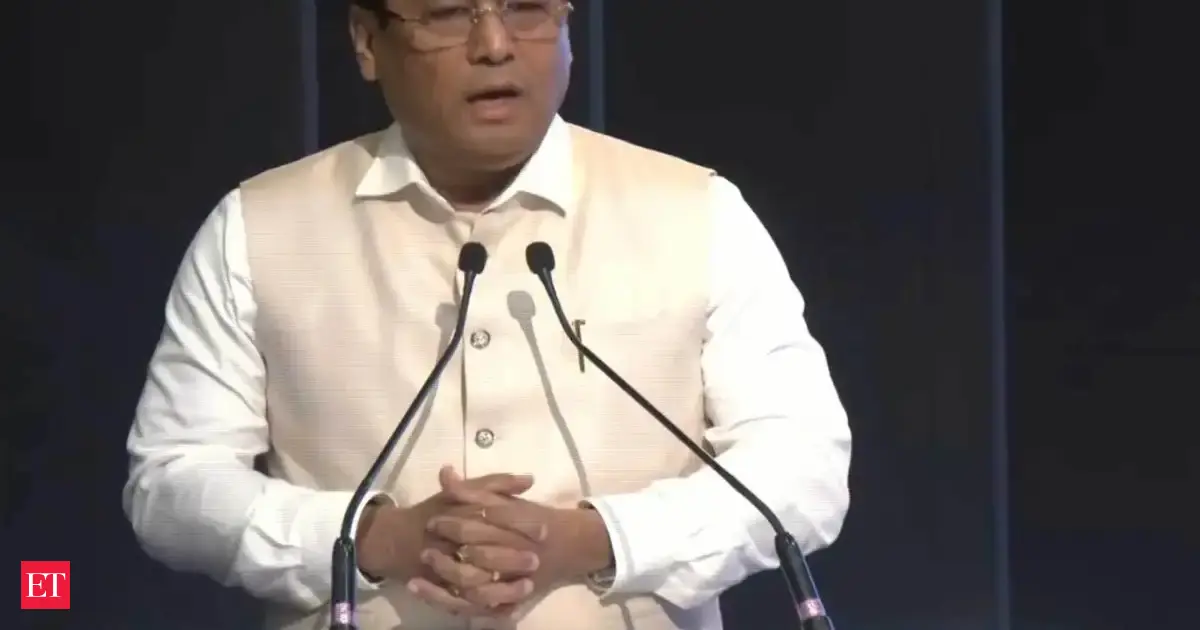
India’s Container Manufacturing Promotion Scheme is aimed at lifting domestic container capacity tenfold to 7.5 lakh units a year, with a first made-in-India EXIM container unveiled and Maersk placing an order for 1,000 units.
Capacity target and policy push
India is moving to expand domestic shipping-container manufacturing, with Union Ports, Shipping and Waterways Minister Sarbananda Sonowal saying the Container Manufacturing Promotion Scheme aims to raise annual capacity tenfold to 7.5 lakh units.
The reporting says the scheme was announced in Budget 2026, positioning it as part of a broader industrial push rather than an isolated announcement.
The policy is being framed as a bid to reduce India’s dependence on imported containers and strengthen maritime self-reliance.
A symbolic first container
The announcement came alongside a separate milestone on July 3: Sonowal unveiled India’s first domestically manufactured EXIM shipping container.
That launch gives the policy an immediate public symbol, even as the formal mechanics of the scheme remain to be detailed.
The available reporting does not identify the company that built the first container.
Why the move matters
Shipping containers are a basic but critical input for export-import trade. India has relied heavily on imported containers, so domestic production has implications for supply-chain resilience as well as industrial capacity.
For exporters and importers, a larger local supply could help ease container availability and reduce exposure to external disruptions. It also creates the possibility of new manufacturing investment if the sector scales as planned.
Maersk’s order
The launch also brought an early commercial signal. AP Moller-Maersk ordered 1,000 India-made containers, according to the reporting.
That order suggests at least one major shipping line is willing to buy locally made units at the outset of the scheme’s rollout. The reporting does not say whether the order is part of a broader purchasing program or a one-off deal.
What is still unclear
Several details still need formal confirmation. The reporting does not spell out the scheme’s incentives, eligibility rules, funding support or rollout timeline.
It is also unclear when the expanded domestic capacity will become fully operational.
The next item to watch is the formal scheme notification or budget document, which should show how the policy is meant to work in practice and whether other shipping lines or leasing firms follow Maersk with additional orders.
,Revision note
Initial automated publication.