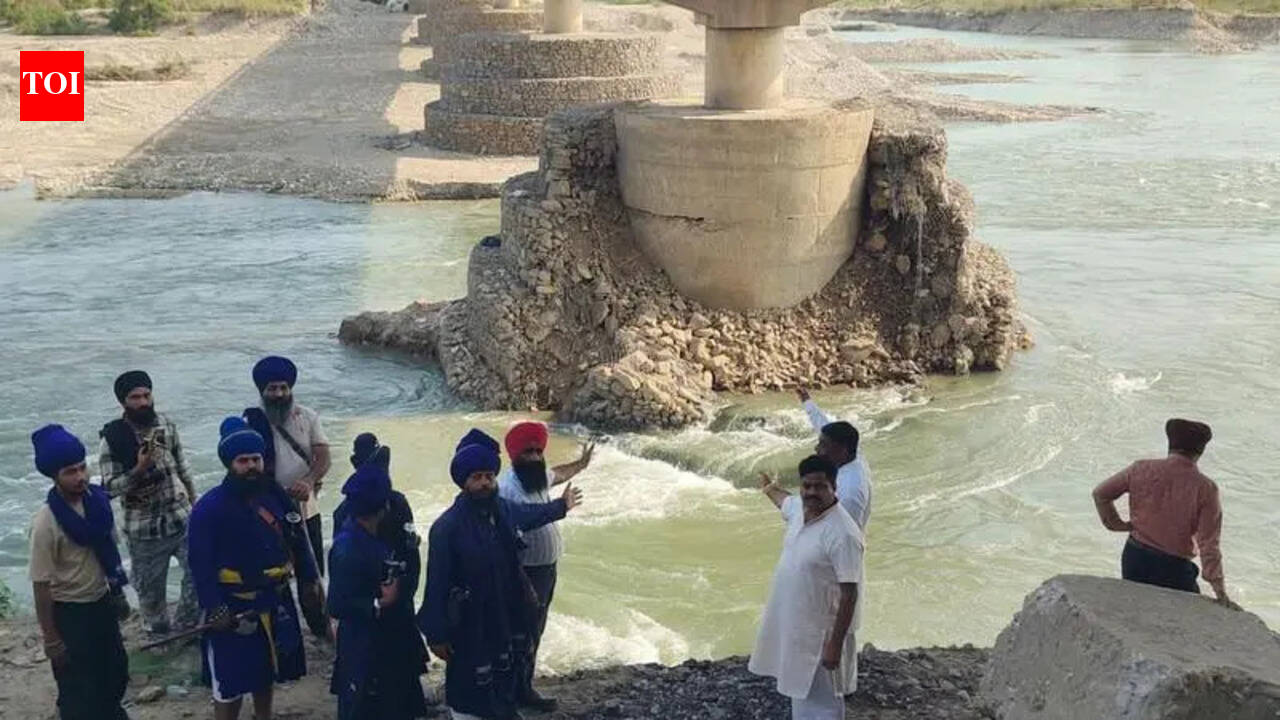
Damage to protection work around the Agampur-Anandpur Sahib bridge has raised concern ahead of the monsoon, with residents alleging poor material use and the Punjab and Haryana High Court reportedly ordering an inspection and interim mining ban.
Residents and activists in Ropar district have raised fresh concern after damage was seen in protection work around the Agampur-Anandpur Sahib bridge over the Satluj, just as the monsoon season is expected to increase pressure on riverbanks and bridge foundations.
The dispute is centered on revetment and packing work meant to protect the bridge from erosion and scouring. The bridge is a key link between Anandpur Sahib and Punjab’s Doaba region, making the condition of the protection work a public safety issue as seasonal water levels rise.
The concern has also revived attention on earlier flood-protection spending in the area. In February, Punjab announced a broader Rs 52-crore flood-protection plan for the Satluj and Swan river stretches in Sri Anandpur Sahib, which included a Rs 12-crore revetment project for Agampur.
What residents are alleging
Local residents and activists, including social activist Gaurav Rana, say the damage points to weaknesses in the recent protection work. They allege that smaller crushed material was used in gabion crates instead of larger Pathankot boulders and argue that the work may not be strong enough to withstand monsoon flows.
Their concerns are not limited to the visible damage at the bridge site. They also link the problem to mining pressure in the Satluj belt and say riverbed activity may have contributed to erosion near the bridge piers.
The issue matters because the bridge protection was meant to reduce exactly this kind of risk. If the work is not holding up before the heaviest flows arrive, locals say, the margin for error during the monsoon will be thin.
Official response
SS Bhullar, executive engineer in the buildings and roads division in Ropar, disputed the sense that the damage was widespread. He said only one pier was affected, that the packing work there had not been completed, and that restoration was already under way.
Bhullar also said the contractor had not yet been paid because the work remained incomplete. He said the repair deadline still had around 15 days left at the time of reporting and said the damage followed increased pressure from flash water.
That response leaves the public dispute in a narrower frame: whether the site has suffered a genuine failure or an incomplete job that is still being finished. It also leaves open the question of whether the original material specification and execution were adequate for the conditions at the site.
Court oversight and mining ban
The Punjab and Haryana High Court has reportedly stepped in with an interim ban on mining and desilting near Agampur. The court has also asked the Ropar deputy commissioner to inspect the site and file a detailed affidavit.
In addition, the court has sought records related to the Public Works Department project, including tender documents and contractor details. That widens the matter beyond one damaged patch of river protection work and into questions about project oversight, procurement, and compliance.
The court action is significant because it places the bridge issue under formal scrutiny at the same time as monsoon risk is rising. Any delay in inspection or repair could carry consequences for commuters and pilgrims who rely on the route.
Why the timing matters
The Agampur-Anandpur Sahib bridge is a practical lifeline, not a peripheral structure. It connects traffic across the Satluj, and the area has already been under pressure from scouring and earlier flood damage.
The timing also overlaps with wider water-management developments in the region. On June 9, the Bhakra Beas Management Board decided to increase water withdrawals from Bhakra for the paddy transplantation season, adding to attention on river flows and flood readiness in Punjab.
For the moment, the core questions remain unresolved. Residents want to know whether the material used in the protection work met the required standard. Officials say the work is still being completed. The court has now asked for inspection and documentation.
What happens next will likely determine whether the damage is treated as a temporary construction issue or as evidence of a deeper problem with workmanship, material selection, or monitoring before the monsoon peaks.
Revision note
Initial automated publication.