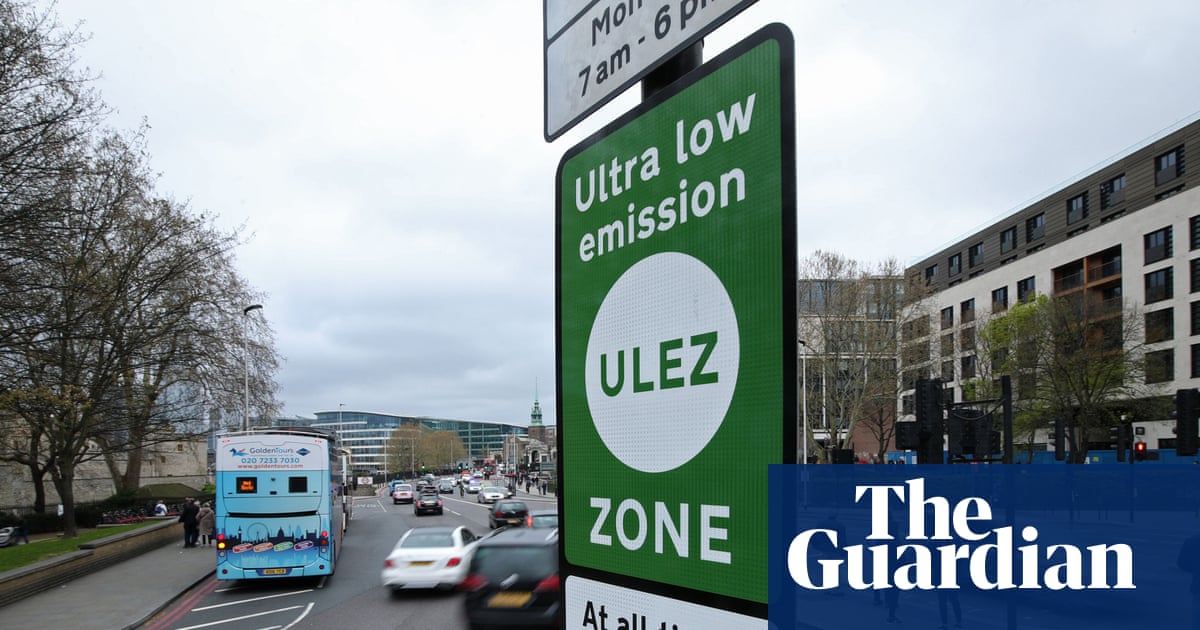
Imperial College London analysis estimates pollution-linked deaths in London fell from 6,400-8,000 in 2019 to 3,800-5,100 in 2024, alongside sharp declines in nitrogen dioxide and fine particulates. The findings have reopened debate over Ulez, though the report does not directly attribute the improvement to the policy.
Deaths linked to air pollution in London have fallen by about 40% since 2019, according to a new Imperial College London analysis reported on Tuesday.
The study estimates that the number of premature deaths attributed to air pollution fell from 6,400 to 8,000 in 2019 to between 3,800 and 5,100 in 2024. Imperial also said nitrogen dioxide levels dropped 41% over the same period, while fine particulate pollution fell 28%.
The figures point to a marked improvement in the capital’s air quality over five years, but they also show that pollution remains a major public health issue. Even after the decline, the revised estimate still puts the death toll in the thousands.
An Imperial researcher quoted in the reporting said London’s air quality has improved markedly since 2019, but warned that air pollution still poses a serious health risk.
Why the numbers matter
The new estimate is notable not just because it shows a fall, but because it revises the baseline upward. Imperial’s updated analysis puts the 2019 death toll higher than earlier figures, which had suggested around 4,000 premature deaths linked to air pollution that year.
That means the newer estimate is doing two things at once: raising the apparent scale of the problem in 2019 and showing that it has since declined. The result is still a substantial public-health burden, but one that appears to have eased.
The changes in pollutants line up with that direction of travel. Nitrogen dioxide, a traffic-related pollutant that has long been a focus of London air policy, fell sharply. Fine particulate pollution, which is also associated with serious health harms, declined too.
Those trends are important because they show the health discussion is not only about abstract emissions targets. They are tied to a measurable shift in the air Londoners breathe.
Ulez returns to the center of the debate
Mayor Sadiq Khan cited the findings as evidence that the ultra-low emission zone is saving lives.
That framing is likely to sharpen the long-running argument over Ulez, which has been politically controversial since its expansion. The policy began in central London in 2019, expanded to inner boroughs in 2021 and then was extended across all of London in 2023.
But the reporting on the Imperial analysis says the study itself does not directly single out Ulez as the cause of the improvement. The research supports the wider argument that London’s cleaner air is associated with better health outcomes, but it does not prove that one policy alone produced the change.
That distinction matters. Supporters are already using the findings to argue that clean-air restrictions are working. Opponents are likely to argue that the data do not settle the question of causation.
What has changed since 2019
The study’s chronology is part of its significance. In 2019, Imperial’s revised estimate places pollution-linked deaths at between 6,400 and 8,000. By 2024, that estimate had fallen to between 3,800 and 5,100.
The reduction tracks with a broad improvement in pollution levels during the same period. Imperial said London’s nitrogen dioxide levels fell 41% from 2019 to 2024. Fine particulate pollution fell 28%.
Those are large changes over a relatively short period. They suggest that the city’s air has become cleaner not just in a marginal sense, but in a way that could affect population health at scale.
At the same time, the remaining burden is still large enough to matter. The estimates indicate that thousands of premature deaths are still associated with air pollution in the capital each year.
Earlier evidence on London air quality
The new analysis does not arrive in isolation. It follows earlier London studies that pointed in a similar direction.
A Guardian report in March 2025 said a separate London study found air quality had improved faster than the rest of England and that roadside nitrogen dioxide had fallen 27% compared with a no-Ulez scenario.
Another Guardian report on June 12, 2026 said an Imperial-led study found emergency hospital admissions in central London fell after the T-charge and Ulez were introduced.
Taken together, those studies have built a broader case that transport policy, emissions controls and cleaner traffic can produce measurable health benefits. The latest Imperial estimate adds mortality to the picture rather than focusing only on pollutant concentrations or hospital admissions.
Where the risks remain
The research also underlines that air pollution remains unevenly distributed.
The reporting says outer London boroughs remain among the areas with the highest risk. That matters because the policy debate often centers on who bears the cost of cleaner-air rules, while the health burden is not spread evenly across the city.
The findings therefore speak to both public health and equity. Residents in the most exposed areas are still facing the greatest danger, even if the overall trend is moving in the right direction.
That is one reason the story is likely to remain politically live. Clean-air measures are often framed as a burden on drivers, but the health data point to continuing danger for residents, commuters and people with existing vulnerabilities.
What happens next
One immediate question is methodology. The research packet indicates that Imperial has not yet been identified as having published the full report or dataset behind the revised mortality estimates.
That leaves several open issues. Readers will want to know exactly how the 2019 and 2024 death ranges were calculated, what assumptions were used, and how much of the change is attributable to traffic emissions versus other factors.
A second question is attribution. The study supports the view that cleaner air is linked with better health, but the reporting stops short of saying Ulez alone caused the fall in estimated deaths. That gap will matter in the political response.
A third question is reaction. The research packet points to likely responses from Ulez opponents, public-health groups, the Royal College of Physicians and campaigners such as Mums for Lungs, as well as from City Hall.
For now, the central finding is straightforward: London’s air has improved since 2019, and Imperial’s updated estimate suggests that change has coincided with a large fall in pollution-linked deaths.
Revision note
Initial automated publication with expanded deep-reporting treatment.