A new study finds warm deep water in the Southern Ocean has moved closer to Antarctica over recent decades, raising concern for ice shelves.
Warm deep-ocean water in the Southern Ocean has been shifting closer to Antarctica over recent decades, according to a new peer-reviewed study that warns of greater heat reaching vulnerable ice shelves.
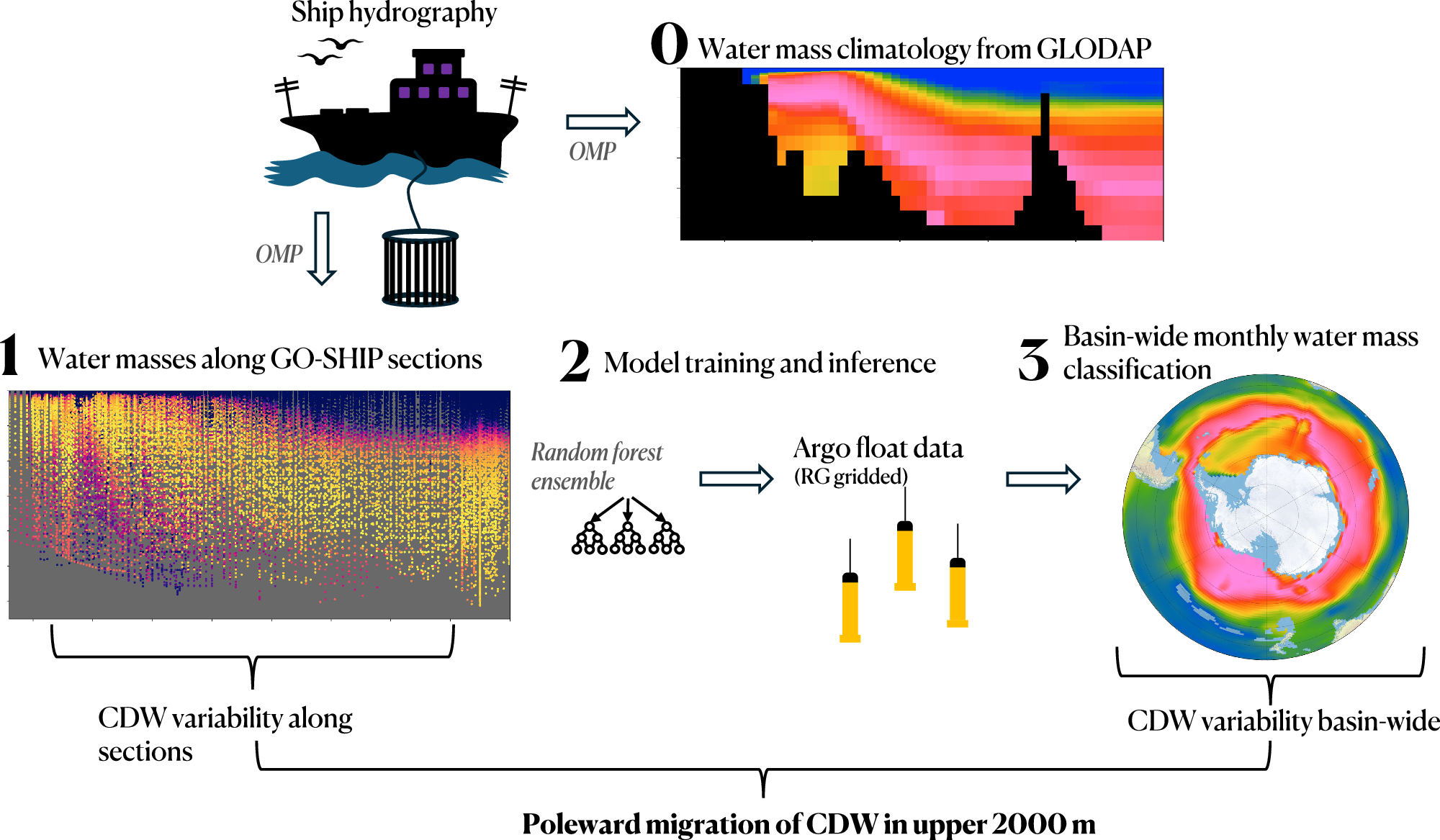
The paper, published on April 28 in Communications Earth & Environment, was led by the University of Cambridge with collaborators at the University of California. It combines repeat ship-based observations with Argo float data to reconstruct changes in Southern Ocean water masses over time.
The authors report a circumpolar-mean poleward migration of the upper Circumpolar Deep Water core, along with increased warm-water thickness near Antarctica. In practical terms, that means more heat is being carried toward the underside of Antarctic ice shelves, where it can accelerate basal melting.
The study does not say every part of the Antarctic margin is changing in the same way, but it does show a broad long-term trend that could make ice shelves more vulnerable. Because ice shelves help hold back inland ice, more melt from below raises the risk of faster ice loss and sea-level rise.
Cambridge’s official news release said the findings suggest deep-ocean heat has been moving closer to Antarctica for years. Phys.org and TIME published same-day coverage highlighting the same core result and its implications for ice-shelf stability.
The paper adds another line of evidence that the Southern Ocean is shifting in ways that matter for the Antarctic ice sheet. The immediate question is how much of the change reflects natural variability and how much is driven by human-caused warming.
Revision note
Initial automated publication.