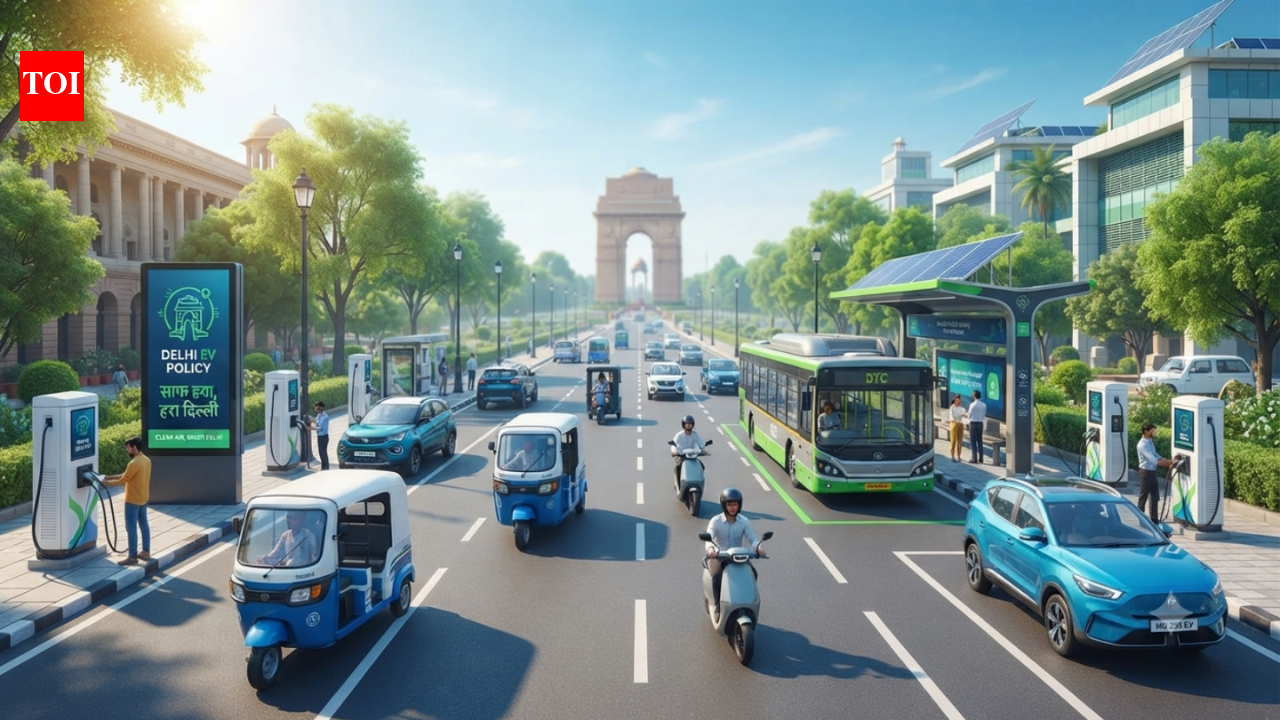
Delhi has formally notified its Electric Vehicles Policy 2026, ending new petrol two-wheeler registrations, expanding charging infrastructure and offering purchase incentives through March 31, 2030.
Delhi has formally notified its Electric Vehicles Policy 2026, turning a cabinet-approved plan into a live policy framework that will shape vehicle sales, charging access and incentives in the capital through March 31, 2030.
The biggest change in the policy is the planned end of new petrol two-wheeler registrations during the policy period. That puts one of Delhi’s most common vehicle categories at the center of the government’s effort to accelerate the shift to electric mobility.
Officials are presenting the move as both a transport and air-quality measure. Delhi has long faced severe pollution, and transport remains one of the city’s major emission sources.
Policy rollout
The policy was approved by the Delhi Cabinet on June 29, according to earlier reporting, before the government moved to notify it on July 1. That notification is the step that makes the policy’s operative terms public and starts the implementation phase.
Reporting on July 1 said the government had officially notified the policy, and later same-day coverage added more detail on how the charging network push will work. Together, the reports show the plan moving from approval to implementation quickly.
The policy is reported to run through March 31, 2030. That gives the government nearly four years to expand charging access, shape buyer behaviour and push more categories toward electric vehicles.
Earlier reporting had already indicated that the policy would phase out new petrol and CNG two-wheelers from April 1, 2028. The formal notification now places the broader EV transition on a more visible policy footing.
Two-wheelers and other vehicle categories
The two-wheeler segment matters because it is central to daily travel in Delhi. Any change to registration rules for that market can affect a large number of buyers, dealers and service operators.
The policy is also part of a staggered approach across vehicle categories. Earlier coverage said only electric auto-rickshaws would be allowed from January 1, 2027, showing that the government is sequencing the transition rather than making one blanket shift at a single date.
The Guardian had earlier reported that the government planned to phase out petrol scooters, motorbikes and autorickshaws, while also setting new registration timelines for electric small trucks and e-rickshaws from 2027 and e-scooters and motorbikes from 2028. Those timelines fit the larger pattern of a phased transition.
The reporting does not yet settle every exemption or carve-out in the final notification. That means the exact treatment of some categories may still depend on the full gazette text and subsequent implementation rules.
Charging network buildout
Charging access is the other major pillar of the policy. Delhi has set a target of 30,000 EV charging points across the city, a scale that signals the government is trying to remove one of the biggest barriers to EV adoption.
The policy also introduces a single-window clearance system for charging infrastructure. The aim is to reduce friction for approvals and make it easier to add stations in a city where land, permissions and coordination can slow deployment.
According to the reporting, EV dealerships will be required to provide public charging stations. That pushes charging access into the retail network instead of relying only on standalone public sites.
Housing societies and private players are also being encouraged to add and maintain charging infrastructure. The result is a broader buildout model that spreads responsibility across government, dealers, residential communities and private operators.
The Times of India also reported that the government wants wider charging coverage rather than a narrow concentration of sites. That approach is designed to improve day-to-day usability for buyers who may not have easy access to home charging.
Incentives and funding
The policy includes tax exemptions and other incentives for EV buyers, including electric cars. It also includes a scrapping incentive for old vehicles, which could help push replacement demand toward newer electric models.
Reporting around the policy has placed the overall outlay at about Rs 15,000 crore over four years. That figure suggests the government sees the transition as a major mobility programme rather than a narrow regulatory change.
The reported scale of the spending also matters for investors and manufacturers. A large and multi-year outlay signals that Delhi expects the EV market to grow and that the policy is meant to shape the market over time, not just announce an intention.
The policy’s financial measures appear intended to work alongside the registration changes. Incentives can reduce the cost barrier for buyers, while the charging rollout aims to reduce the practical barrier of where to charge.
Why it matters
For consumers, the policy changes the long-term outlook for vehicle purchases in Delhi. Buyers considering a petrol two-wheeler now face a policy environment that is explicitly moving away from that category.
For dealers and manufacturers, the policy increases the importance of EV inventory, charging support and service readiness. The dealership charging requirement also means retail outlets may become part of the city’s infrastructure network.
For charging-network operators, housing societies and private owners, the policy offers a clearer public mandate to add capacity. That could affect site selection, investment planning and permit applications over the next several years.
The policy also matters because Delhi’s air pollution problem gives transport reform a high public profile. The government says the policy focuses on pure EVs and on strengthening the city’s electric mobility ecosystem, linking mobility policy directly to public-health and environmental goals.
What to watch next
The main open questions are operational. The public reporting does not yet show every exception, phase-in period or category-specific carve-out in the final notification.
It is also not yet clear how the 30,000 charging-point target will be split between public sites, dealerships, residential buildings and private locations. That breakdown will matter for how quickly the network becomes useful in practice.
Another question is whether the reported Rs 15,000 crore reflects a fully allocated budget in the notified policy or a broader estimate of the policy’s cost over time.
The next test will be execution: how quickly charging permissions are issued, how strictly dealership obligations are enforced and how the government manages the transition toward the 2027 and 2028 category deadlines already outlined in earlier reporting.
Revision note
Initial automated publication.