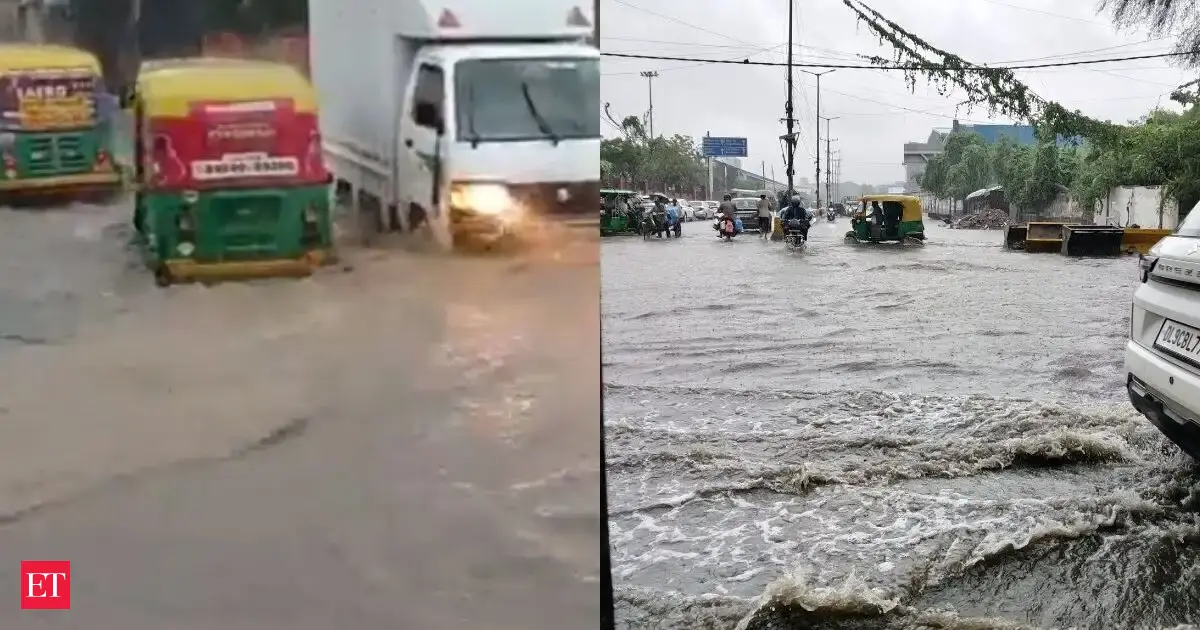
Heavy monsoon rain on July 9 triggered IMD alerts across Delhi-NCR, with waterlogging, traffic delays, flight advisories and school closures reported in parts of the region.
Fresh monsoon rain on July 9 triggered widespread waterlogging across Delhi-NCR, slowing the morning commute, disrupting flight operations and prompting school closures in parts of the region.
The India Meteorological Department issued a red alert for Delhi and an orange alert for Gurugram and Faridabad, with other coverage describing orange alerts across the broader NCR and red alerts for the worst-hit pockets. Reporters said the heavy rain began overnight and intensified into Thursday morning, leaving major roads clogged and low-lying stretches flooded.
Coverage from the day described waterlogged stretches at and around New Delhi Railway Station, Sector 62 in Noida and Vijay Nagar in Ghaziabad. Several reports also said commuters faced long delays on key routes as the region dealt with what some outlets called the heaviest rainfall of the season.
Morning commute hit hard
The most immediate impact was on road traffic. Cars, buses and two-wheelers moved slowly through several parts of Delhi-NCR as water collected on arterial roads and in underpasses, adding to the pressure on an already busy weekday commute.
Times of India reported severe waterlogging and traffic snarls across multiple areas, while other coverage said fallen trees added to the disruption in some locations. The result was a wider slowdown across the urban corridor linking Delhi with Noida, Ghaziabad, Gurugram and Faridabad.
New Delhi Railway Station’s approach roads were among the locations cited as affected, underscoring how quickly intense monsoon rain can affect access to major transport hubs. For many residents, the practical effect was not just slower travel but a changing morning plan as route closures and flooded stretches became known.
Official alerts and local responses
The weather warnings varied slightly by outlet, but the core message was consistent: the rain had already caused serious disruption and more showers were possible later in the day. The IMD’s red and orange alerts signaled that conditions remained unstable.
Gurugram Police urged corporate offices and private establishments to consider work-from-home arrangements to reduce avoidable travel during the rain. In one report, the Delhi government said the situation was under control, even as waterlogging continued to affect movement in parts of the city and its satellite towns.
Schools, flights and travel advisories
The disruption extended beyond roads. District authorities in Ghaziabad ordered schools from nursery through Class 12 closed for Thursday, July 10, 2026, because of heavy rainfall and waterlogging.
Air travel also came under pressure. Air India, IndiGo and Akasa Air issued advisories asking passengers to check flight status before leaving for the airport. Coverage said the rain affected operations in and around Delhi, adding another layer of inconvenience for travelers already dealing with surface traffic delays.
What happens next
Rain was still expected to continue through the day in some coverage, leaving open the possibility of more flooding, additional school or office advisories and changes to the alert level later on July 9.
The main questions now are whether the rainfall eases enough for drainage conditions to improve, whether the IMD keeps the red alert in place for Delhi, and whether more districts in the NCR add closure orders or travel restrictions. For now, the region remains in a live disruption phase, with the effect concentrated on commuter safety, school routines, airport access and the resilience of flood-prone roads.
Delhi-NCR has long faced waterlogging during strong monsoon spells because heavy runoff can overwhelm drainage in low-lying stretches. This episode was different from a routine wet day only because the rainfall was immediate, the alerts were active and the impacts were already visible across transport, schools and air travel.
Revision note
Initial automated publication with fuller verified chronology and disruption context.