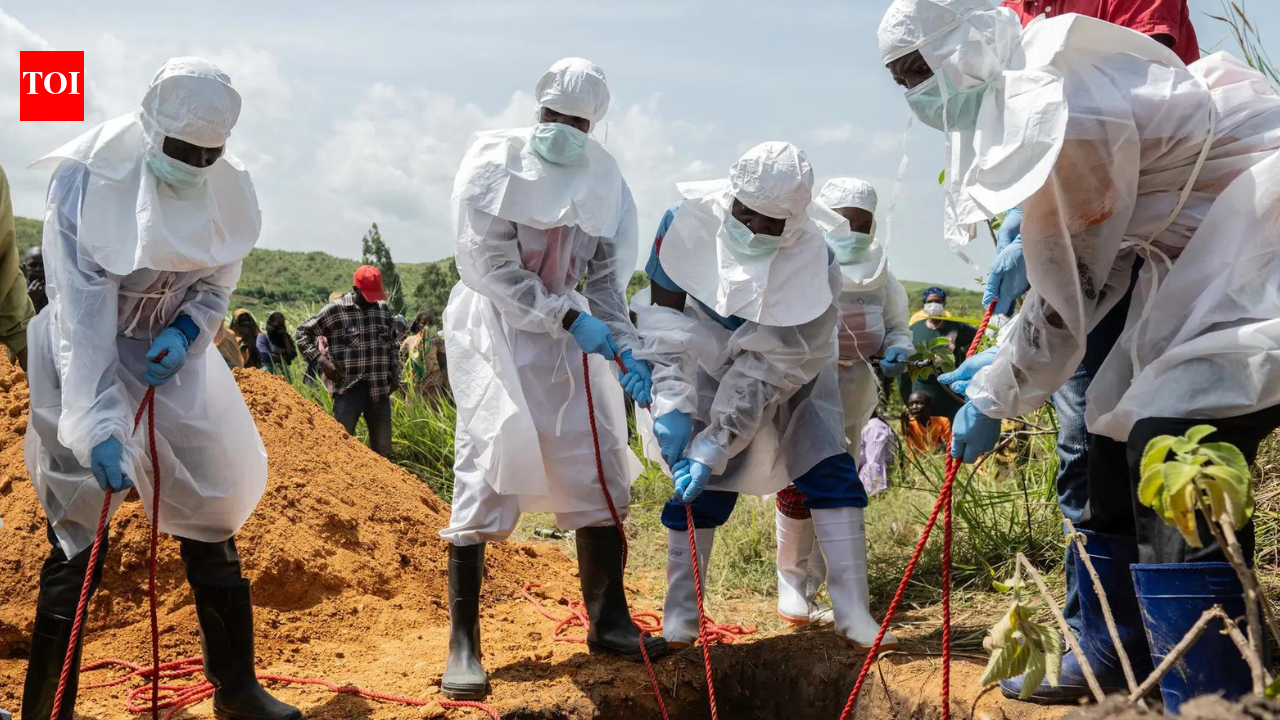
Recent reporting says Ebola in the Democratic Republic of Congo has spread to a fourth province, widening an already severe outbreak in the country’s northeast. Case and death totals differ by outlet and date, reflecting a fast-moving situation as responders confront conflict, displacement and tracing gaps.
Recent reporting says the Ebola outbreak in the Democratic Republic of Congo has spread to a fourth province, widening an emergency that is already straining health workers in the country’s northeast.
The new geographic spread matters because it makes surveillance, isolation and contact tracing harder in a region where responders are already working across a large population and in areas affected by conflict and displacement. Coverage said roughly 15 million people are now in the affected area.
The outbreak has been described in recent reporting as involving the Bundibugyo strain of Ebola virus. Reporters have said that the combination of insecurity, weak access for health workers and population movement is making containment more difficult.
How the outbreak has expanded
The latest reporting, published June 29, said the outbreak had reached a fourth province. That is the newest step in a sequence of updates that show the outbreak widening across eastern Congo.
AP reported on June 24 that the Democratic Republic of Congo had 1,094 cases and 277 deaths. The Guardian reported on June 26 that there were 1,118 confirmed cases and 291 deaths, while Le Monde reported later that same day that the tally had reached 1,155 cases and 304 deaths.
Those numbers do not describe separate outbreaks. They are different snapshots taken at different times, and the publication lag explains why totals vary across outlets.
The newest report added a still higher death toll, saying 360 people had died. That figure should be treated as the latest reported snapshot until it is confirmed by Congolese health authorities or international public-health agencies.
Why it matters
The outbreak has been concentrated in eastern Congo, where responders must move through difficult terrain and communities already affected by violence and displacement. That combination can slow reporting, make it harder to find contacts and increase the chance that some infections are missed.
Recent coverage also said nearly 300 Ebola-positive people were unaccounted for, underscoring the scale of the tracing challenge. If cases cannot be located quickly, isolation and vaccination efforts become harder to carry out effectively.
The risk is not limited to the DRC. France has already reported a confirmed Ebola case in a doctor who returned after humanitarian work in Congo, showing how outbreaks in the region can create international exposure when travel or medical evacuation is involved.
What officials are watching next
Key actors now include Congolese health authorities, the World Health Organization, Africa CDC and health workers in eastern DRC. Their immediate priorities are to confirm the newest province, update the case and death totals and strengthen response operations around known transmission chains.
The next questions are whether the outbreak stays concentrated in the northeastern corridor, whether officials announce province-level restrictions or emergency measures, and how quickly an official update matches the newest reported figures. For now, the outbreak remains active, severe and geographically expanding.
Revision note
Initial automated publication.