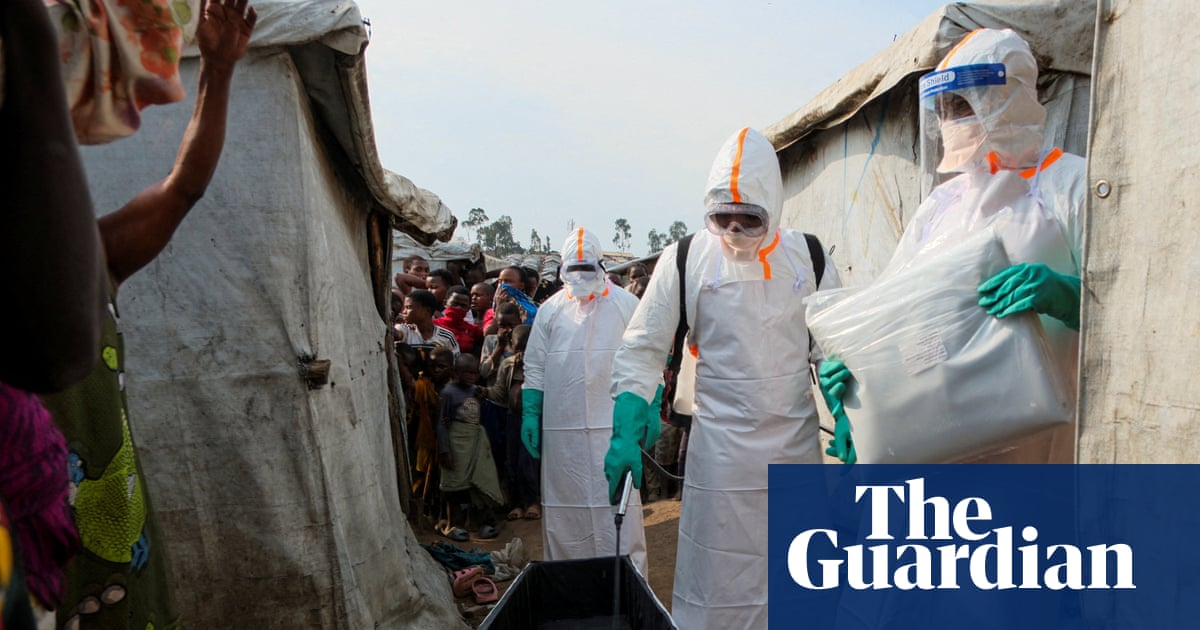
A fast-growing Ebola outbreak in eastern Congo has passed 1,100 cases and nearly 300 deaths, but Uganda has kept its toll far lower through rapid contact tracing, hygiene rules and isolation.
The Ebola outbreak in eastern Congo is worsening, but Uganda has so far shown that rapid tracing, strict hygiene rules and isolation can still slow the virus’s spread across a porous regional border.
Recent reporting puts the outbreak in the Democratic Republic of Congo at roughly 1,118 to 1,155 confirmed cases, with 291 to 304 deaths, depending on the date of the official tally cited. In Uganda, health officials have reported about 20 cases and two deaths in the same regional outbreak.
That gap has made the contrast one of the clearest public-health stories in Central Africa: a severe outbreak in Congo’s east, and a neighboring country that has contained spillover far better.
Congo’s outbreak keeps worsening
The DRC outbreak was first declared in reporting cited later in the month, and it has since become the country’s 17th Ebola outbreak since 1976. It is being driven by the rare Bundibugyo strain, which reporting says does not have an approved vaccine or treatment.
The numbers alone do not capture the difficulty of the response. This outbreak is unfolding in eastern Congo, where insecurity, displacement and difficult access have made it harder to find patients, trace contacts and keep treatment and isolation systems working.
The Guardian reported that nearly 300 Ebola-positive people in the DRC were unaccounted for, citing Africa CDC chief Jean Kaseya. For any Ebola outbreak, that kind of gap is dangerous: missing patients can keep transmission chains alive and make it harder for public-health teams to contain spread.
The same reporting said World Health Organization modeling projects the outbreak could worsen further and could spread to South Sudan. That warning underscores the regional stakes. Even if the outbreak remains centered in Congo, the risk is not confined to Congo alone.
The outbreak has also already reached beyond Central Africa. France confirmed its first Ebola case on June 24, 2026, in a doctor who had returned from a humanitarian mission in the DRC. French authorities isolated the patient and began contact tracing, while saying the risk to the wider public was low.
Uganda’s containment model
Uganda’s response has been far tighter. Reporting says the country has relied on strict hygiene measures, rapid isolation of suspected cases and aggressive contact tracing. Health workers in Uganda have traced more than 95% of known contacts, a level of follow-up that gives officials a much better chance to interrupt spread before it grows.
That approach appears to have limited spillover even though eastern Congo and Uganda share a highly mobile border. People move across that frontier for trade, work and family ties, which makes containment much harder once cases start appearing on both sides.
Uganda’s toll has remained relatively small at about 20 cases and two deaths. That does not mean the threat is over, but it does show the effect of a response that moves fast, isolates exposed people and keeps monitoring tight.
The Ugandan model also depends on local enforcement and public compliance. In an outbreak like this, hygiene guidance, movement restrictions and quick reporting of symptoms can matter as much as any single treatment step, because they reduce the chances that exposed people infect others before they are identified.
The contrast with Congo is not simply about one country doing everything right and another doing everything wrong. It is also about the difference between a relatively contained response environment and one where insecurity and displacement make basic outbreak control much harder.
Why the Congo side is harder to control
Eastern Congo remains the more dangerous setting because the outbreak is moving through a region where public-health access is unstable. Conflict, population movement and weak access to some camps make it harder to find contacts and keep track of where people are.
That matters because Ebola control depends on speed and visibility. When health workers cannot quickly identify exposed people, the virus gets more chances to move silently through households, clinics and communities.
The reporting also points to pressure on already overstretched response systems in eastern DRC. Bed capacity, funding and staff workload all matter in an outbreak like this, especially when the number of cases is still rising and contact tracing is incomplete.
The story is not only about the virus itself. It is also about whether local and international responders can reach the areas where cases are concentrated and whether they can keep people in care long enough to stop further transmission.
Regional and international risk
The cross-border setting makes spillover a continuing concern. Uganda’s border controls and tracing have helped limit domestic spread, but the region remains exposed as long as the Congolese outbreak is still producing new cases.
The confirmation of France’s first case shows how quickly a local outbreak can become an international one when infected health workers or travelers move across borders. In that case, French authorities moved quickly to isolate the patient and begin tracing contacts.
For public-health officials, the more worrying signal is not just that one export case happened, but that hundreds of Ebola-positive people in Congo may not be accounted for. That leaves open the possibility of additional transmission chains that are harder to see.
The key question for the region is whether Congo can regain enough access to find missing patients and whether neighboring countries can keep their containment systems tight enough to prevent wider spread.
What officials are watching next
The first near-term test is whether Uganda stays close to its current toll of about 20 cases and two deaths. If that remains stable, it would strengthen the case that its tracing-and-containment playbook is working.
Officials will also be watching for any additional export cases beyond France and for any confirmed spread into new countries. Even a small number of new cases outside Congo and Uganda would change the regional risk picture.
In Congo, the crucial questions are whether health workers can reach inaccessible areas, trace more contacts and close the gap on the nearly 300 reported Ebola-positive people whose whereabouts are unknown.
WHO and Africa CDC updates will matter in the coming days, along with any changes in funding, bed occupancy and tracing coverage. If those indicators improve, the outbreak may still be slowed. If they worsen, the region could face another round of escalation.
For now, the outbreak is split between two outcomes. In eastern Congo, Ebola is still spreading through a difficult operating environment. In Uganda, rapid tracing, isolation and hygiene rules have so far kept the virus from expanding in the same way.
Revision note
Expanded into a full multi-section initial report with chronology, regional risk, and next steps.