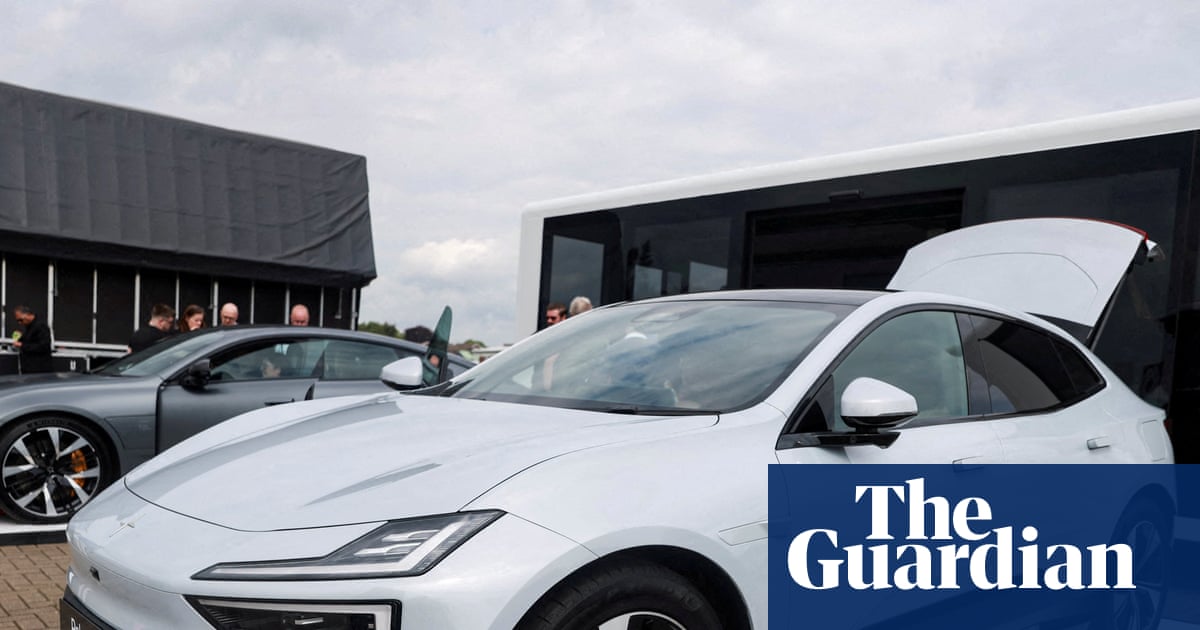
The Society of Motor Manufacturers and Traders says the UK’s zero-emission vehicle mandate risks jobs, investment and car production unless ministers adjust the rules. The government says it is reviewing the policy in a pragmatic and balanced way.
The UK car industry has stepped up its warning that the zero-emission vehicle mandate is moving faster than the market and could damage jobs, investment and domestic production.
The Society of Motor Manufacturers and Traders said in a new report that the current path for the mandate risks undermining UK manufacturing competitiveness at a time when the sector is already facing weak demand and high regulatory costs.
SMMT chief executive Mike Hawes said the industry needed a more realistic route to grow zero-emission vehicle uptake, and argued that changing the mandate was about making the transition achievable rather than weakening ambition.
The warning lands after months of pressure around the rules. Labour has already loosened the mandate once by adding flexibilities that allow more plug-in hybrid sales, and ministers have since signalled that the policy is under review again.
The industry case
According to the report as described by The Times, the mandate requires 38% of vehicles to be electric by next year, while electric models are currently under 25% of production.
The Times also reported that major UK-assembled manufacturers including Nissan, Jaguar Land Rover, Toyota, Bentley and Aston Martin are not on track to meet the target.
That gap has become the central point in the industry’s argument: if manufacturers cannot meet the trajectory without distorting production or delaying investment, the policy may end up weakening the UK’s carmaking base rather than accelerating the transition.
Government pressure
The government’s position remains that it is committed to the 2035 phase-out of new non-zero-emission car and van sales, but it has also said it will review the mandate.
A Department for Transport spokesperson told The Guardian earlier this month that the UK EV market is strong and that the review would be pragmatic and balanced, supporting British industry while continuing to drive investment.
On June 15, The Guardian reported that ministers were considering a lower 2030 pure-electric sales target, potentially reducing it from 80% to 50% and allowing a larger role for hybrids.
That report followed earlier Guardian coverage on June 6 that said the government had already weakened the rules once by widening flexibilities for plug-in hybrid sales.
Why it matters
The dispute goes beyond a single compliance target.
For the industry, the issue is whether the UK can maintain inward investment and keep production competitive while forcing a rapid shift to electric vehicles. For ministers, the question is how to support manufacturing without slowing the move to zero-emission transport.
The stakes are especially high for UK automotive jobs, factory investment and the confidence of companies deciding where to build future models. The debate also affects charging companies, environmental groups and unions, all of whom have a stake in how quickly the transition proceeds and on what terms.
A Wall Street Journal report on June 25 said SMMT had already warned that weak demand and regulatory costs were threatening competitiveness, jobs and future investment, reinforcing the broader industry message.
What happens next
The immediate question is whether the government responds to SMMT’s new report with another change to the mandate.
Also unresolved is whether ministers keep the 2030 target at 80% pure-electric sales or move to a lower figure, and how much support there is inside government and among manufacturers for further loosening.
The timing of the review is another key issue. Earlier reporting suggested the Department for Transport wanted a pragmatic review that would continue to support investment, but it was not clear whether the timetable would remain aligned with the previously discussed early-2027 window.
For now, carmakers are pressing for a more realistic path, while the government is trying to balance industrial policy, climate targets and investor confidence.
,Revision note
Initial automated publication.