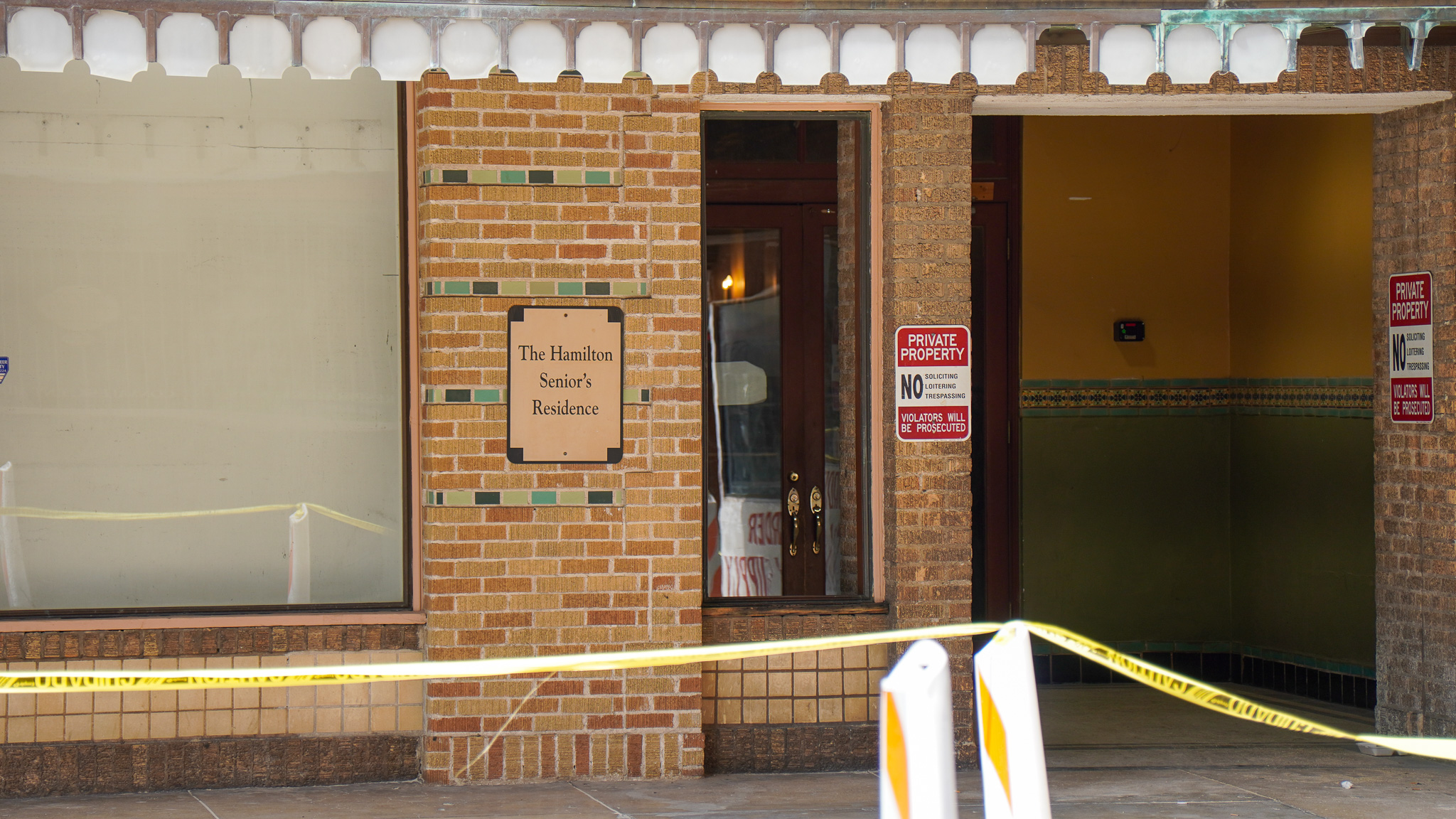
Laredo issued an emergency advisory for Hamilton Senior Apartments after a partial failure of the building’s chiller, prompting temporary cooling measures and renewed scrutiny of a permanent repair timeline.
Laredo issued an emergency advisory for Hamilton Senior Apartments after a partial failure of the building’s air-conditioning chiller, escalating a cooling crisis at the city-overseen senior housing complex as dangerous heat continues across South Texas.
City officials said temporary cooling measures are now in place, but they described those steps as a stopgap rather than a permanent fix. The advisory adds urgency to a problem that had already prompted wellness checks, resident relocations and questions about how the building will be kept safe through the summer.
Mayor Victor Trevino said air conditioning is a necessity, not a luxury, for elderly residents in Texas heat. He also said the aging system requires specially fabricated replacement parts that are not expected until September and estimated the full repair could cost as much as $1 million.
How the problem escalated
The latest advisory builds on earlier reporting from June 23, when wellness checks found some residents with inadequate or nonfunctioning air conditioning at the complex. At that point, city officials began assessing how many residents needed help and moved some people to hotels or other air-conditioned locations.
Trevino also asked Fire Chief Guillermo Heard to determine how many residents needed replacement personal AC units. Hamilton Senior Apartments has 164 apartments, making the extent of the cooling problem a significant issue for a large population of older residents.
By June 25, the city had moved from assessment into a formal emergency response. According to the reporting, the advisory was issued after a partial failure of the building’s chiller, and temporary cooling measures were put in place to reduce immediate risk.
Why the building is vulnerable
Hamilton Senior Apartments has been under city oversight since the Laredo Housing Finance Corporation board was dissolved in 2024. That means the city remains responsible for resident support even as the building’s aging cooling equipment continues to fail.
The timing is especially sensitive because of the ongoing heat risk. Older adults are more vulnerable to heat-related illness, and city officials have framed the air-conditioning problem as a public-safety issue rather than a routine maintenance complaint.
Councilmember Alyssa Cigarroa said the city had already approved more than $225,000 for a cooling-system replacement using existing capital funds. Even so, the available funding appears to be only part of the overall repair picture.
Repair timeline and funding questions
The biggest unanswered question is how quickly the permanent fix can be delivered. Trevino said the needed parts for the aging cooling system have to be specially fabricated, which pushes the expected replacement timeline to September.
That delay leaves city officials relying on temporary measures while temperatures remain high. It also raises the possibility that more residents could need relocation or additional emergency support if the existing cooling does not hold.
The funding backdrop is tied to Proposition D, the bond measure that would have supported repairs and renovations at the complex but did not pass. The city now has to balance emergency support, resident safety and the cost of a longer-term infrastructure repair.
Residents and council members are likely to keep pressing for a clearer answer on whether the approved capital money is enough, whether more funds will be needed and how the city will bridge the gap until replacement parts arrive.
For now, the central question is how long temporary cooling can protect residents at Hamilton Senior Apartments if the heat persists. The city says it will continue check-ins and emergency support while it works toward a permanent repair, but the timeline remains unresolved.
Revision note
Initial automated publication.