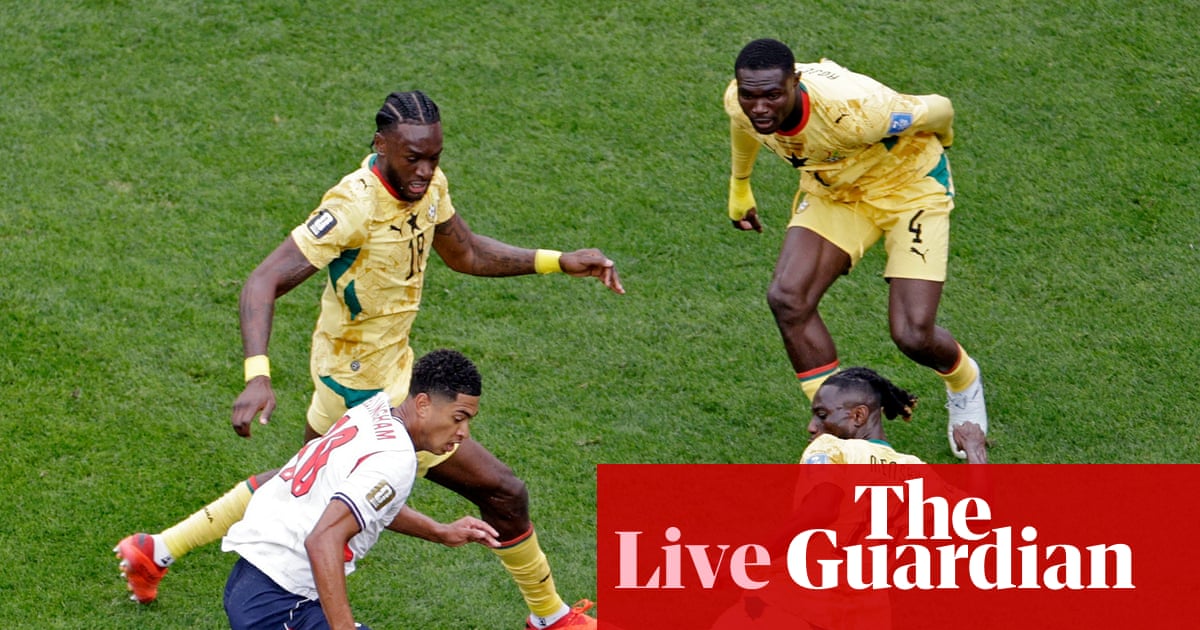
England and Ghana met in a World Cup Group L match in Boston with both sides still in contention for knockout qualification. England controlled possession for long spells but struggled to break down Ghana’s compact defense, keeping the result and the group picture live.
England and Ghana met in a 2026 World Cup Group L match in Boston on Tuesday with both teams still chasing knockout-stage qualification.
England had the ball for long spells and pressed high up the field, but Ghana’s compact defensive shape made it hard for Thomas Tuchel’s side to create clear chances. The Guardian said England controlled roughly 88% possession in the first half, while The Times reported a similar figure early on as Ghana stayed in a low block and narrowed space through the middle.
The match carried immediate stakes. Pre-match reporting said both sides had entered on three points after opening wins, meaning a victory could clinch a place in the Round of 32 and potentially the top spot in Group L.
Jude Bellingham was making his 50th England appearance, while Tuchel’s lineup included Marc Guéhi and Djed Spence in defense. Ghana, managed by Carlos Queiroz, were set up conservatively and looked content to absorb pressure and wait for openings.
Match pattern
England’s approach was clear from the start: keep the ball, push Ghana back and look for a way through a disciplined shape. That left the game tilted in England’s favor territorially, but without many obvious chances.
Ghana’s plan was equally clear. Their defensive block stayed narrow and deep, and the team’s first priority was to deny space rather than open the game up. That made the contest feel like a tactical test as much as a football match.
Group L context
The wider Group L picture mattered as much as the match itself. England’s opening win over Croatia and Ghana’s victory over Panama had set up a tight race, with Croatia and Panama also part of the group.
The final round of Group L fixtures was scheduled for June 27, so the result in Boston could shape the path to the knockout rounds. A win for either side would have major implications for qualification, while a draw would keep the group alive going into the last set of matches.
What to watch next
The key immediate questions were whether either side could find a decisive goal, whether that would secure Round of 32 qualification, and how the later Panama-Croatia match would affect the standings.
Any late substitution, injury or disciplinary issue would also matter for the final group fixtures.
Revision note
Initial automated publication.