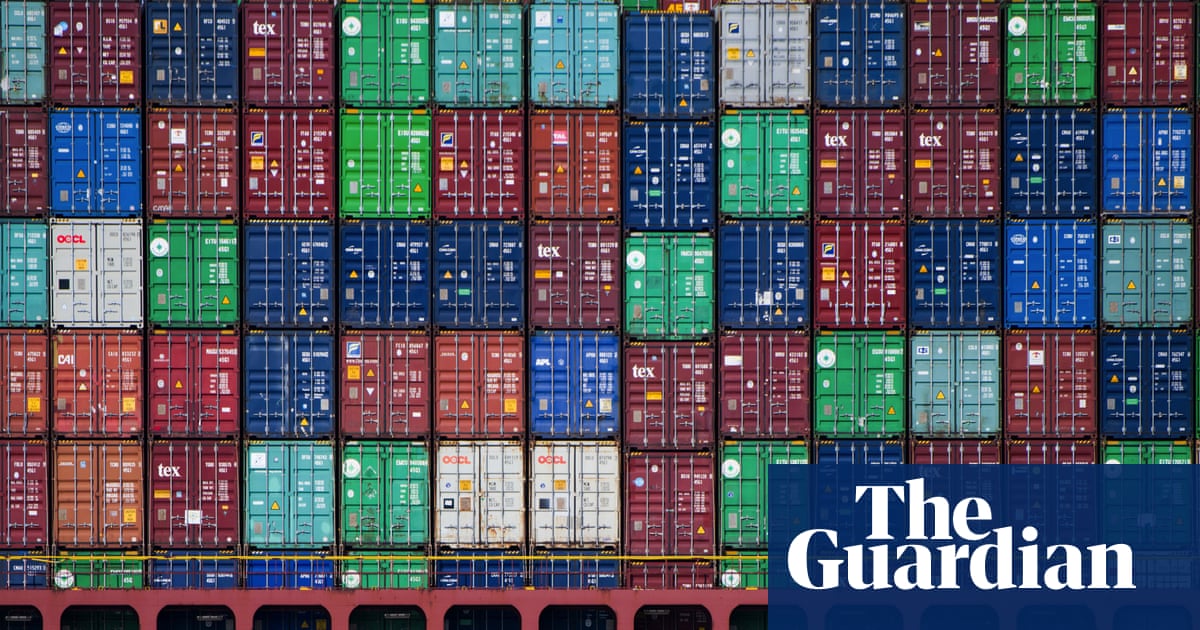
Eurostat data cited in reporting show the EU’s goods deficit with China reached €31.9bn in April, or about €1bn a day, intensifying debate in Brussels over quotas and safeguards.
The European Union’s goods deficit with China reached a record €31.9bn in April, equivalent to about €1bn a day, according to Eurostat data cited in reporting on Monday.
The figure adds to pressure on Brussels as EU officials debate whether the bloc should answer with tougher trade defenses, including quotas or broader safeguard measures on selected Chinese imports.
April data sharpen the warning
The April gap is the latest sign that Europe’s trade imbalance with China is widening fast. Reporting earlier this spring had already pointed to a record Chinese surplus with the EU in the first quarter, but the new monthly data show the scale of the problem more starkly.
A deficit of €31.9bn in a single month is significant not only because of the headline number, but because it shows how quickly the balance can swing when Chinese exports into Europe accelerate.
For European policymakers, the issue is no longer just a trade statistic. It is increasingly being treated as a strategic and industrial warning sign, with implications for manufacturing competitiveness, supply-chain dependence and jobs.
What is driving the gap
The deficit has been linked to a surge in Chinese exports into Europe, especially electric vehicles, hybrids, chemicals and industrial components. Those sectors matter because they sit close to the core of Europe’s industrial base, rather than at the margins of consumer trade.
European industrial groups have warned that the dependence runs deeper than the import of finished goods. They argue that the bloc’s exposure to Chinese inputs and equipment can feed through into production decisions, investment plans and the resilience of wider supply chains.
That is why the deficit is being discussed in Brussels as more than a cyclical trade imbalance. It has become part of a broader argument about whether Europe can protect its manufacturing base while remaining open to trade.
Brussels weighs its response
European trade officials are discussing stronger defenses, including quotas and safeguard measures on selected Chinese imports. Reporting suggests broader import restrictions are under consideration, reflecting concern that existing measures may not be enough.
European Commission trade commissioner Maroš Šefčovič has said the deficit has to be addressed. Stéphane Séjourné has also argued for a tougher approach, warning that Europe could splinter without a more forceful commercial stance toward China.
The policy debate is partly about tools. Tariffs have already been used in some areas, including on Chinese electric vehicles, but officials are now weighing whether quotas or wider safeguards would be a more effective way to slow import pressure in other sectors.
China pushes back
Beijing has rejected the idea that it is deliberately pursuing a trade surplus with Europe. China’s foreign ministry says it has never intentionally sought such an outcome.
Chinese officials and their defenders also argue that the surplus should not be read as simple evidence of unfair intent. One part of the counterargument is that some EU companies manufacture in China and ship goods back into Europe, which can contribute to the overall imbalance.
That dispute matters because it shapes how far the EU may be willing to go. If Brussels sees the deficit as mainly the result of overcapacity and subsidy-driven exports, trade-defense measures become easier to justify politically. If it sees the imbalance as a more complicated product of global supply chains, the case for broad restrictions becomes less straightforward.
Why the issue is rising now
The new April data land after several weeks of growing political attention. Earlier reporting on the first-quarter surplus and on warnings from EU officials helped build the case that the problem is structural rather than temporary.
The timing also matters because EU leaders are due to meet in Brussels on June 18, where trade pressure on China is expected to remain part of the discussion. That meeting could help determine whether the bloc moves from debate to specific proposals.
Further clarity is likely later in the summer, when May and June trade figures are released in July and August. Those numbers will show whether the April deficit was an outlier or whether the bloc really is running at close to a €1bn-a-day pace.
The stakes for Europe
The concern in Brussels is not only about trade balances. European policymakers and industrial groups are worried about competitiveness, jobs and strategic autonomy if key sectors remain heavily exposed to Chinese imports and inputs.
The stakes extend beyond cars. Chemicals, industrial components and other manufacturing supply chains are all part of the discussion, along with the possibility that Europe may need more targeted trade defenses to protect vulnerable sectors.
For now, the April figures give Brussels a fresh reason to consider whether current measures are enough. The immediate question is whether the EU should rely on existing tariffs, or move toward broader quotas and safeguards to slow the widening deficit with China.
Revision note
Initial automated publication.