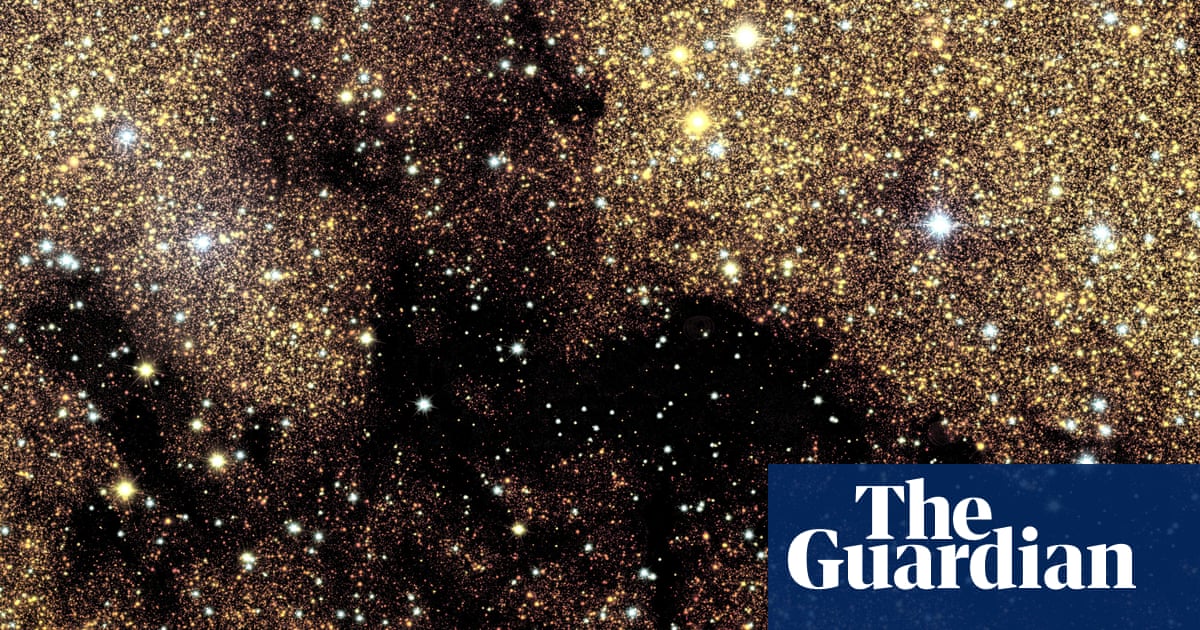
ESA’s Euclid telescope has released a visible-light mosaic of the Milky Way’s central bulge showing more than 60 million stars. Built from nine pointings over about 26 hours in March 2025, the image is expected to help astronomers separate crowded stars and improve microlensing-based exoplanet searches.
A new view of the galactic bulge
The European Space Agency’s Euclid mission has released what multiple outlets describe as the largest and most detailed visible-light image yet of the Milky Way’s center.
The mosaic shows more than 60 million stars in the galaxy’s crowded central bulge, a region that is notoriously hard to observe because so many stars overlap in the same field of view.
Euclid’s visible-light camera was able to separate individual stars in that dense region, making the image both a visual milestone and a useful scientific dataset.
How Euclid made it
The image was built from nine separate pointings taken over about 26 hours of observations in March 2025.
Each pointing covered an area of sky larger than the full moon. Those observations were then stitched together into one wide mosaic of the Milky Way’s core.
That cadence matters because the bulge is not just bright and crowded. It is also a difficult region to map cleanly enough for follow-up work on faint or transient signals.
Why the image matters for planet searches
The release is not being framed as a direct exoplanet discovery. Its value is as a survey asset that could make later searches more reliable.
Astronomers use microlensing to detect planets when a foreground star briefly bends and amplifies the light from a background star. In a field as crowded as the bulge, resolving overlapping stars is essential for identifying those events and interpreting them correctly.
Researchers cited in coverage said the Euclid dataset could improve follow-up measurements, helping teams confirm planets and estimate their masses with greater precision.
A mission with a broader purpose
Euclid was built primarily to study dark matter and dark energy, not exoplanets. The bulge mosaic shows how a cosmology mission can still produce data that is valuable for planetary science.
The new image also gives astronomers a reference field for studying stellar motions in one of the hardest regions of the sky to untangle.
That makes the release useful beyond its immediate visual impact. It supplies a benchmark for future work in crowded-star environments.
What happens next
Astronomers are expected to use the bulge data to refine stellar measurements and identify microlensing candidates.
Researchers will also compare Euclid’s field with future observations from NASA’s Nancy Grace Roman Space Telescope. That comparison could help improve planet confirmation and mass estimates.
ESA and the Euclid mission team are likely to continue releasing science results from the bulge survey as analysis progresses.
For now, the image stands as one of Euclid’s clearest demonstrations that a mission designed for cosmology can also sharpen the search for worlds around other stars.
Revision note
Initial automated publication.