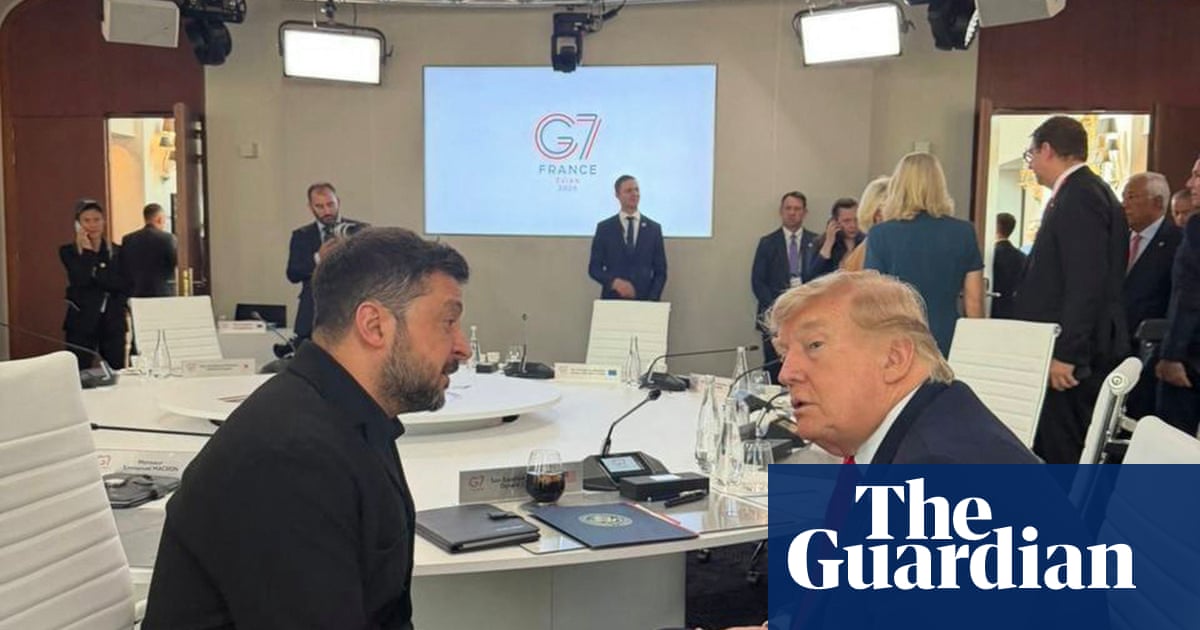
European leaders at the G7 summit in Évian-les-Bains pressed Donald Trump to help bring Volodymyr Zelenskyy and Vladimir Putin into direct peace talks, with sanctions pressure and continued support for Ukraine also central to the discussions.
European leaders used the G7 summit in Évian-les-Bains on June 16 to press U.S. President Donald Trump to help create a direct negotiating track between Ukrainian President Volodymyr Zelenskyy and Russian President Vladimir Putin.
The push reflected a broader European effort to use Trump’s influence with Moscow and Washington’s leverage over the war to move peace talks forward. Reporting from the summit said Trump was willing to mediate, but there was no confirmed commitment that the United States would host the talks.
Zelenskyy attended the summit at the invitation of French President Emmanuel Macron, giving European leaders a chance to coordinate their message while the war in Ukraine remained one of the meeting’s central topics. G7 leaders also discussed stronger sanctions on Russian energy and continued military and financial support for Ukraine.
Why Trump matters
European leaders view Trump as a figure with enough political weight to force a new diplomatic channel on the conflict. The idea under discussion was not a broad peace conference, but a direct Zelenskyy-Putin meeting that could be hosted on U.S. soil or otherwise facilitated by Washington.
That format would give Kyiv and its allies a way to test whether Moscow is prepared for face-to-face negotiations. It would also allow European leaders to keep pressure on the process without leaving Ukraine isolated.
Finnish President Alexander Stubb had reportedly declined a role in representing Europe in possible talks, underscoring that one unresolved question is who would speak for the continent if a broader negotiation track takes shape.
What was discussed at the summit
The Ukraine discussions unfolded alongside another major G7 agenda item: Iran. Zelenskyy argued that a ceasefire in Iran could free up more U.S. attention for Ukraine, reflecting how closely the two crises were being tracked at the summit.
The summit reporting pointed to a wider diplomatic effort, with European leaders trying to shape any talks before they begin. Their goal was to prevent a direct channel between Kyiv and Moscow from becoming a process that sidelines Ukraine or weakens European influence.
AP reporting said Ukraine remained a major topic at the G7, with leaders coordinating military aid and Zelenskyy meeting Trump bilaterally during the summit. The Guardian reported that European leaders were explicitly urging Trump to host the talks, while Trump signaled willingness to mediate.
What happens next
The immediate tests are whether Trump follows his reported openness with any formal offer to host or facilitate talks, and whether G7 leaders issue clearer language on sanctions, aid or negotiation principles.
The other key question is whether Zelenskyy, Macron, Starmer or the White House puts a venue, timetable or format on paper. Until then, the summit has produced pressure and signals, but not a finished peace plan.
Revision note
Initial automated publication.