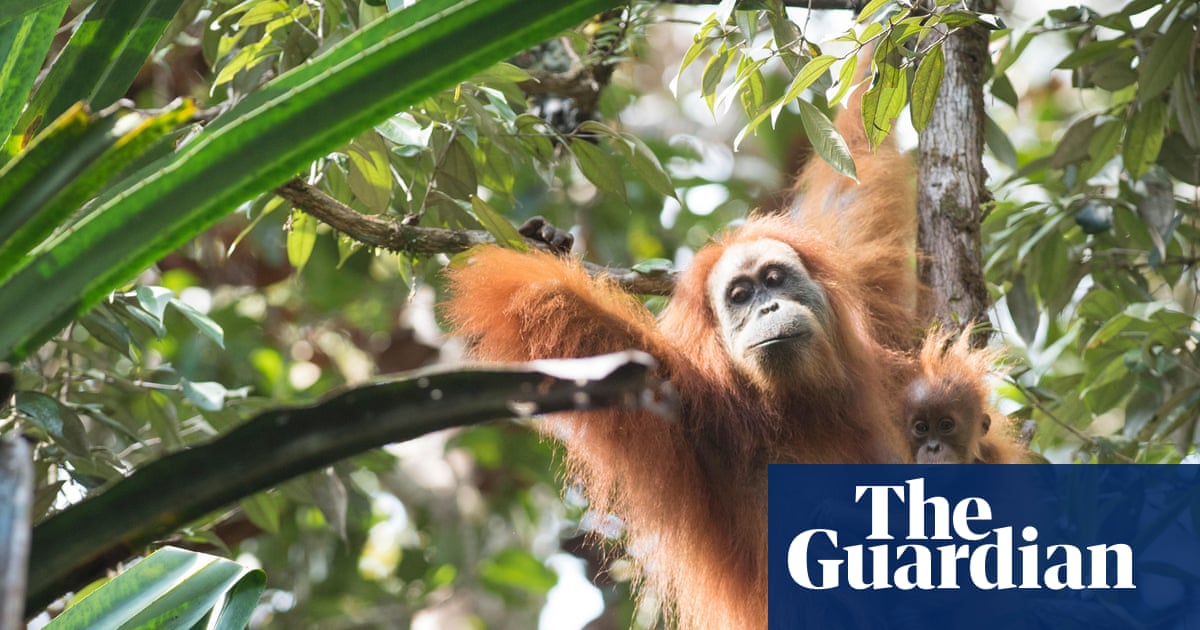
A Current Biology study says extreme rain and landslides in North Sumatra killed 58 Tapanuli orangutans in November 2025, destroyed 11.7% of their primary habitat and deepened extinction fears for the critically endangered species.
Study findings
A new study says extreme rain and landslides in North Sumatra killed 58 Tapanuli orangutans in November 2025, a blow to the world’s rarest great ape and one of Indonesia’s most fragile species.
The research, published in Current Biology and reported on June 10, estimates the deaths amounted to about 7% of the remaining global population and about 11% of the local population in the Batang Toru ecosystem.
The study also says the storm and landslides destroyed 11.7% of the orangutan’s primary habitat, or about 8,300 hectares, in the same forest area.
The Tapanuli orangutan, Pongo tapanuliensis, is critically endangered and has fewer than 800 individuals left in the wild.
What happened in November 2025
The paper links the deaths to four days of exceptional rainfall and landslides in North Sumatra’s Batang Toru region.
Reporting on the study says more than 1,000 millimeters of rain fell over that period, helping trigger slope failures and severe forest damage.
The timeline matters because the November disaster was first described months ago as a serious conservation event, but the new study provides a higher and more specific estimate of the toll on the species.
Earlier coverage in December 2025 had put the likely death toll at 33 to 54 orangutans. The new analysis raises that to 58.
Why the loss is so serious
The Tapanuli orangutan lives only in the Batang Toru forest area of North Sumatra, so losses there affect the species as a whole.
That restricted range makes the orangutan unusually vulnerable to any event that removes animals, fragments habitat or cuts off movement between forest patches.
Researchers cited in the reporting, including scientists from Liverpool John Moores University and Universitas Indonesia, warned that even annual losses of 1% could threaten the species’ long-term survival.
The study’s warning is stark because the population is already small. For a species with fewer than 800 animals, a single extreme weather event can erase a large share of the remaining total.
Batang Toru pressures
The Batang Toru ecosystem has long faced habitat fragmentation and other land-use pressures, including mining, roads and hydropower-related development.
Those pressures matter because they reduce food sources, shelter and the forest connectivity the species needs to move through its range.
The new study adds another layer of risk: the landslides did not only kill orangutans, they also damaged the forest base needed by the survivors.
That makes the event more than a wildlife loss. It is also a habitat-loss problem in one of Southeast Asia’s most sensitive biodiversity areas.
Policy implications
As reported, the paper calls for stronger protection of remaining habitat and a moratorium on land-degrading activities in the Batang Toru ecosystem.
That recommendation puts pressure on Indonesian authorities to treat the area as both a conservation priority and a climate-vulnerability hotspot.
The broader Sumatra floods and landslides in late 2025 also caused major human losses and infrastructure damage, underscoring how large the disaster was beyond the orangutan case.
For conservationists, the immediate question is whether enough habitat can be protected, connected and restored to keep the species from sliding further toward extinction.
The June 2026 study reframes the November storm as both a climate-extreme and a biodiversity crisis, with consequences that extend far beyond one rain event.
What comes next
The next questions are whether the Current Biology paper is accompanied by full author and methods details, whether Indonesian authorities issue a formal response, and whether outside experts broadly accept the 58-death estimate.
Conservation groups and local NGOs are also likely to focus on whether the findings accelerate protection measures in Batang Toru or trigger any change in land-use policy.
For now, the study stands as a warning that extreme weather can push an already endangered species closer to the edge in a single season.
,Revision note
Initial automated publication.