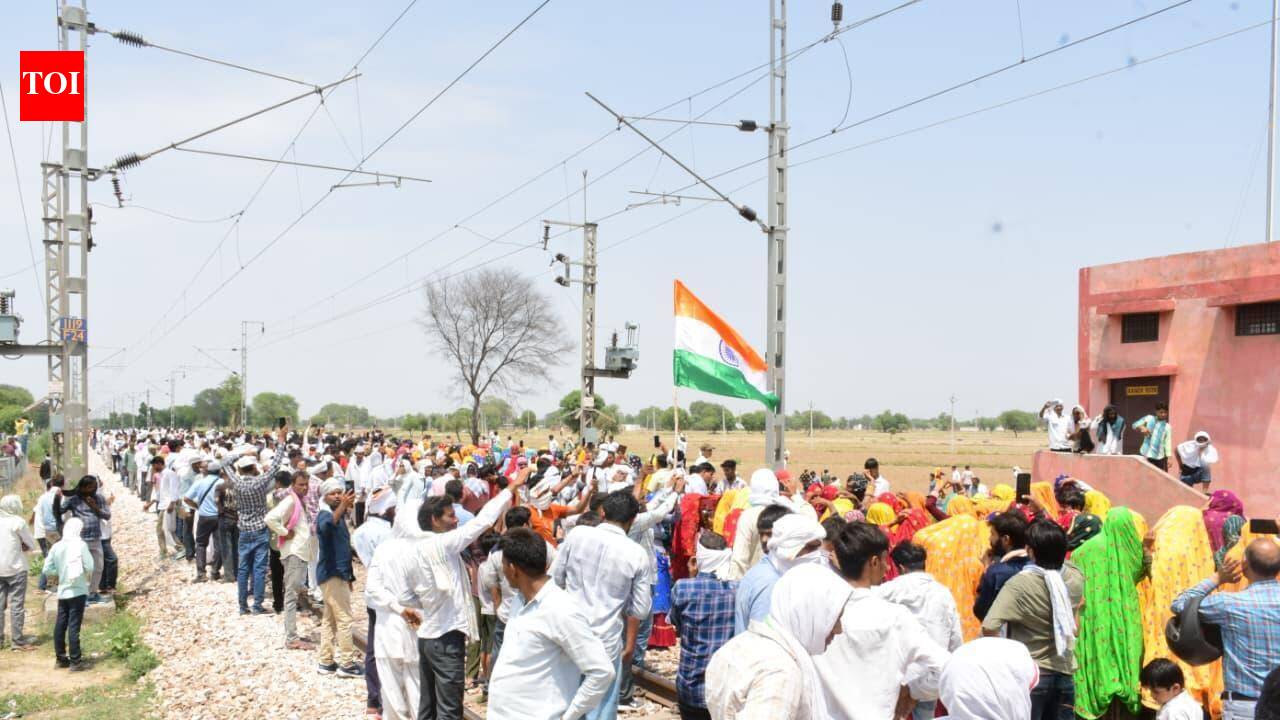
Farmers protesting for irrigation water from Panchana Dam in Rajasthan’s Sawai Madhopur district have kept their sit-in going into a 16th day. The dispute has already triggered rail-track blockades, stalled talks after Karauli representatives boycotted a meeting, and prompted a separate state assurance of drinking water for 39 Karauli villages through the Panchana-Gudla lift project.
Farmers protesting over release of Panchana Dam water in Rajasthan’s Sawai Madhopur district have kept up their sit-in into a 16th day, extending a local irrigation dispute into a longer-running law-and-order and public-works issue.
The protest is centred on demands from farmers in the dam’s command area for water to be released for irrigation. Over the past several days, the standoff has also affected the Delhi-Mumbai rail corridor and exposed a widening split between groups on the Sawai Madhopur and Karauli sides of the dispute.
Protest enters day 16
Reporting on June 21 said the agitation had reached its 16th day. That follows earlier coverage on June 18 that placed the protest at day 13, showing the sit-in has continued without a reported settlement.
The core demand has remained the same: farmers in the command area want Panchana Dam water released for crops. The dispute has not been described as resolved, and there is no reported compromise so far.
Rail disruption added pressure
The protest moved beyond a sit-in earlier in the week when demonstrators blocked the Delhi-Mumbai rail track near Khandip village.
A June 18 report said protesters, including women and youth, blocked the track for nearly two hours. Rail services were disrupted until around 2:30 p.m., and the same report said it was the third consecutive day of rail-track blockades.
That escalation increased pressure on authorities by turning the water dispute into a transport disruption on a major corridor.
Talks stalled after boycott
Efforts to resolve the issue have also run into resistance. A June 18 report said a scheduled administrative meeting on the dispute stalled after Karauli representatives boycotted it.
Officials and stakeholders from the Sawai Madhopur command area still attended the meeting, but the boycott left the two sides without a reported breakthrough.
The dispute has therefore become a contest between Sawai Madhopur-side farmers seeking release of water from the dam and Karauli-side representatives reported to oppose that release.
Drinking-water assurance for Karauli villages
On June 20, reporting said the government had separately assured drinking water for 39 Karauli villages through the Panchana-Gudla lift project.
That assurance appears aimed at addressing drinking-water needs in the area, but it is not the same as a reported settlement of the irrigation dispute.
It remains unclear whether the lift-project assurance has translated into actual supply on the ground or whether it is still only an administrative commitment.
What remains unresolved
The immediate stakes are clear. For the protesting farmers, the issue is irrigation water for crops in the command area. For Karauli villages, the focus is on drinking-water supply. For railway users, the concern is repeated disruption on the Delhi-Mumbai line.
What is still missing is a specific release schedule, a fresh compromise between the two district-side groups, or a clear indication that the state’s separate drinking-water assurance will ease the wider standoff.
For now, the Panchana protest remains active, the opposing sides remain split, and the next move appears likely to come from another administrative meeting or a new government water plan.
Revision note
Initial automated publication with expanded chronology and context.