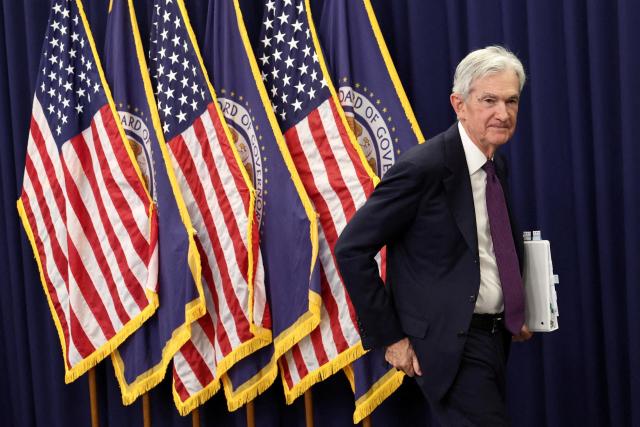
The Federal Reserve held rates unchanged on April 29, 2026, but four dissents sharpened the policy divide just as the Bank of Korea weighs its next move.
The Federal Reserve held its target range unchanged on April 29, but the decision exposed a sharper split inside the central bank and added another layer of uncertainty for the Bank of Korea.
The Fed left rates steady with four dissents, the most divided vote in decades. Three officials objected to keeping an easing bias in the statement, while one dissented in favor of a 25-basis-point cut.
That vote matters in Seoul because the Bank of Korea has already been signaling caution. On April 10, the BOK held its base rate at 2.50% and warned that Middle East conflict was adding to inflation pressure and growth risks. Minutes released on April 28 said all members favored keeping the base rate unchanged until the next meeting.
The Fed's decision makes the external backdrop less predictable. On April 30, BOK Deputy Governor Yoo Sangdae said the divided U.S. stance and its emphasis on higher inflation had increased uncertainty around the Fed's policy path, and that markets need close monitoring.
The BOK now faces a familiar trade-off: whether to keep support in place for growth or respond more forcefully if inflation pressures and global policy uncertainty remain elevated.
The immediate focus will be on whether U.S. inflation and energy prices stay firm enough to keep the Fed cautious, and whether that shifts the Bank of Korea's tone at its next meeting.
Revision note
Initial automated publication.