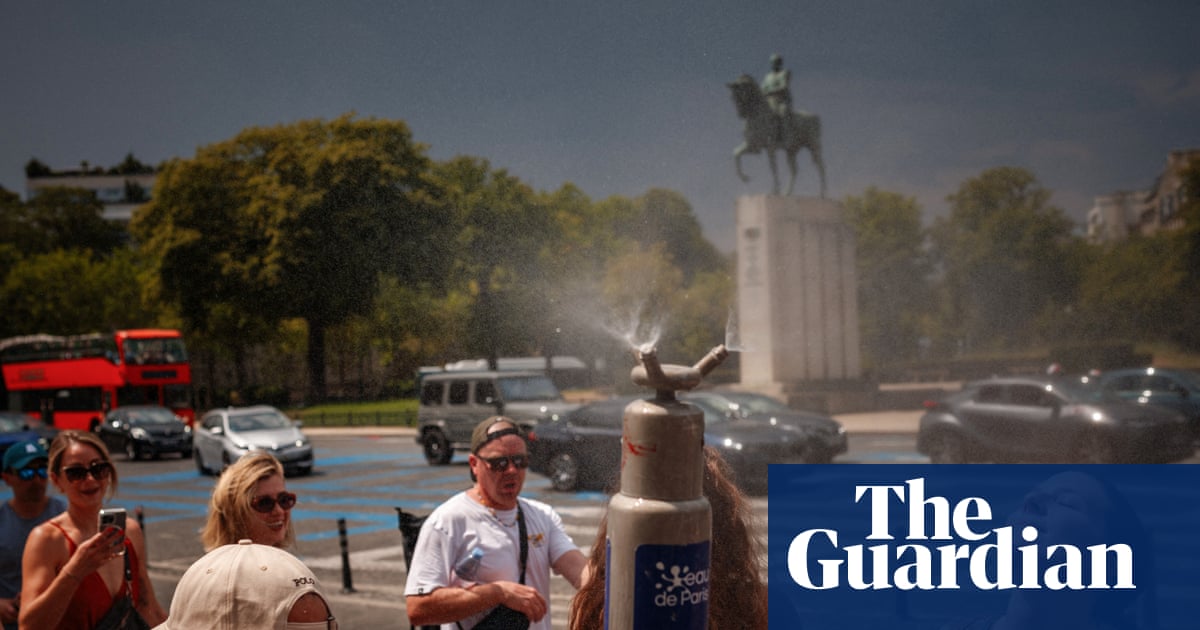
Reports say a fourth toddler has died in France during the late-June heatwave, as hospitals, schools and emergency services strain under the pressure and forecasters warn the extreme heat is shifting east.
France’s late-June heatwave has escalated into a broader public-safety emergency, with reports that a fourth toddler has died in France and forecasters warning that the dangerous heat is now shifting east across Europe.
The latest reported death came as French hospitals, ambulance crews and local authorities were already struggling to cope with a surge in heat-related illness. Officials in Paris have moved to restrict public drinking in parts of the city, while France has raised its hospital emergency response in the affected areas.
The reporting points to a fast-moving crisis that has moved beyond weather alone. It is now affecting emergency rooms, schools, transport planning and public events, while also raising questions about how prepared France and its neighbors were for an intense early-summer heatwave.
Reported child deaths in France
The Guardian reported on June 26 that France’s heatwave death toll among toddlers had risen to four. According to the report, the latest case involved an 18-month-old child who died in emergency care in Marseille after being found in a car in a state of hyperthermia.
The same report said earlier cases included a three-year-old boy in a Paris suburb who died after becoming trapped in a car, plus two other children aged two and four who were found dead in their family car.
The available reporting does not show that all of the individual deaths have been publicly confirmed by police, prosecutors or hospitals. Even so, the sequence has become the most severe human toll so far in France’s heatwave coverage.
Hospitals and emergency services under strain
Le Monde reported that French hospitals were at a tipping point after seven days of extreme heat, especially in the Paris region. The paper said the government raised the ORSAN emergency plan to level 3, a major-response tier used when the health system is under severe pressure.
The Guardian said Paris police chief Patrice Faure described hospitals as being at full capacity and said ambulance services were handling roughly double their usual call volume. That strain has made the heatwave a systems problem, not just a weather event.
Paris also imposed a public alcohol restriction in parts of the city to help reduce pressure on emergency services. The move reflects the effort by local authorities to cut avoidable demand while hospitals and first responders deal with a heavy flow of heat-related cases.
Le Monde also reported that more than 1,800 French schools were affected by closures or disruption during the heatwave, adding to the wider disruption for families and public services.
Political pressure and public response
The heatwave has also put France’s leadership on the defensive. Le Monde reported criticism of President Emmanuel Macron and Prime Minister Sébastien Lecornu over whether the state was sufficiently prepared for the scale of the emergency.
According to the reporting, the government has defended its response and pointed to measures such as cooling funds for hospitals and checks on vulnerable people by postal workers. The political debate now runs alongside the immediate public-health response.
The emergency measures in Paris and the pressure on hospitals underline how quickly severe heat can turn into a governance issue. What began as a weather alert has become a test of public-adaptation planning, emergency capacity and local coordination.
Heat shifting east
The immediate weather concern is no longer limited to France. Forecasters cited in the reporting said the hot air mass is expected to shift toward central and eastern Europe, raising the risk of renewed alerts in countries including Germany and Poland.
That matters because the heatwave has already shown how quickly extreme temperatures can disrupt normal life. Across France, the impacts have included health-system strain, school disruption and public restrictions. In the next phase, the concern is that the same pattern could spread into neighboring countries with fresh health and wildfire risks.
The Guardian also reported a provisional June temperature record of 37.3C in the UK, while Paris reached 40.9C on June 25. Those readings underline how broad and intense the heat has been across western Europe.
Officials and forecasters are still watching for updated warnings as the weather pattern evolves. The immediate questions are whether more deaths are formally confirmed in France, how long the pressure on hospitals lasts and which central and eastern European countries will face the next round of severe heat.
Revision note
Initial automated publication.