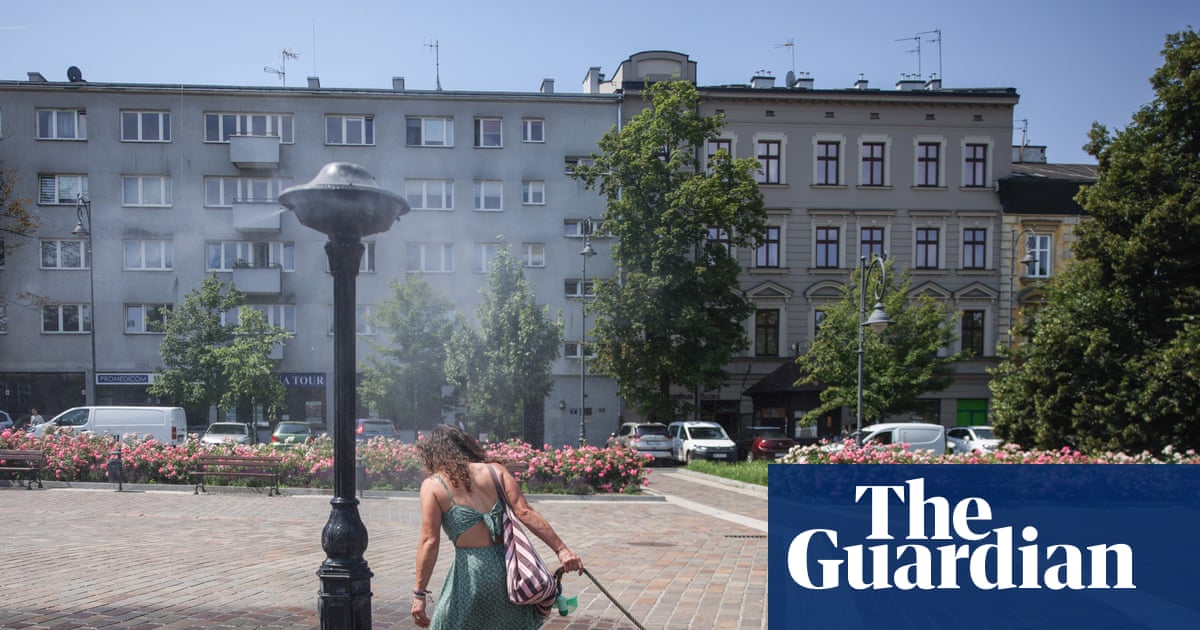
A late-June heatwave pushed temperatures above 40C across Germany, Czechia, Poland and Hungary, setting or breaking national records and driving wildfire, travel and health responses.
Central Europe was hit by another day of extreme heat on June 28 as temperatures climbed above 40C in Germany, Czechia, Poland and Hungary, setting or breaking national records and adding pressure to firefighters, transport operators and public health services.
The wave of record readings marked the eastward shift of a broader European heatwave that had already brought warnings across the continent. In several places, the temperatures were not just high for the season but high for the countries themselves, with officials reporting values that exceeded previous national benchmarks.
Record readings across central Europe
Germany recorded a preliminary all-time high of 41.7C in Coschen, near the Polish border in eastern Brandenburg, according to the national weather service. That reading surpassed the previous German record of 41.5C, which had been set the day before in Drewitz.
Poland recorded 40.5C in Słubice, breaking a 105-year national record of 40.2C from 1921. Czechia’s hydrometeorological institute confirmed a new all-time high of 41.9C in Doksany. Hungary recorded 40.7C in Budakalász, topping Saturday’s 40.0C and setting a new record for that date.
The sequence of readings showed how quickly the hottest air mass moved east from western Europe into central Europe. AP and The Guardian both reported the same multi-country record pattern as the heatwave intensified.
Wildfires and evacuations
The heat also increased fire danger in Germany. Wildfires broke out in several areas, including Gohrischheide, where the blaze affected land contaminated with World War II ammunition.
A major firefighting operation near Traisen in southwest Germany was paused after explosions were triggered at a former munitions disposal site. Around 650 people were evacuated from the area, according to the reporting.
The combination of heat, dry conditions and hazardous ground made the fire response more difficult and raised the stakes for emergency crews already working in dangerous terrain.
Public safety and transport pressure
Authorities and service providers also moved to reduce the immediate impact on daily life. Berlin police used water cannons to help people cool off, a sign of the strain the heat put on public spaces in the capital.
Deutsche Bahn advised against nonessential travel as high temperatures and wider disruption complicated rail operations and made journeys less comfortable and potentially less safe for passengers.
Those measures reflected a broader challenge during prolonged heat events: the emergency is not only medical, but also logistical, affecting how people move, work and stay safe through the day.
Health risks beyond Germany
The broader European heatwave has already had a serious public-health toll. Reporting linked the extreme heat to about 1,000 additional deaths in France, according to French public health authorities.
France’s national public health agency said 85% of those additional deaths were among people aged 65 or older. That age profile underscores why heatwaves are especially dangerous for older adults and other vulnerable people, particularly when temperatures remain high overnight and relief is limited.
The France figures also put the central European records in a wider regional context. The current heatwave is not just a weather story, but a public-health event with measurable consequences.
What officials are watching next
Meteorological agencies and civil protection authorities are still watching for more records as the heatwave continues to shift east. Open questions include whether additional national or city records will fall, how quickly the German fires can be contained and whether evacuation zones will expand or close.
The current reporting also leaves room for revisions to the temperature readings, which are often checked again after preliminary reports are issued. Even so, the confirmed data already show an exceptional late-June event across several central European countries.
For now, officials remain on alert as the heatwave moves on. The immediate priorities are fire containment, cooling and travel guidance, and protection for people most exposed to extreme heat.
Revision note
Initial automated publication with expanded verified chronology and impacts.