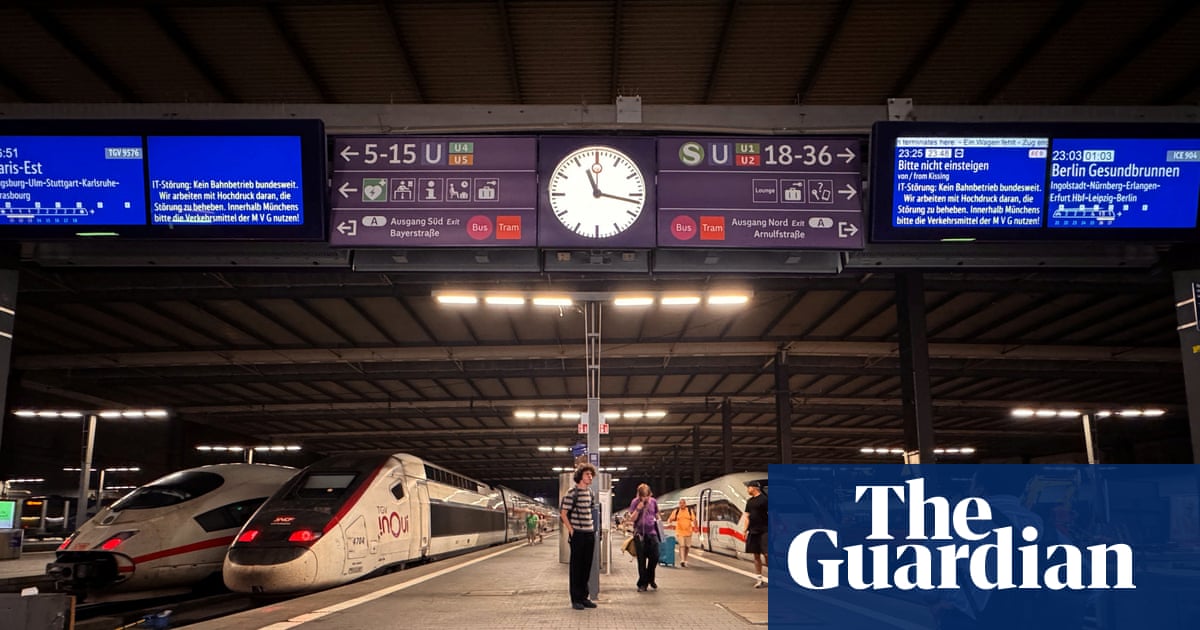
A maintenance failure on Germany’s GSM-R railway communications network triggered a nationwide outage that halted trains for about two hours and stranded passengers across the country. Deutsche Bahn said service resumed step by step after midnight, while officials pressed for a fuller explanation.
Nationwide shutdown
Germany’s rail network was pushed into a near-total standstill late on June 23 after a failure during scheduled maintenance on Deutsche Bahn’s GSM-R communications system disrupted train operations nationwide.
Passenger and freight traffic were both affected. Trains were held across the country as a safety precaution, leaving passengers stranded at stations and, in some cases, on trains.
Deutsche Bahn apologized to travelers and said it offered assistance where possible, including taxi and hotel vouchers in some cases.
AP reported that the outage lasted about two hours before service began resuming step by step after midnight.
What Deutsche Bahn says happened
Deutsche Bahn said the disruption involved GSM-R, the digital radio system used for internal railway communications and operations.
Philipp Nagl, the company’s infrastructure chief, said the apparent cause was a fault during maintenance work on a central component. Later reporting said the problem was linked to a planned replacement of an ageing communications component.
DB InfraGO, the infrastructure arm of Deutsche Bahn, said the investigation was continuing and that the company would analyze the cause meticulously.
The company’s account is important because the shutdown did not appear to be a random technical collapse. Instead, the outage emerged during planned work on a core system that rail operations depend on to communicate and coordinate safely.
How the disruption unfolded
The outage began late on June 23, with rail traffic held nationwide as crews responded to the communications failure.
Security protocols meant trains were stopped rather than allowed to continue through the outage. That decision prevented trains from running as normal, but it also limited the risk of operating without reliable communications.
As the night went on, service started to return gradually. AP said trains began running again in stages after midnight, rather than reopening all at once.
That phased restart meant knock-on delays were still possible even after the initial outage ended.
Passengers and freight hit
The shutdown affected both passengers and freight operators, reflecting how deeply the rail system depends on GSM-R for day-to-day coordination.
Passengers reported being stranded at stations and on trains while the system was down. Deutsche Bahn said it tried to help affected travelers where possible, including by arranging alternative support in some cases.
The incident also underscored how a failure in a central communications layer can cascade across a national network. When the system that supports operational messaging goes down, the effects are felt far beyond a single line or region.
Germany runs one of Europe’s largest rail systems, with roughly 50,000 trains moving across it each day, according to the background cited in reporting.
Political scrutiny and backup systems
The outage quickly drew criticism from officials.
Regional transport minister Oliver Krischer called for a full explanation and said reliable redundancy and professional emergency management were essential after a disruption of this scale.
That reaction reflects a wider concern: whether Deutsche Bahn’s backup and contingency arrangements are strong enough when core infrastructure fails during maintenance.
The incident has therefore become more than a one-off technical problem. It is now part of the broader debate over resilience, redundancy and how Germany’s rail operator handles major failures.
Broader rail context
The outage comes against a backdrop of long-running criticism of Deutsche Bahn over delays, cancellations and underinvestment.
That context matters because the latest failure will likely be judged not just on how long it lasted, but on what it suggests about the reliability of Germany’s rail infrastructure.
Initial speculation had included a possible cyberattack, but later reporting said officials and Deutsche Bahn did not see evidence of sabotage or an external attack.
Instead, the developing picture points to a maintenance-related technical failure in a critical communications system.
What happens next
DB is still investigating the exact technical failure and why the backup or emergency response did not prevent a complete nationwide halt sooner.
Officials and ministers are likely to keep pressing for technical answers and for any policy or infrastructure changes that follow.
Passengers may also continue to face delays as the network returns fully to normal operations.
For now, the immediate fact is clear: a planned maintenance job on a central rail communications component was enough to stop trains across Germany and expose how dependent the system is on a network that must work every time.
Revision note
Initial automated publication.