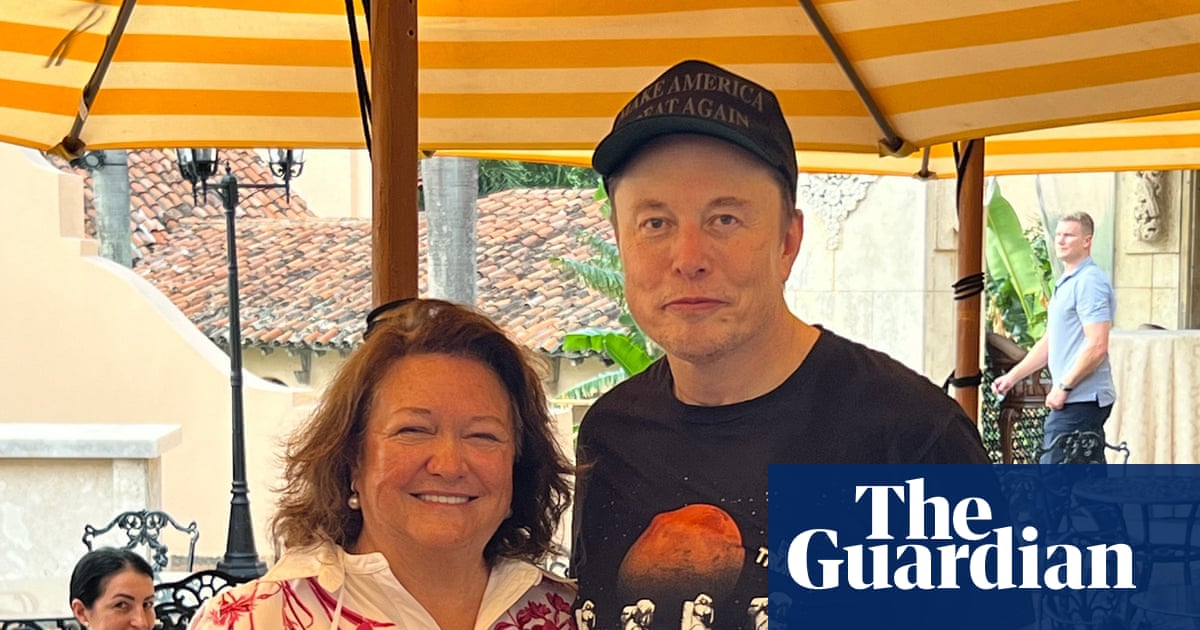
Multiple outlets report that Gina Rinehart’s Hancock Prospecting has bought a SpaceX stake worth more than US$1 billion after the company’s June 12 public debut, with executives pointing to possible overlap in critical minerals, AI infrastructure and technology supply chains.
Multiple outlets report that Gina Rinehart’s Hancock Prospecting has bought a significant stake in SpaceX, making the Australian mining investor one of the most prominent new backers of Elon Musk’s company after its public debut.
The reported purchase, first published on June 15, is said to be worth more than US$1 billion, or about A$1.4 billion. The Wall Street Journal reported a position above US$1 billion, while other contemporaneous coverage described it as at least A$1.4 billion. Hancock has not publicly released a detailed breakdown of the holding.
SpaceX began trading publicly on June 12 and closed its first day at a reported valuation of about US$2.1 trillion after raising US$75 billion. The stock-market debut has been described in coverage as one of the largest listings ever, and the Hancock investment gives the company another high-profile institutional-style backer almost immediately after the offering.
The reported deal
The reporting says the SpaceX stake is Hancock Prospecting’s largest US shareholding if the size reported by the outlets is accurate. It also marks a major diversification move beyond Hancock’s core mining and resources business.
The exact final size of the position remains uncertain because no standalone filing or company statement has set out the complete allocation. The sources agree on the broad scale of the deal, but they vary slightly on the currency framing and final dollar equivalent.
What Rinehart and Korte said
Rinehart said the investment reflected confidence in Musk and his ability to build an unusual business led by strong technical judgment. Hancock chief executive Garry Korte said the company hoped to explore future collaboration with SpaceX.
Korte specifically pointed to Hancock’s critical-minerals investments and SpaceX’s advanced-technology needs as possible areas of overlap. The reporting also says the two sides see potential alignment around AI infrastructure and broader technology supply chains.
Why it matters
The investment puts one of Australia’s richest private investors in direct economic alignment with a newly public Musk company. If the reported amount is confirmed in future disclosures, Hancock would have meaningful exposure to SpaceX’s public-market performance.
It also hints at possible commercial logic beyond portfolio diversification. Hancock’s minerals interests could become relevant if SpaceX expands sourcing or supply-chain relationships for advanced manufacturing, energy systems or other technology inputs.
Timing and context
The chronology matters. SpaceX’s public listing began on June 12, and the Rinehart reports followed on June 15, with multiple outlets confirming the same broad development within hours of one another.
That quick succession suggests the investment was made against the backdrop of SpaceX’s blockbuster market debut, rather than as a long-planned private holding that only later became visible. Coverage says the company’s first-day valuation was about US$2.1 trillion, underscoring the scale of the market moment.
What is still unknown
The reporting does not yet answer whether Hancock’s holding is fixed, staged or likely to change as the IPO allocation settles. It is also unclear whether the investment will lead to any formal commercial arrangement between Hancock and SpaceX.
For now, the verified development is the investment itself and the public comments from Rinehart and Korte suggesting possible future cooperation. Any formal partnership, supply agreement or strategic tie-up would need separate confirmation.
Background
Hancock Prospecting is Gina Rinehart’s privately held mining company. Rinehart has previously diversified beyond iron ore into technology, media and critical-minerals investments.
SpaceX’s public debut has been portrayed in coverage as one of the biggest listings in market history. Musk retains control through voting shares, according to the reporting.
What comes next
The key item to watch is whether Hancock discloses the SpaceX stake in any future portfolio filing or public statement. That would help resolve the uncertainty around the exact final size of the holding.
Observers will also be looking for any follow-up from SpaceX on strategic suppliers, AI infrastructure or minerals sourcing. The reported overlap between the two companies may stay speculative unless it is translated into a concrete commercial arrangement.
Revision note
Initial automated publication.