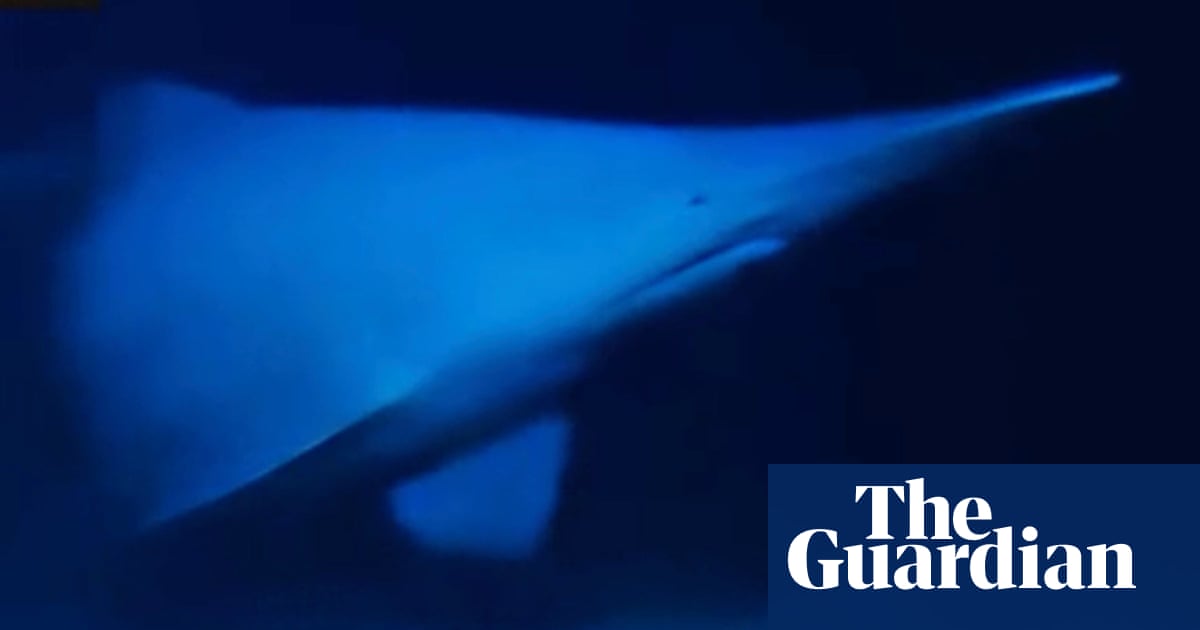
Scientists say they have filmed a goblin shark alive in its natural habitat for the first time, from a Tonga Trench expedition in 2024, with a separate Jarvis Island sighting helping extend the species' known Pacific range.
Scientists say they have filmed a goblin shark alive in its natural habitat for the first time, offering an unusually direct look at one of the ocean's most elusive deep-sea predators.
The footage was recorded during a 2024 expedition in the Tonga Trench by Australian researchers aboard the R/V Dagon. The shark was observed at about 1,997 meters depth after more than 50 days of continuous deep-sea filming.
The report is significant because goblin sharks are usually known from accidental captures or dead specimens, not from clear observations of the animals in situ. Researchers say the new footage helps fill in a major gap in what is known about the species' behavior and habitat.
Why the sighting matters
Goblin sharks are among the least frequently seen sharks alive. Their appearance in the wild is rarely documented, which has limited scientists' ability to study how they move, feed and use deep ocean environments.
The natural-habitat footage therefore has value beyond novelty. It adds evidence about where the species can be found and strengthens the scientific record for a shark that is often discussed more from preserved material than from live observation.
Prof. Alan Jamieson of the Minderoo-UWA Deep-Sea Research Centre is identified in the reporting as a co-author and quoted source. The reporting frames the sighting as important because it captures the animal alive rather than after it has been brought to the surface.
A wider Pacific range
The published reporting also includes a separate goblin shark sighting near Jarvis Island by University of Hawaii researchers. Together, the two observations extend the species' documented range into the central Pacific.
That range extension is one of the main scientific takeaways from the paper in the Journal of Fish Biology. It suggests the species may occur more broadly across deep Pacific waters than its sparse record of sightings has previously shown.
The reporting says the Tonga Trench footage and the Jarvis Island observation were part of the same published package, even though the wording in secondary coverage varies slightly. Some accounts emphasize the first live natural-habitat observation, while others describe the clip more narrowly as a first deep-sea video.
What is still being checked
The available reporting does not yet answer every question around the paper itself, including its full title, full author list and DOI. Those details matter for readers who want to trace the primary research directly.
It is also still unclear whether the University of Hawaii team has issued its own statement or dataset release about the Jarvis Island sighting. Additional institutional comment could add context on how the observation was made and how it fits with previous records.
For now, the core finding is stable: researchers say they have recorded a goblin shark alive in its natural habitat, and a second sighting has helped extend the species' known Pacific range.
Revision note
Initial automated publication.