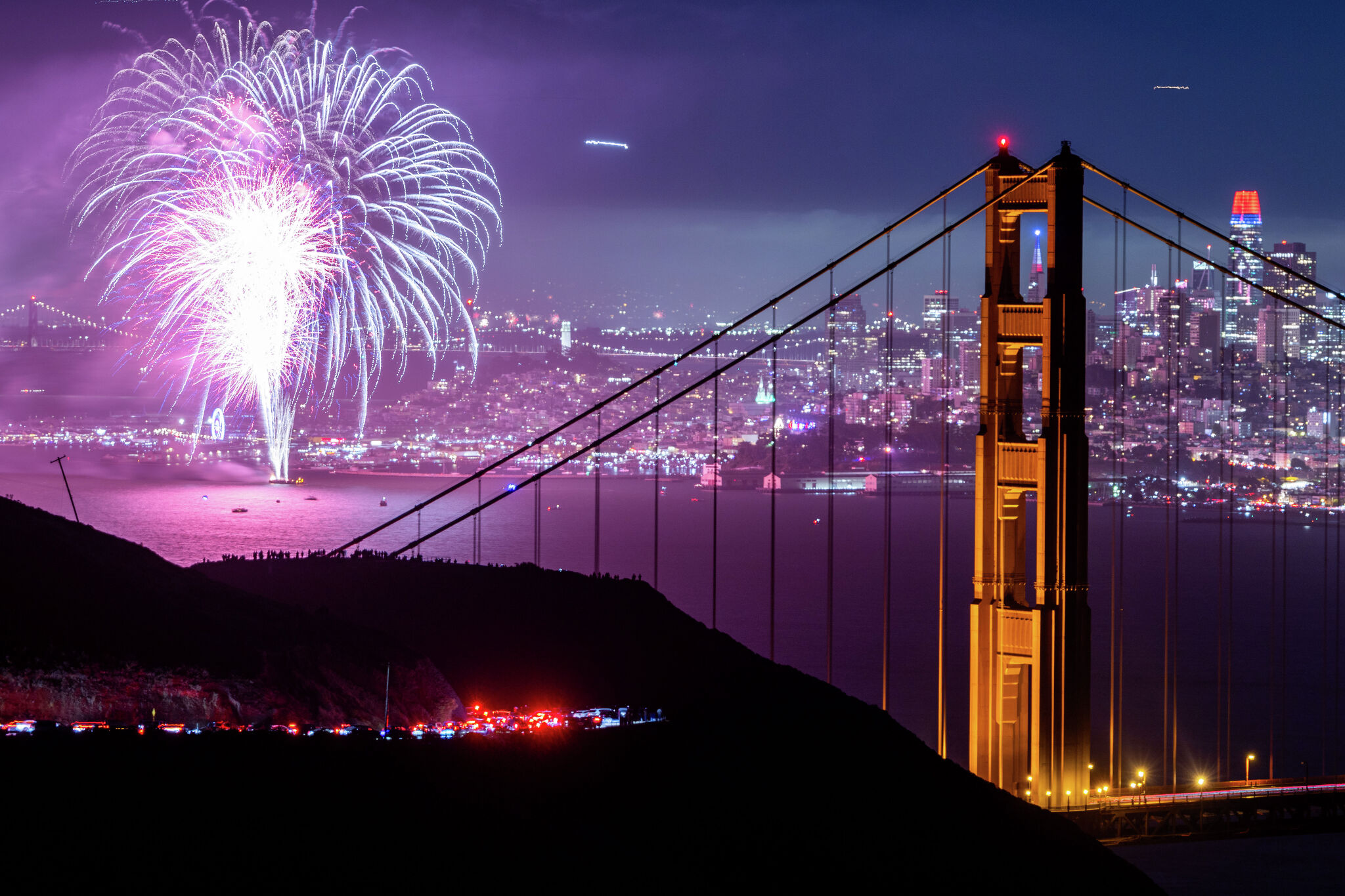
San Francisco will launch July Fourth fireworks from the Golden Gate Bridge, closing the span from 9 p.m. to 10 p.m. and triggering broad traffic, parking and transit restrictions around the waterfront.
San Francisco is preparing for a rare July Fourth fireworks show launched from the Golden Gate Bridge, and the celebration will come with a large traffic and transit plan around the city’s waterfront.
The bridge will be closed to vehicles from 9 p.m. to 10 p.m. on July 4, while the fireworks display is scheduled to begin at about 9:30 p.m. City officials say access will also be restricted across the Marina, Fisherman’s Wharf, the Presidio and parts of the Richmond as spectators and residents move through the area.
The event is tied to San Francisco’s 250th-birthday celebration and is one of only three times fireworks have been launched from the bridge, following displays in 1987 and 2012. Mayor Daniel Lurie announced the plan on June 15.
What closes when
The closure plan is layered and starts before the fireworks themselves. Caltrans will block Highway 101 access to the bridge in both directions starting at 8 p.m., cutting off one of the city’s major regional corridors during the evening rush.
Roads around Fisherman’s Wharf and the Marina will be limited to local traffic and emergency vehicles from 8 p.m. to 11 p.m. Jefferson Street will close between Hyde Street and the Embarcadero from 1 p.m. to 11 p.m., adding another major restriction in the waterfront core.
Parking will also be tight. Lots at Marina Green and Crissy Field are scheduled to close for 24 hours beginning at 6 a.m. on July 4, and the east-side sidewalk on the bridge will be partially shut down before the show.
The fireworks will not all come from the bridge alone. Officials say the display will also include two barges in the bay, one near the bridge and one near Pier 39.
Transit and access
The San Francisco Municipal Transportation Agency says it will run two special fireworks shuttles from 4 p.m. to 11:30 p.m. One will run from Powell BART Station via the 38-Geary and 49-Van Ness routes to Marina Middle School.
A second shuttle will run from Embarcadero BART Station along the F-Market line to Pier 39. The plan is meant to give spectators alternatives to driving into an area where parking and curb access will be heavily constrained.
City officials are urging people to walk, bike, take transit or use taxis. That advice reflects the expected crush of holiday traffic in a zone that already draws heavy crowds on summer evenings.
The likely pressure points are clear: BART stations, Muni connections, waterfront streets and the blocks closest to the viewing areas. Even a brief bridge closure can ripple through nearby routes because the Golden Gate Bridge is a key link for both local and regional traffic.
Why it matters
This is not just a fireworks display. It is a citywide traffic operation centered on one of San Francisco’s most visible landmarks, with direct effects on residents, visitors and emergency access around the bayfront.
The affected area includes the Marina, Fisherman’s Wharf, the Presidio and parts of the Richmond, all of which are likely to see heavier congestion and parking pressure than usual during the holiday evening.
That matters because the waterfront is already a major July Fourth destination. Add a bridge closure, freeway restrictions, local-access limits and a pair of special transit shuttles, and the city’s normal travel patterns will be compressed into a much smaller footprint.
Officials have not indicated that the plan will change, but they may still issue day-of traffic or security advisories if crowd conditions shift. For now, the scheduled bridge closure, road restrictions and shuttle service are the core of the operation.
The basic travel message from city officials is straightforward: avoid driving into the area if possible, plan for delays if you must travel nearby, and expect the waterfront to function differently for several hours on July 4.
,Revision note
Initial automated publication.