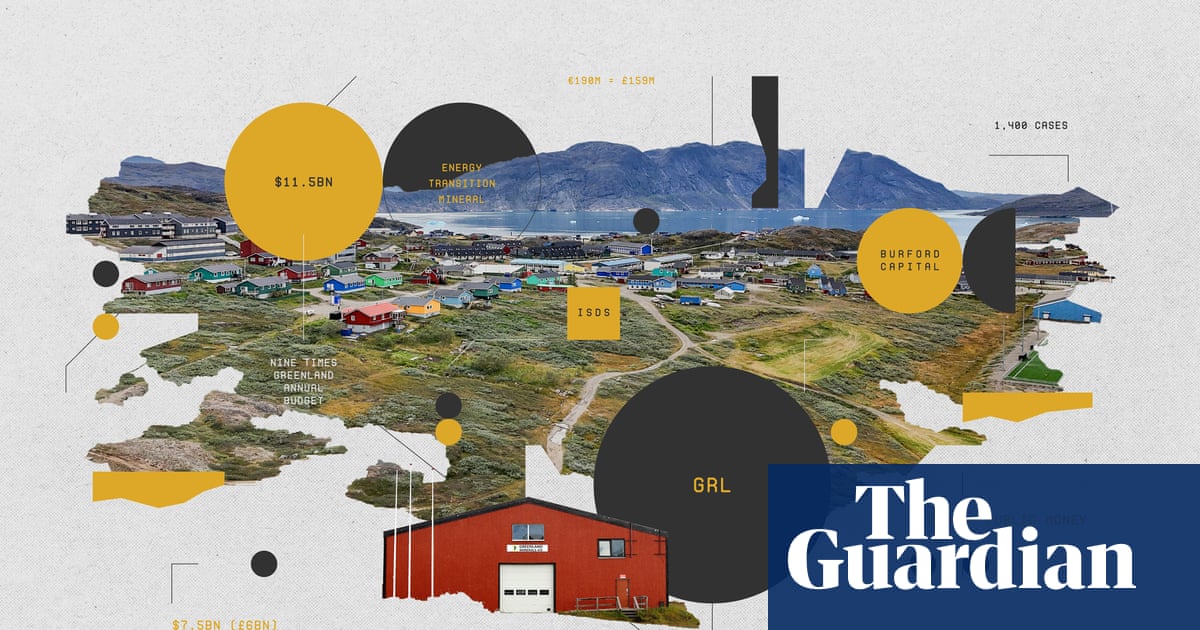
Greenland has refused to extend Energy Transition Minerals' exploration licence for the Kvanefjeld rare-earths project, reviving a long-running dispute over uranium restrictions, environmental policy and the future of a strategically watched mine.
Greenland has refused to extend Energy Transition Minerals' exploration licence for the Kvanefjeld rare-earths project, a decision that could halt one of the territory's best-known mining proposals unless the Australian company succeeds in a challenge.
ETM said on June 29, 2026 that the Greenland Ministry of Business and Mineral Resources would not prolong the licence. The company framed the decision as a major setback for a project it says could be important to rare-earth supply chains outside China.
The Greenland government said further exploration in the area was not likely to lead to deposits that could be exploited in line with the Uranium Act, according to reporting cited in the research packet. Government remarks also tied the decision to uranium reform and environmental concerns.
Kvanefjeld has long been one of Greenland's most contested mining projects because the ore body contains uranium as well as rare earths. That combination has repeatedly put the project at the centre of debates over whether Greenland should prioritise resource development or tighten restrictions on uranium-linked mining.
How the review unfolded
According to ETM, the company submitted its licence extension request on September 1, 2025. It later said it responded to a ministry consultation memorandum on June 15, 2026.
The company said it was then given 48 hours to answer additional memorandums and asked for a one-week extension on June 22. ETM said that request was refused.
ETM also said the ministry spent nine months reviewing the extension request before reaching its decision. Taken together, the company is describing a long administrative process that ended in a refusal rather than an abrupt policy announcement.
ETM managing director Daniel Mamadou said the process was unfair and argued that the ministry ignored newer drilling data showing uranium levels below the legal threshold, according to the material reviewed.
Why Kvanefjeld matters
The dispute has implications beyond one licence. Investors will watch closely to see whether Greenland is viewed as a predictable jurisdiction for critical-minerals projects, especially those that intersect with environmental rules and uranium policy.
The project is also being followed for its role in broader supply-chain debates. Rare-earth projects outside China remain strategically important to governments and companies seeking more diversified sources of materials used in clean energy, electronics and defence supply chains.
ETM has argued that Kvanefjeld could be strategically significant for that effort. Greenland's refusal, by contrast, reinforces the view that uranium-linked projects face a particularly difficult path through the territory's regulatory system.
What happens next
ETM may pursue legal or administrative action to challenge the refusal, but no formal filing was included in the research packet reviewed for this article.
Investors will also watch for any government decision document, further company disclosure on the financial impact, or clarification on whether the refusal applies only to the exploration extension or signals a broader rejection of the project.
For Greenland, the case is likely to renew scrutiny over how the territory applies the Uranium Act and how much room remains for rare-earth development when uranium is part of the ore body.
For ETM, the decision leaves Kvanefjeld facing another setback in a dispute that has already stretched over years and now appears headed for another round of legal and political scrutiny.
Revision note
Initial automated publication.