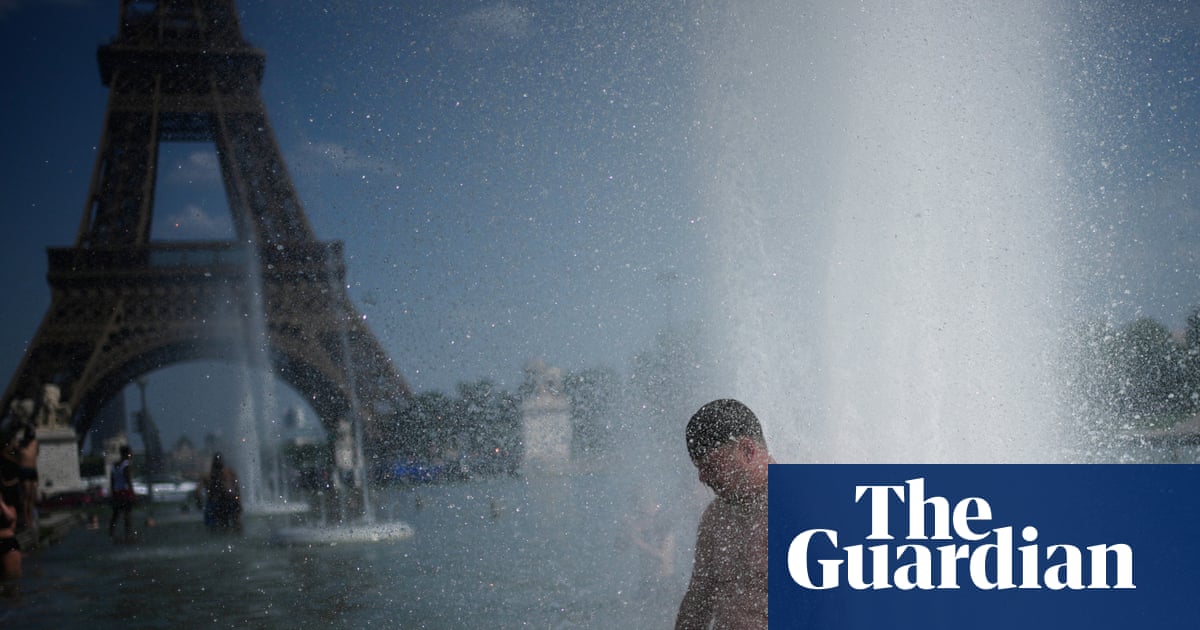
President Emmanuel Macron and Prime Minister Sébastien Lecornu are defending France’s heatwave response after criticism over climate preparedness, as hospitals, schools and local services struggle under extreme temperatures.
France’s government is on the defensive after criticism that it was not prepared for the latest heatwave, with President Emmanuel Macron and Prime Minister Sébastien Lecornu pushing back against claims that authorities failed to act.
Macron said on June 25 that most of the adaptation work had already been done during his presidencies, while arguing that France cannot fully prepare for an extreme heat peak on a scale not seen recently. Lecornu, meanwhile, sent a letter to mayors rejecting accusations that public authorities had done nothing to adapt the country to climate change.
The dispute sharpened as the heatwave continued to strain hospitals, schools and local services across France. Le Monde reported that the episode peaked on June 25 after about a week of intense temperatures.
The government response
Lecornu said the state had activated ORSAN level 3, the crisis setting used by hospitals to reorganize care, postpone non-urgent surgery and recall staff. The move is designed to help health services cope with a surge in demand during an emergency.
He also announced that postal workers would be mobilized during their rounds to check on isolated people, reflecting concern for vulnerable residents who may be hardest to reach during prolonged heat.
The prime minister said the government would allocate €100 million to cool overheated hospitals. He also said funding for hospital energy renovation would be doubled, from €300 million to €600 million, over the 2026-2035 period.
Lecornu’s message was not only about emergency management. He argued that responsibility for adaptation is shared between the state and local authorities, especially when it comes to schools, public buildings and protection for vulnerable people.
Hospitals under strain
The health system has become one of the clearest pressure points. A separate Le Monde report said French hospitals were at a tipping point after seven days of heat, with some regions facing severe strain.
According to the reporting, emergency calls rose by about 60% in some areas. Hospitals have also had to reorganize care, postpone non-urgent procedures and bring staff back into service to keep wards functioning during the heatwave.
The government’s crisis response is meant to slow that pressure, but the scale of the disruption has intensified criticism that France was not sufficiently prepared for an extreme heat event that is becoming more common.
Schools and local disruption
The heatwave has also disrupted the school system. Le Monde reported that about 1,800 schools were closed and roughly 8,000 school buildings were affected by disruptions.
That has put pressure on families as well as teachers and local administrators, particularly where classroom conditions became too difficult for pupils and staff. The school impact is one of the most visible signs of how heatwaves now affect everyday public services, not just hospitals.
The education disruption also feeds into the broader political argument about adaptation. Lecornu has pushed the idea that France’s response cannot be reduced to a single emergency measure, because schools, buildings and local infrastructure all need longer-term preparation.
Pressure on public services
In Paris, police moved to ban drinking alcohol in public spaces to reduce pressure on emergency services during the heatwave. The restriction is one example of how local authorities are trying to manage demand while temperatures remain high.
The government’s response is therefore unfolding on two levels at once: immediate crisis management for hospitals and vulnerable people, and a broader argument over who should bear responsibility for adaptation spending and planning.
That divide is at the heart of the criticism facing Macron and Lecornu. Opponents and climate advocates say the scale of disruption points to years of underinvestment and incomplete planning. The government says it has already done substantial work and is combining emergency intervention with longer-term investment.
What comes next
The key question is whether the measures already announced will be enough if the heat persists into the weekend.
Officials are watching for more local restrictions on gatherings or alcohol sales, further hospital escalations and additional steps affecting schools or vulnerable residents. If temperatures remain high, more regions may need to expand emergency health measures.
The government is also likely to face continued pressure from opposition parties, mayors and climate campaigners over whether France has invested enough in adaptation before this crisis.
For now, Lecornu is trying to present the state’s response as both immediate and structural: a mix of short-term crisis management, support for isolated people and hospital funding, alongside longer-term spending on energy renovation and resilience.
Revision note
Initial automated publication.