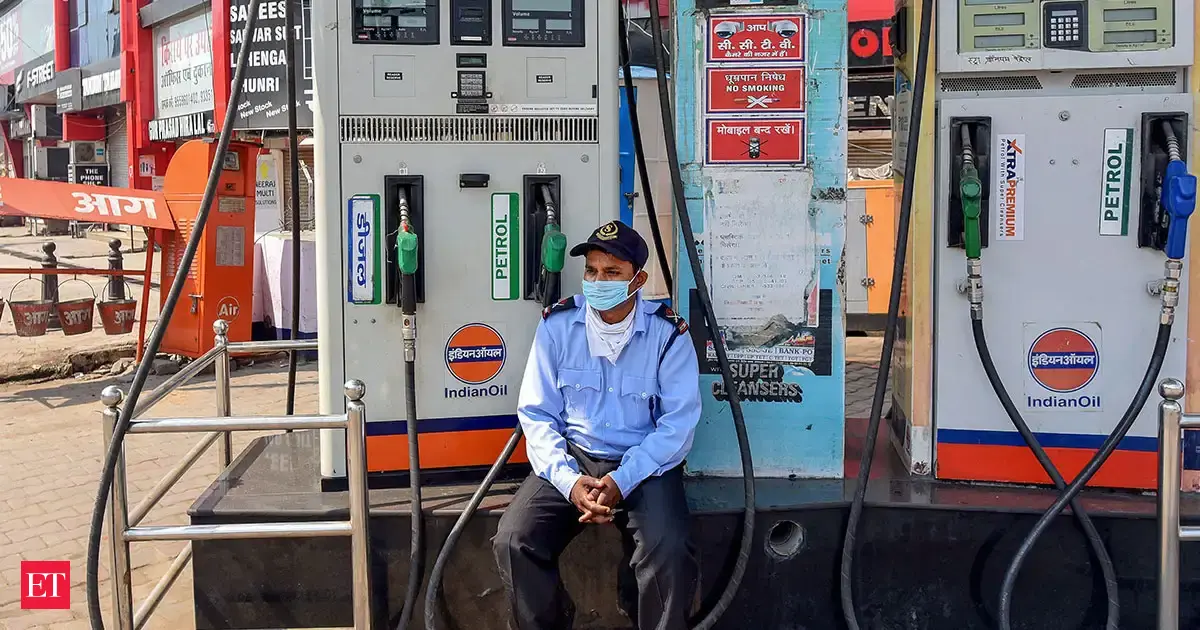
India has barred industrial, commercial and institutional users from buying petrol and diesel at retail pumps, directing them to bulk procurement channels instead. Coverage says the policy is meant to protect supply for ordinary consumers, and one report says diesel sales have also been capped at 200 litres per vehicle or customer per day.
India has barred industrial, commercial and institutional users from buying petrol and diesel at retail fuel stations, according to contemporaneous reporting on the policy move.
The restriction pushes those buyers toward bulk procurement channels instead. Coverage said the aim is to keep retail fuel available for ordinary consumers and reduce pressure on the pump network from large-volume users.
One report also said diesel sales have been capped at 200 litres per vehicle or customer per day. It was not immediately clear from the available reporting whether that limit is nationwide, temporary, or tied to specific supply conditions.
What the restriction changes
The directive affects industrial, commercial and institutional consumers that had been using retail outlets for fuel purchases.
Those users are now being steered back to bulk buying arrangements, which are typically used for fleets, plant operations and other high-volume needs.
The policy is aimed at separating ordinary retail demand from larger-volume demand so that petrol pumps remain focused on small customers and private motorists.
Why the government is acting
Coverage said some bulk buyers had been shifting to retail pumps because retail pricing was lower than bulk purchase pricing. That created pressure on the retail network and appears to be part of what the policy is meant to stop.
The reported rationale is to preserve fuel availability for ordinary consumers and prevent bulk users from crowding the retail channel.
The restriction is also being described in coverage as a supply-management step under the Essential Commodities Act, underscoring that the government is treating the issue as a matter of market control and access.
Timeline
The first reports on the restriction appeared on June 12, 2026. The Economic Times reported that industrial, commercial and institutional users were being barred from buying petrol and diesel at petrol pumps and told to use bulk procurement channels.
Later that day, The Times of India reported the same basic directive and said industries would have to move to the bulk purchase route.
A follow-up Economic Times report published on June 13 added that diesel sales were being capped at 200 litres per vehicle or customer per day.
The Times of India also reported on June 13 that the government had notified an order allowing temporary restrictions on bulk fuel buys during periods of supply stress to prevent shortages and diversion.
Who is affected
The policy has immediate consequences for industrial users, commercial operators and institutional consumers that depend on petrol and diesel for transport, machinery and day-to-day operations.
It also creates a compliance burden for petrol pump operators and fuel retailers, who will have to enforce the new limits and distinguish between ordinary retail buyers and bulk consumers.
Fuel suppliers and bulk buyers may also face changes in logistics and procurement costs if more demand is pushed into dedicated bulk channels.
What remains unclear
The available reporting does not yet show the full notification text.
It is also unclear whether there are exemptions for emergency services, agriculture or other essential users.
Another open question is whether the diesel cap is permanent or only meant to apply during supply stress.
Further reporting is likely to focus on the exact enforcement mechanics, any state-level guidance, and whether industry groups challenge the new restrictions or seek clarification on exemptions.
Revision note
Initial automated publication.