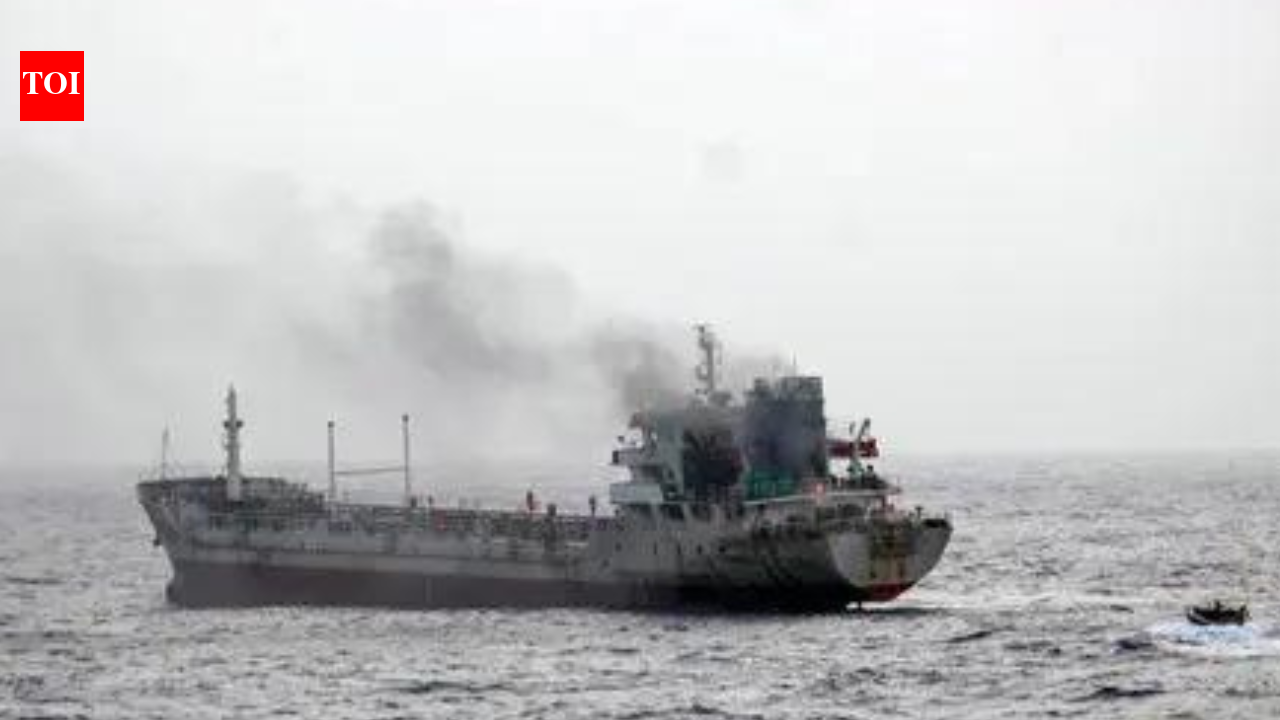
India lodged a formal protest with the U.S. embassy after the attack on the Palau-flagged Settebello off Oman. Initial reports said 21 crew were rescued and three Indians were missing; later accounts cited deaths and one missing seafarer.
India has lodged a formal protest with the U.S. embassy over the attack on the Palau-flagged Settebello off Oman, as reporting on the fate of its crew shifted from three missing Indian seafarers to later claims that deaths had been confirmed.
The incident has become both a diplomatic issue and a maritime-security concern because the vessel was carrying a large Indian crew and was attacked in a sensitive shipping corridor near the Strait of Hormuz.
India’s protest
Reporting said India’s Ministry of External Affairs condemned the attack and then formally protested to the U.S. embassy. The move followed early accounts that 24 Indian seafarers were aboard the vessel, 21 had been rescued and three remained missing.
That response placed the case squarely in the realm of consular and labor concerns for India, which has a large seafarer workforce and a direct interest in the safety of its crews operating through the Gulf.
How the casualty picture changed
The first accounts focused on the missing crew members. Later reporting shifted the story as family accounts and union statements suggested the toll may have been worse than first believed.
One report cited the family of Indian seafarer Aditya Sharma saying he had died in the attack. Another later report quoted the Forward Seamen’s Union of India as saying two Indian sailors were dead and a chief engineer was still missing.
Those claims have not yet been uniformly verified across the available coverage, so the final casualty count remains unsettled.
Why the attack matters
The Settebello was attacked off the coast of Oman in the Gulf of Oman, close to one of the world’s most important maritime routes. Any assault on a commercial ship in that area raises wider concerns about shipping security, crew safety and escalation risks in the region.
For India, the case is especially sensitive because the crew members in question are Indian nationals and their families, unions and government officials are still seeking clarity on what happened.
What remains unclear
The main unanswered questions are whether the three initially missing crew members have been found and whether the later death reports represent the final toll.
It is also unclear whether the U.S. has issued an official response or explanation, and whether India, the ship’s owner or operator will publish a revised manifest or casualty list.
Until those details are confirmed, the attack remains a live story with unresolved questions about responsibility, rescue and recovery.
Timeline of reporting
The earliest reports said the MEA condemned the attack and that three Indian crew were missing after 21 were rescued.
Later that night, India was reported to have lodged a formal protest with the U.S. embassy over the attack on the Settebello.
Subsequent reports moved the story further, with one account saying the family of Aditya Sharma believed he had died, and another saying the seamen’s union was reporting two dead and one missing.
The incident now sits at the intersection of maritime security, diplomatic friction and the immediate safety of Indian seafarers on a route that remains under heavy scrutiny.
,Revision note
Expanded with full chronology, casualty uncertainty, maritime context, and open questions.