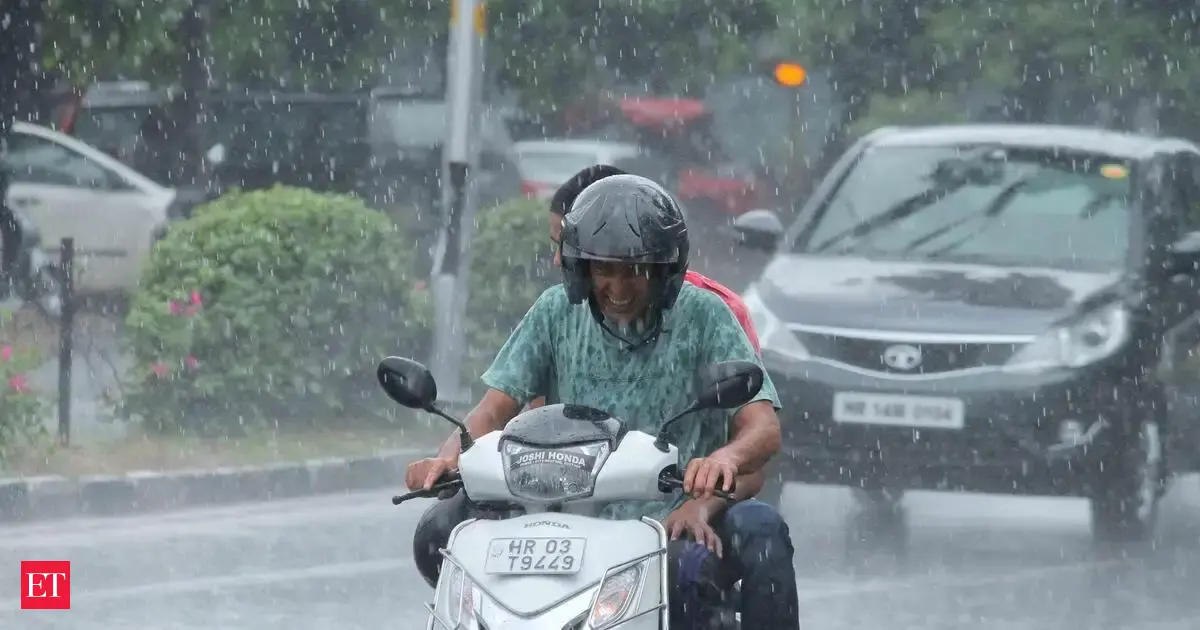
The IMD issued alerts for heavy rain, thunderstorms, lightning and strong winds across multiple states on July 9, with Delhi-NCR under an orange alert and waterlogging reported in parts of the region.
The India Meteorological Department issued fresh weather alerts on July 9 as heavy rain, thunderstorms, lightning and strong winds continued across several states, with Delhi-NCR among the worst affected areas.
Delhi, Noida and Gurugram woke up to another rainy morning, and reports said waterlogging had already started in low-lying parts of the National Capital Region. The IMD issued an orange alert for Delhi-NCR, while some reports said parts of the region were under a red alert.
Delhi-NCR sees another wet morning
The latest spell has raised immediate concerns for commuters, air travelers and residents in Delhi-NCR. The Economic Times reported that the IMD was expecting 180-250 mm of rain in the next 24 hours in the region, adding to the risk of waterlogging and disruption.
The weather department also warned of thunderstorms, lightning and strong winds, conditions that can quickly worsen visibility and make travel unsafe.
Alerts across multiple states
The warning was not limited to the capital region. Coverage said IMD alerts covered Uttar Pradesh, Bihar, Rajasthan, Uttarakhand, Assam and Tamil Nadu, reflecting a wider monsoon surge across the country.
The broader setup is part of the active monsoon phase, when weather systems can shift quickly and bring short bursts of intense rain to different regions. Times of India said conditions were favorable for the southwest monsoon to advance further across India over the next two to three days.
What to watch next
The main question for July 9 is whether IMD upgrades or narrows alerts later in the day, and whether the rain triggers further transport, school or airport disruption.
Officials and residents in the affected states are being advised to stay alert for thunderstorm and flood-related warnings, especially in urban areas prone to waterlogging and in locations facing flash-flood risk.
Revision note
Initial automated publication.