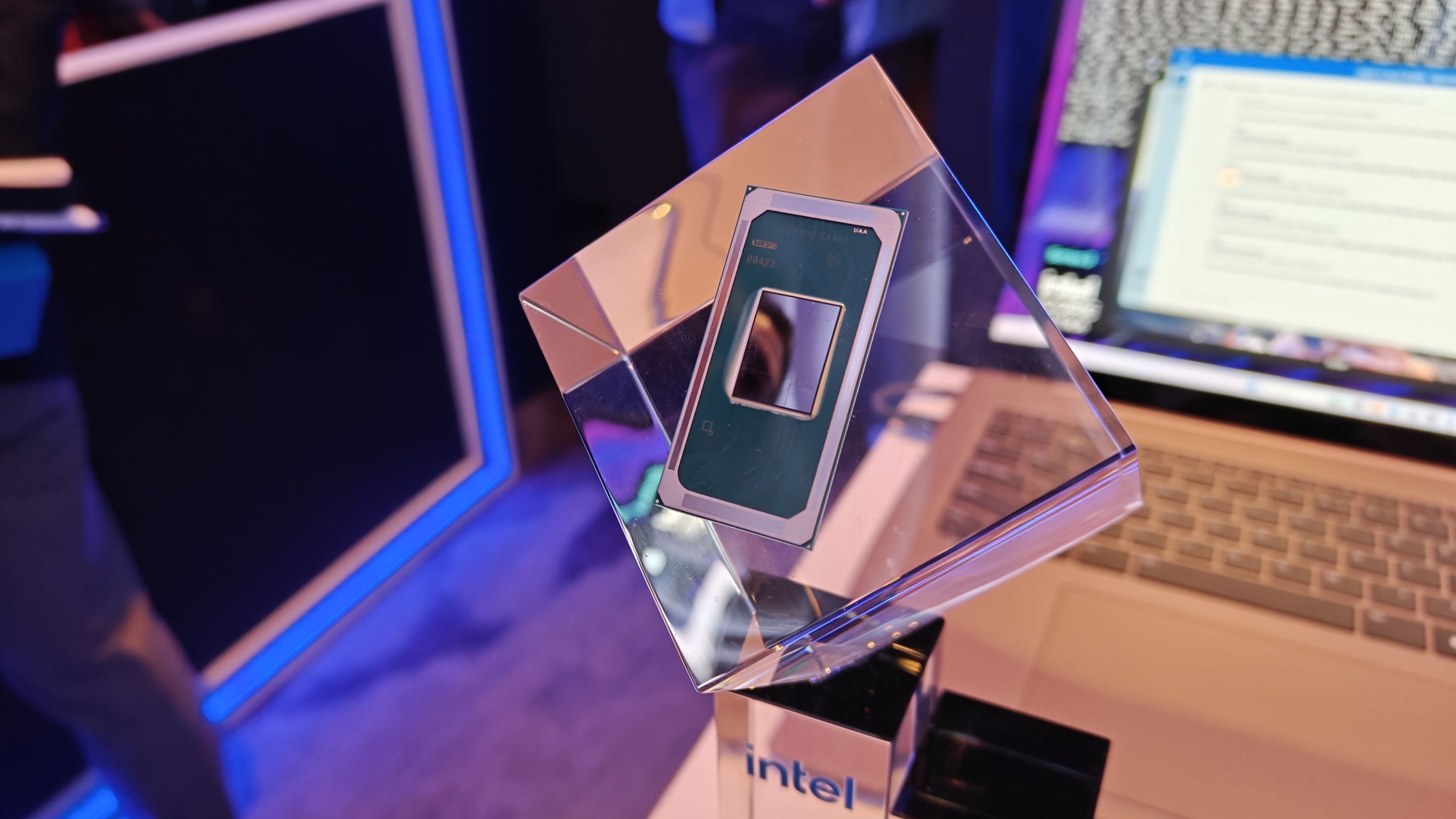
Intel said its 18A-P process has entered risk production, a limited manufacturing stage that advances the company’s foundry push and adds a more efficient version of its 18A node.
Intel said its 18A-P process has entered risk production, marking a new step in the company’s effort to turn process-node progress into foundry demand.
The move gives Intel a limited trial-production path for the next version of its advanced manufacturing node. It also keeps the company focused on a central question for its foundry business: whether technical progress can translate into real orders from outside chip designers.
Risk production is an early stage in semiconductor manufacturing. It comes before broader volume output and is typically used to validate the process in limited runs before a wider ramp.
What Intel said about 18A-P
Intel describes 18A-P as a performance- and power-optimized revision of 18A. The company says the node can deliver about 9% higher performance at the same power, or about 18% lower power at the same performance level.
Intel also says 18A-P is compatible with 18A designs. That compatibility could make adoption easier for prospective customers by reducing the need for a full redesign.
The company is positioning that compatibility as part of its foundry pitch. For Intel Foundry, the challenge is not just proving the technology works internally, but proving that third-party chip designers will commit to it.
Why it matters for Intel Foundry
Intel’s foundry business has been under pressure and needs outside customers to improve utilization and narrow losses in manufacturing. The 18A-P update is therefore being watched as more than a technical milestone.
If Intel can turn the node into customer interest, it would strengthen the case that its manufacturing roadmap can attract external business. If it cannot, 18A-P may remain another step forward without a corresponding commercial payoff.
Chronology and reporting
The earliest confirmed report on the announcement came on June 16, 2026, when Tom’s Hardware said Intel tied the update to its VLSI 2026 presentation and described 18A-P as entering risk production.
MarketWatch followed later on June 16, saying Intel had entered risk production for 18A-P and framing the move as a sign the company was making progress toward attracting external customers.
Barron’s published additional coverage on June 17, reporting that the update helped lift Intel stock and emphasizing the foundry-customer angle. A second Barron’s story the same day repeated the importance of outside customers to Intel’s chip-making bet.
Technical backdrop
Tom’s Hardware reported that Intel presented 18A-P at VLSI 2026 with new transistor options and thermal improvements. Its reporting also said the node remains backward compatible with 18A designs.
That framing suggests Intel is positioning 18A-P as an incremental but more attractive step for potential customers, rather than a clean-sheet replacement for its earlier node.
What remains unconfirmed
Intel has not named a specific external foundry customer for 18A-P in the reporting reviewed here. The available coverage also does not include measured yields, defect rates, or a firm timetable for moving from risk production to broader volume production.
Those details will determine whether 18A-P becomes a genuine commercial win for Intel Foundry or stays mainly a technical milestone on the company’s roadmap.
What to watch next
The next signs of progress would be named customer commitments, more detail on yields and ramp timing, and evidence that external chip designers are moving beyond exploratory interest.
Intel’s broader foundry turnaround still depends on whether it can convert process development into sustained customer demand.
Revision note
Initial automated publication.