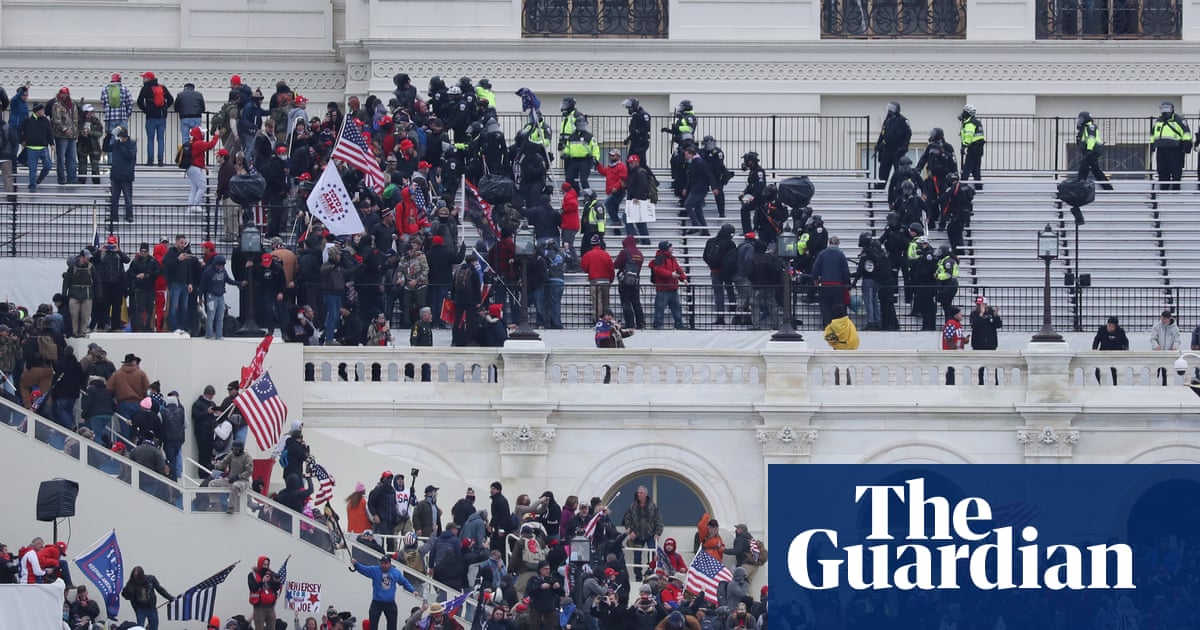
January 6 defendants are using the Federal Tort Claims Act to seek federal payouts after the Trump administration’s proposed anti-weaponization fund stalled, with roughly 400 claims filed and some seeking at least $1 million each.
January 6 defendants are turning to the Federal Tort Claims Act, a little-used legal process that allows people to seek money damages from the federal government.
The shift has become a new route for compensation after the Trump administration’s proposed $1.8 billion anti-weaponization fund appears to have been shelved amid bipartisan backlash. According to reporting by The Guardian, the abandoned fund was followed by a wave of FTCA filings on behalf of January 6 participants.
The Guardian said roughly 400 claims have now been filed, some seeking $1 million or more per person. If any are paid, the money would come from the federal judgment fund.
How the push developed
The reporting traces the dispute back to the administration’s earlier effort to create a compensation fund tied to what it described as government weaponization. That proposal drew criticism from both parties and did not move forward.
In May, AP reported that Acting Attorney General Todd Blanche did not rule out compensation for people involved in the violent January 6 riot while defending the proposed fund. AP also reported that final eligibility decisions would rest with a five-member commission Blanche would appoint.
That backdrop appears to have pushed some January 6 participants toward the FTCA instead. Unlike a direct legislative payout, the FTCA is an existing claims process that can be used to seek damages from the United States.
Who is filing claims
The Guardian reports that Trump ally Peter Ticktin has filed nearly 400 FTCA claims on behalf of January 6 participants. The claims are said to include requests for substantial sums, with some seeking at least $1 million each.
The reporting also identifies a separate Washington, D.C., lawsuit filed May 29 by nine plaintiffs who are seeking at least $1 million apiece. Among those named are Kenneth Joseph Thomas and John George Todd III.
Andrew Taake filed an earlier FTCA lawsuit in Washington seeking at least $2.5 million, according to the reporting.
The article says the January 6 defendants seeking compensation received pardons from Trump.
Why the stakes are high
The claims raise the possibility that federal money could flow to people convicted of or charged with violence against police officers during the Capitol attack.
That has made the issue politically explosive. Critics argue that taxpayers should not be asked to pay out people tied to the January 6 violence, while supporters are testing whether the government will treat the claims like any other tort filing.
The Justice Department has already settled separate FTCA claims involving Michael Flynn and Carter Page for $1.25 million each earlier this year, which adds another layer of sensitivity around how the department handles politically charged claims.
Political reaction
The Guardian quoted Sen. Adam Schiff as saying he introduced legislation to bar January 6 offenders from receiving federal payouts and that taxpayer dollars should not be used to pay criminals.
His response reflects the broader concern that any settlement could look like a reward for people connected to the Capitol attack. The reporting says bipartisan backlash helped stall the administration’s original anti-weaponization fund.
What happens next
The immediate question is whether the Justice Department will contest the January 6-related FTCA claims or settle any of them.
Another unresolved issue is how, or whether, the administration will apply eligibility standards to claims tied to assaults on police officers or other violent conduct on January 6.
It is also unclear whether the anti-weaponization fund is fully dead or may be repackaged in another form.
For now, the filings show that the fight over January 6 compensation has moved from political rhetoric into a formal federal claims process, with Congress and the Justice Department still facing pressure over what comes next.
Revision note
Expanded with verified chronology, claimants, legal mechanism, political response, and next steps.