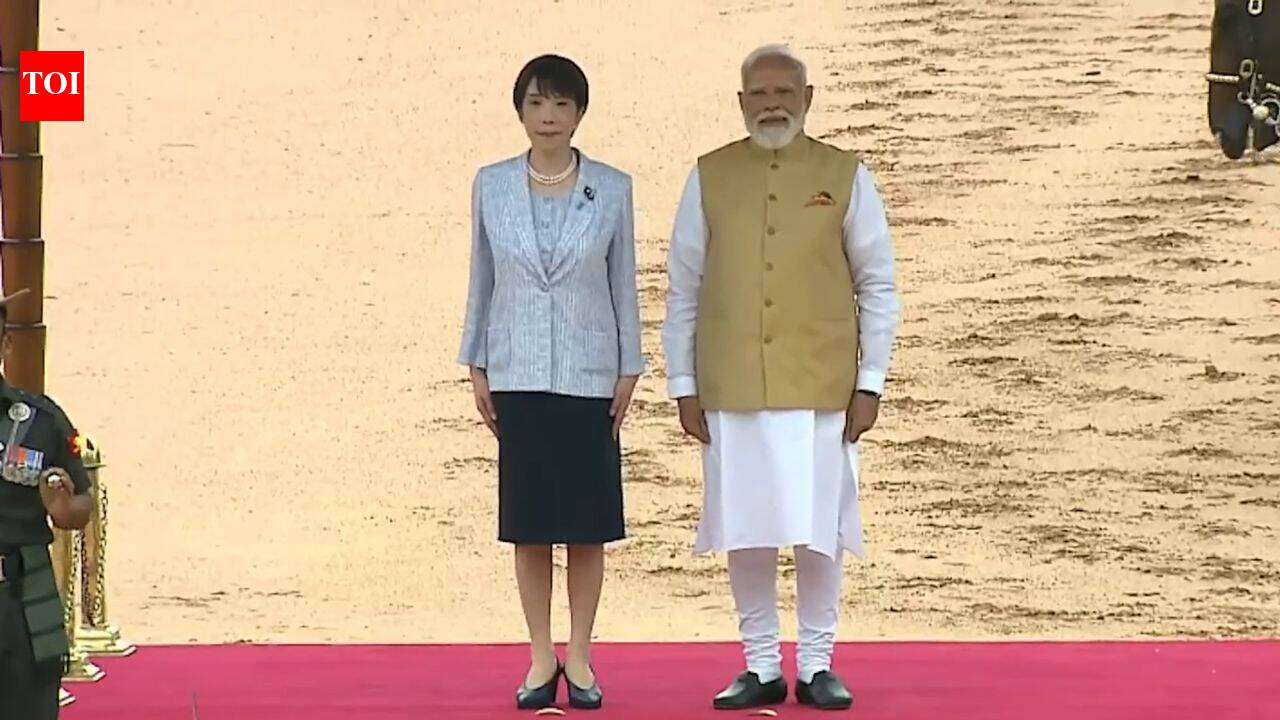
Japanese Prime Minister Sanae Takaichi met Narendra Modi in New Delhi on July 2, 2026, as India and Japan used their annual summit to announce deeper cooperation on investment, AI, defence, energy and supply chains.
Japanese Prime Minister Sanae Takaichi met Narendra Modi in New Delhi on Wednesday, marking the latest India-Japan annual summit and signaling a broader push by both governments to deepen economic and security ties.
Takaichi received a ceremonial welcome at Rashtrapati Bhavan before talks with Modi in the Indian capital. Multiple reports said the meeting was part of the 16th India-Japan Annual Summit.
The summit was framed as more than a ceremonial visit. Coverage said the two sides used the talks to advance a new cooperation package spanning investment, artificial intelligence, defence, energy, next-generation mobility and supply chains.
The Economic Times reported that the discussions produced a multi-billion-dollar roadmap and more than $10 billion in new Japanese investments. It also said the two countries are aiming for ¥10 trillion of Japanese investment in India over the next decade.
Times of India reported that Modi and Takaichi signed a memorandum of cooperation tied to the summit. Other coverage described the package as a wider bilateral roadmap rather than a single narrow agreement.
Economic and technology agenda
Investment and industrial cooperation were at the center of the meeting. The reported commitments point to a stronger effort to channel Japanese capital into India, especially in areas linked to manufacturing, infrastructure and technology transfer.
Artificial intelligence was one of the headline themes in the summit coverage. The reporting did not set out a full project list, but it showed that the two governments want the partnership to extend beyond traditional trade into newer technology-focused sectors.
Energy and next-generation mobility were also included in the package. Those areas suggest both sides are looking for longer-term cooperation that can support industrial capacity and supply-chain resilience.
The investment targets matter for India because they could help shape manufacturing, energy and technology supply lines over the next decade. For Japan, the package offers a way to deepen economic links with one of Asia’s fastest-growing large economies.
Security and Indo-Pacific context
The Financial Times said the meeting took place against a backdrop of Chinese pressure and broader supply-chain concerns. That context gave the summit a clear strategic dimension as well as an economic one.
FT also reported plans for joint maritime exercises and a new naval communications system. Those details indicate that the security side of the partnership is becoming more operational, especially in the maritime sphere.
India and Japan have spent years expanding their Special Strategic and Global Partnership, but the July 2 summit appeared designed to give it fresh momentum. The mix of investment, technology and defence cooperation points to a wider Indo-Pacific alignment.
The leaders did not present the summit as a response to one specific event. Instead, the reporting portrayed it as part of a continuing effort to strengthen ties amid regional uncertainty and a need for more resilient supply chains.
What remains unclear
The main open question is how much of the announced package is legally binding and how much reflects political intent. Reporting noted that the exact wording and legal status of the agreements were not yet fully clear.
A government communique or follow-up readout could provide more detail on individual projects, timelines and implementation steps. That would help distinguish between memorandum-level commitments and agreements that are already locked in.
For now, the summit signals a clear direction from both sides: to turn the India-Japan partnership into a deeper platform for investment, defence coordination and technology cooperation.
Revision note
Initial automated publication with expanded summit context.