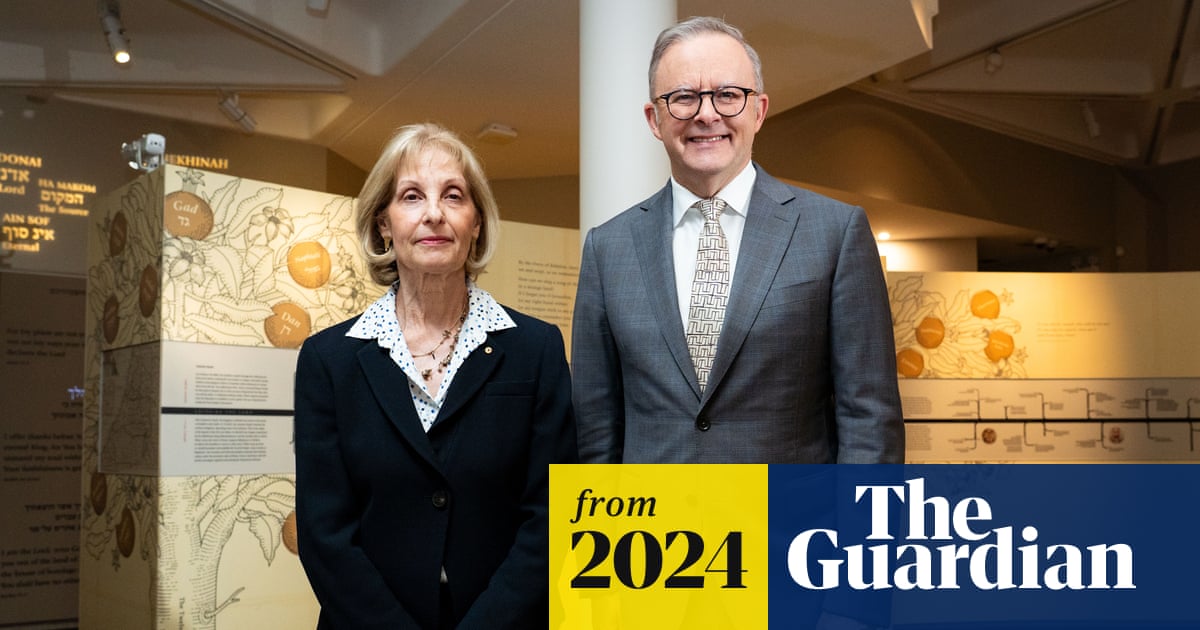
Daniel Aghion, president of the Executive Council of Australian Jewry, has accused the Albanese government of delaying the antisemitism envoy appointment so it could be paired with an Islamophobia envoy announcement. The allegation, made in a submission to the Royal Commission into Antisemitism and Social Cohesion, comes after 2024 reporting on the staggered appointments and the government’s explanation of the roles as advisory.
Daniel Aghion, president of the Executive Council of Australian Jewry, has accused the Albanese government of delaying the appointment of a special envoy on antisemitism so it could be announced alongside an Islamophobia envoy.
The allegation was made in a submission to the Royal Commission into Antisemitism and Social Cohesion, according to The Australian, which reported the claim on June 22, 2026. Aghion’s claim adds a new political argument to an already sensitive debate about how the government handled its response to antisemitism, Islamophobia and social cohesion.
The allegation
According to the report, Aghion told the royal commission that the government held back the antisemitism envoy appointment in 2024 for timing reasons, so it could be matched with the later Islamophobia appointment. The claim goes to the question of whether the two envoy roles were shaped by policy need or political presentation.
The submission was made against the backdrop of broader scrutiny of the Albanese government’s handling of hate speech, discrimination and community tensions after the October 7, 2023 Hamas attacks on Israel and the Gaza war.
The 2024 timeline
The government announced Jillian Segal as special envoy to combat antisemitism in July 2024.
It then announced Aftab Malik as special envoy to combat Islamophobia on September 30, 2024, after months of delay.
The staggered timing had already drawn attention. The Guardian reported in September 2024 that the Islamophobia appointment had been delayed amid concerns in the Muslim community. Malik said at the time that the role was about social cohesion and engagement with the Muslim community, religious discrimination experts and government.
What the government said about the roles
Separate Guardian reporting based on government documents said the envoy roles were meant to be advisory rather than a way for the government to outsource official policy statements.
Those documents said public communications from the envoys would be attributed to the envoy, not to the department or the government as a whole. They also set out the policy purpose of the appointments: to advise on policy development, legislation, campaigns and public awareness around antisemitism and Islamophobia.
The same material said antisemitism had increased significantly after the October 7 attacks and that discrimination and harassment of Muslim Australians had also surged, requiring further work to counter stereotypes and harmful perceptions.
Why it matters
The allegation matters because the envoy appointments sit at the intersection of two communities that have faced rising concern about hate speech and discrimination. Jewish and Muslim groups have both pushed the government to do more, but they have not always agreed on how the response should be framed or timed.
It also raises a separate political question: whether the government was trying to balance the optics of one appointment against the other. If the claim is borne out, it would suggest the timing of the antisemitism envoy was shaped at least in part by a desire to present the two roles together.
That would sit uneasily beside the government’s later explanation that the envoy positions were advisory roles, not official mouthpieces for government policy.
What happens next
It is not clear from the reporting whether the royal commission has received documents or testimony beyond Aghion’s submission that support the allegation.
It is also not clear whether the government will respond publicly to the claim.
For now, the confirmed chronology is straightforward: Segal was announced in July 2024, Malik followed in September 2024, and a June 2026 submission has now turned that sequence into a fresh argument about political timing and process.
Revision note
Initial automated publication.