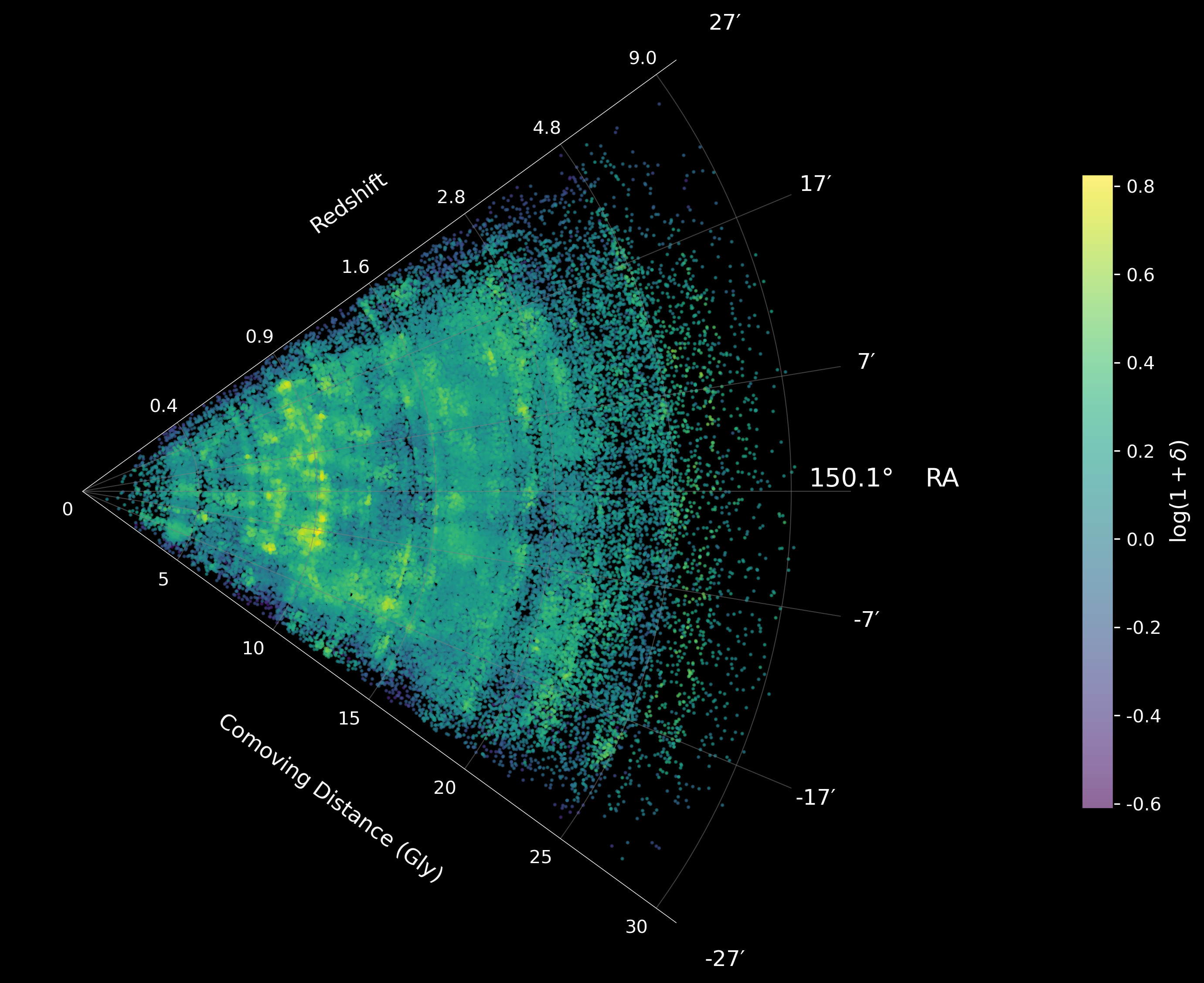
Researchers using James Webb Space Telescope data say they have mapped the cosmic web in unprecedented detail, tracing large-scale structure back to roughly one billion years after the Big Bang.
Researchers using James Webb Space Telescope data say they have produced the clearest map yet of the Universe’s cosmic web, tracing large-scale structure back to when the cosmos was about one billion years old.
The new work draws on COSMOS-Web survey data and has been published in The Astrophysical Journal. UC Riverside, which highlighted the study on May 12, said the map captures how galaxies, filaments and voids are arranged across early cosmic history, reaching back to about redshift 7.
The team says the large-scale-structure maps and related data are being made publicly available, giving other researchers a new resource for studying how the Universe assembled itself after the Big Bang.
The cosmic web is the enormous network of matter that connects galaxies across the Universe. Mapping it in the early Universe is difficult because the structures are faint and extremely distant, so the JWST observations offer a sharper view than earlier surveys.
What the study adds
The research extends structural mapping farther back in time than previous observations, into the Universe’s first billion years. That makes it useful not only as a picture of where galaxies were, but also as a test of how large-scale structure formed and evolved.
The COSMOS-Web project has already released related public data products, and the new paper builds on that effort by turning the survey into a detailed reconstruction of early cosmic structure.
Why it matters
For astronomers, the value of the map is not just its clarity but its scale. It can help researchers compare observed galaxy clustering with models of dark matter and cosmic evolution, and it may sharpen future work on how matter gathered into the web-like structures seen today.
The headline result is straightforward: JWST has now been used to chart the early cosmic web in unprecedented detail, and the underlying data are being opened to the wider scientific community.
Revision note
Initial automated publication.